Гарантия возврата средств · 100 дней Бесплатная доставка по всему миру
449 564произведения искусства 30 613художники 4 660музеи 32языки
Запись в каталоге

Weasels Playing

1911. Oil On Canvas, 68.0 x 101.0 cm.

Рис. 1. Франц Марк, Weasels Playing, 1911. Показано в виде выбранной вами репродукции: , .

§ 1Данные каталога

Размеры
68.0 x 101.0 cm

§ 2Абстракция

Описание предмета коллекционирования

Franz Marc's 'Weasels Playing' (1911) is an Expressionist masterpiece bursting with vibrant color and symbolic animal life. Explore its spiritual depth & dynamic composition.

Биография художника

Фрэнк Марк (1880-1916) – немецкий экспрессионист, известный своими яркими живописными лошадьми и сине-голубым «Голубым Рейдером». Его работы полны духовности и символизма.

§ 3Комментарий

A Glimpse of the Soul: Unpacking “Weasels Playing”

Franz Marc’s “Weasels Playing,” painted in 1911, isn't merely a depiction of two playful animals; it’s a profound meditation on life, spirituality, and the interconnectedness of nature. Created during his most intensely focused period as an Expressionist, this work embodies the movement’s core tenets – a rejection of purely representational art in favor of conveying inner emotions and subjective experiences. Marc, deeply influenced by his own spiritual seeking and a fascination with the animal world, sought to capture not just what he saw, but what he *felt* about the natural world, translating it into a vibrant tapestry of color and form.

The painting immediately draws the eye with its audacious palette. Bold strokes of crimson, emerald green, and sapphire blue dominate, creating an atmosphere that is both joyous and slightly unsettling. These aren’t the muted tones of academic landscape painting; instead, Marc employs a vibrant, almost hallucinatory color scheme, reflecting his belief in the inherent spiritual power of color itself. The composition isn't rigidly structured; rather, it feels spontaneous and alive, mirroring the energy of the weasels’ playful interaction.

The Language of Color: Technique and Expressionism

Marc’s technique is a masterful blend of observation and intuition. He meticulously rendered the forms of the weasels and their surroundings – the trees, the grass – but then imbued them with an abstract quality that transcends mere imitation. His brushstrokes are loose and expressive, conveying movement and emotion rather than precise detail. Notice how he uses short, broken strokes to suggest texture and light, creating a sense of depth and immediacy. This technique is central to Expressionism’s goal: to communicate the artist's inner state directly to the viewer.

The painting’s background isn’t simply a backdrop; it’s an integral part of the composition. The swirling clouds and indistinct trees contribute to the overall sense of dynamism and suggest a world teeming with life, both visible and unseen. Marc's use of color here is particularly striking – he employs complementary colors to create visual excitement and heighten the emotional impact of the scene.

Symbolic Echoes: Animals as Embodiments

Marc frequently employed animals as symbolic figures in his work, imbuing them with profound meanings rooted in folklore, mythology, and his own spiritual beliefs. In “Weasels Playing,” the weasels themselves are often interpreted as representing a primal, instinctual joy – a celebration of life’s simple pleasures. Their playful interaction suggests a harmony between nature and spirit, a reminder of the importance of embracing spontaneity and living in the moment.

The presence of a dog adds another layer to the symbolism. Dogs are often associated with loyalty, companionship, and connection – qualities that complement the weasels’ carefree exuberance. Together, they create a scene of idyllic harmony, reflecting Marc's belief in the inherent goodness of nature.

A Legacy of Spiritual Vision

“Weasels Playing” stands as a pivotal work in Franz Marc’s oeuvre and a cornerstone of Expressionism. It exemplifies his ability to translate complex spiritual ideas into visually arresting paintings that resonate deeply with viewers. His exploration of color, form, and symbolism continues to inspire artists today, reminding us of the power of art to evoke emotion, challenge our perceptions, and connect us to something larger than ourselves. AllPaintingsStore.com offers exquisite reproductions of this iconic piece, allowing you to bring Marc’s vibrant vision into your own space.

Вопросы и ответы

Какой цвет преобладает в композиции «Weasels Playing», Франц Марк?

Наиболее выразительным цветом в произведении «Weasels Playing» является Cobalt Violet (#5f639a). Преобладающий цвет полезен при подборе произведения искусства к интерьеру.

Как «Weasels Playing» соотносится с привычными темами творчества Франц Марк?

Повторяющиеся темы в творчестве Франц Марк включают van gogh’s color, symbolic expressionism, spiritual abstraction, nature’s essence, key expressionist work, early blue rider phase, animal series focus, exploring inner state; работа «Weasels Playing» сосредоточена на animals, landscape, playfulness, color, expressionism, weasels, germany.

Насколько известна работа «Weasels Playing» автора Франц Марк?

Уровень популярности произведения «Weasels Playing», Франц Марк оценивается как Recognized. Эта классификация отражает степень узнаваемости работы.
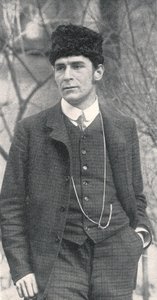
§ 4Автор работы

Франц Марк

Франц Марк

1880 - 1916, Германия

Краткая информация об авторе: Франц Марк

  • Artistic Movement Or Style: Немецкий экспрессионизм
  • Artists Or Movements Influenced By This Artist:
    • Абстрактное искусство
    • Синий Rider
  • Artists Who Influenced This Artist:
    • Ван Гог
    • Деланье
  • Date Of Birth: 8 февраля 1880 г.
  • Date Of Death: 4 марта 1916 г.
  • Full Name: Франц Moritz Wilhelm Marc
  • Nationality: Германец
  • Notable Artworks:
    • Кот на красном полотне
    • Чёрный жеребец
    • Башня синих лошадей
  • Place Of Birth: Мюнхен, Германия

Биография художника

A Life Immersed in Color and Spirit

Franz Moritz Wilhelm Marc, born in Munich in 1880, was a painter whose brief but intensely focused career irrevocably altered the course of German Expressionism. His story is one of profound spiritual seeking translated into a vibrant visual language, a quest to understand the essence of life through the purity he found in the natural world—particularly within the animal kingdom. Initially influenced by his father, Wilhelm Marc, a landscape painter, young Franz’s artistic path wasn't immediately certain. He briefly considered theology, grappling with questions of faith and existence before ultimately dedicating himself to art at the Academy of Fine Arts in Munich. These early explorations into religious thought would remain deeply embedded within his work, shaping his belief that art could be a conduit for spiritual experience. His academic training provided him with technical foundations, but it was encounters with the works of Vincent van Gogh during visits to Paris that truly ignited his artistic vision. Van Gogh’s emotive use of color and raw expression resonated profoundly with Marc, liberating him from conventional techniques and setting him on a path toward a more subjective and emotionally charged style.

The Blue Rider and a New Artistic Vision

Marc's artistic development wasn’t solitary; it flourished within the dynamic context of early 20th-century Munich. He experimented with various artist groups, including the Neue Künstlervereinigung München, before co-founding *Der Blaue Reiter* (The Blue Rider) in 1911 alongside Wassily Kandinsky. This wasn’t merely a group or an exhibition series; it was a philosophical and artistic revolution. *Der Blaue Reiter* sought to move beyond mere representation, aiming instead to express inner spiritual truths through abstraction and symbolic color. The journal of the same name became a platform for disseminating these ideas, showcasing not only their own work but also that of other forward-thinking artists and exploring diverse cultural influences from folk art to primitive sculpture. Marc’s contributions during this period were pivotal. He moved away from depicting landscapes as static scenes, instead focusing on animals—horses, deer, foxes—as vessels of spiritual energy. These weren’t simply animal portraits; they were symbolic representations of innocence, harmony, and a connection to the natural world that he believed humanity had lost. The influence of Robert Delaunay’s exploration of abstract forms and vibrant colors further propelled Marc toward simplification and heightened emotional expression in his work. Paintings like *The Tiger* (1912) and *Red Deer* (1912) exemplify this shift, showcasing bold color choices and a growing focus on the inherent qualities of his subjects rather than realistic depiction.

Symbolism, Color, and the Essence of Being

Marc’s artistic style is immediately recognizable for its distinctive use of color and form. He didn't employ color descriptively; instead, he imbued it with symbolic meaning. Blue represented spirituality and masculinity, yellow signified joy and femininity, and red embodied violence and materiality. These weren’t arbitrary choices but a carefully constructed system designed to convey specific emotional and philosophical ideas. His animals aren’t merely subjects; they are embodiments of these concepts. The simplification of forms—reducing figures to their essential shapes—further emphasized the underlying spiritual essence he sought to capture. *The Tower of Blue Horses* (1913), sadly lost during World War II, is perhaps the most iconic example of this approach, a powerful and evocative composition that encapsulates his artistic vision. He believed animals possessed an inherent purity and connection to nature that humans had forfeited through societal constraints and intellectualization. By portraying them with such reverence and symbolic weight, Marc sought to remind viewers of this lost harmony and inspire a deeper appreciation for the natural world. His work wasn’t about depicting *what* he saw but rather *how* he felt—a deeply personal and spiritual response to his surroundings.

Influences and Development

Marc's artistic journey was shaped by a confluence of influences. Initially, his father’s landscape paintings provided a foundation in observation and technique. However, it was the encounter with Vincent van Gogh that truly transformed his approach. Van Gogh’s expressive brushwork, intense colors, and emotional honesty resonated deeply with Marc, liberating him from academic constraints and encouraging him to prioritize feeling over representation. The Impressionists, particularly Monet, also played a role in broadening his palette and exploring new ways of capturing light and atmosphere. Furthermore, Marc's time in Paris exposed him to the burgeoning avant-garde movements, including Cubism and Fauvism, which subtly influenced his later work. He was fascinated by the works of Paul Gauguin, particularly Gauguin’s use of symbolism and vibrant colors to convey spiritual themes. The philosophical ideas of Eastern religions—particularly Buddhism—also exerted a significant influence on Marc's thinking, informing his belief in the interconnectedness of all things and the importance of living in harmony with nature.

A Tragic End and Lasting Legacy

The outbreak of World War I in 1914 dramatically altered Marc’s life and artistic trajectory. Despite seeking exemption due to his status as an artist, he was drafted into the German army, serving as a cavalryman. The horrors of war deeply affected him, yet even amidst the chaos, he continued to paint, finding solace and meaning in his art. Tragically, Franz Marc died on March 4, 1916, at the Battle of Verdun, a devastating loss for the art world. His untimely death cut short a career brimming with potential, but it also cemented his place as a pivotal figure in modern art history. His work continues to resonate today, influencing generations of artists and captivating audiences with its emotional depth and spiritual resonance. Marc’s paintings are exhibited in major museums worldwide, including the Lenbachhaus in Munich, which holds an extensive collection of his work. He is remembered not only as a pioneer of German Expressionism but also as a visionary artist who dared to explore the profound connection between art, spirituality, and the natural world—a legacy that continues to inspire awe and contemplation. His artistic vision remains a testament to the power of art to transcend the material realm and touch upon something deeper within the human spirit.

§ 5Сравнимые работы

§ 6Вопросы

Основные сведения

  • Notable elements: Bold colors, dynamic
  • Medium: Oil on canvas
  • Artistic style: Vibrant, abstract
  • Dimensions: 68 x 101 cm
  • Year: 1911
  • Influences: Van Gogh

Тест на знание искусства

В каждом вопросе только один правильный ответ.

Вопрос 1:
What artistic movement is Franz Marc most closely associated with?
Вопрос 2:
In 'Weasels Playing,' what is a prominent feature of Franz Marc's use of color?
Вопрос 3:
The painting 'Weasels Playing' depicts a scene primarily featuring:
Вопрос 4:
What does the depiction of weasels in 'Weasels Playing' often symbolize, according to art historical interpretation?
Вопрос 5:
Franz Marc created 'Weasels Playing' in which year?

§ 7Как сослаться на эту запись

AllPaintingsStore.com, “Франц Марк, Weasels Playing (1911)”, https://allpaintingsstore.com/ru/art/franz-marc-weasels-playing-8XY3GH-en/ArtistReproduction/ (дата обращения 7 Октябрь 2026).

§ 8Репродукция

Масляная репродукция ручной работы

Картина маслом на холсте в выбранном вами размере и раме, написанная на заказ нашими художниками. ( Перейти к печатным копиям Перейти к цифровым изображениям)

Это указано на полях заказного листа; текущее состояние этого листа выглядит следующим образом.

Weasels Playing

Техника репродукции

Размер репродукции

-

Выдающийся мастер высокого класса

Более высокая детализация, изысканность и дополнительное время на создание работы

-

Оформление репродукции

-

-

Для произведений искусства или репродукций, размер которых превышает 105 см (приблизительно 41 дюйм) по любой из сторон, рама будет доставлена в разобранном виде (в виде комплекта). Этот метод обеспечивает безопасную доставку и предотвращает повреждения при транспортировке.

Требуется профессиональная сборка — это не продукт для самостоятельной сборки (DIY).
Комплект должен быть собран, а холст натянут опытным мастером по багетным рамам с использованием клеевого ПВА (не входит в комплект), струбцин для натяжки холста и зажимов, чтобы удерживать подрамник ровным до полного высыхания клея. Неправильная сборка или неравномерное натяжение холста могут привести к необратимому повреждению произведения искусства и не являются гарантийным случаем.

  • В комплект входят все бруски из массива дерева, точно вырезанные по размеру.

  • Собирается с помощью предоставляемых винтов, а также столярного клея для угловых соединений, который не входит в комплект и должен быть приобретен вашим мастером.

  • Требуются профессиональные инструменты, не входящие в комплект: щипцы для натяжки холста (натяжитель) и зажимы, чтобы удерживать рейки ровно во время высыхания клея.

Важно:
Для соединения углов требуется клей для дерева, перекладины необходимо зафиксировать струбцинами до полного высыхания клея, а для натяжки холста на собранную раму требуются щипцы для натяжки холста. Ни один из этих инструментов не входит в комплект. Пожалуйста, убедитесь в наличии опытного мастера по багетным работам перед заказом рамы такого размера.

Этикетка

-

-

Защитный лак

Глянцевый лак (насыщает цвета, защищает от воздействия света и влаги)

-

Персонализация картины

Примеры возможных изменений: замена лица на фото клиента; добавление домашнего питомца (например, замена кошки на собаку); добавление скрытого сообщения на фоне; изменение пейзажа или элементов фона.

-

Экспресс-доставка

Доставка по всему миру () за 3–4 недели вместо стандартных 5 недель. (4 Ноябрь). Без компромиссов в качестве.

-

Экспресс-доставка

Доставка по всему миру () в течение 5 недель. (11 Ноябрь).

Включено в стоимость

Итоговая стоимость

$ 258

Включено в каждый заказ

  • Бесплатная экспресс-доставка по всему миру
  • Высококачественный льняной холст
  • Полное страхование при доставке
  • Гарантия возмещения таможенных пошлин
  • Гарантия точного цветового соответствия
  • 100-дневная гарантия возврата (только при обнаружении дефектов)
  • Гарантия возврата 100% средств
  • Скидка при оптовом заказе
Форма заказа