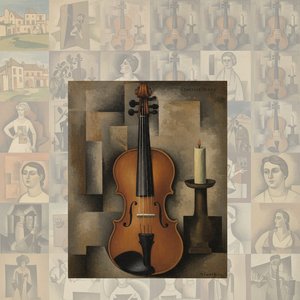
1913. Acrylic On Canvas, 62.0 x 46.0 cm.

§ 1Catalogue data
 Acrylic On Canvas
- WallArt
- Cubist Analytical
 1913
1913- Modern
 62.0 x 46.0 cm
Данное произведение защищено авторским правом
Произведение искусства, представленное на этой странице, защищено законом об авторском праве, что исключает возможность законного создания или продажи его точной репродукции. Данная защита обеспечивается международными соглашениями, такими как Бернская конвенция и национальным законодательством, включая положения, изложенные в Закон США об авторском праве — Раздел 17.
В качестве достойной и законной альтернативы мы предлагаем авторские картины ручной работы, вдохновленные оригиналом. Наши опытные профессиональные художники тщательно изучают стиль, настроение и художественную суть оригинала, чтобы создать новое, уникальное произведение, которое вызывает те же чувства, оставаясь при этом самостоятельным оригинальным творением.
Этот метод полностью соответствует нормам авторского права, так как он не предполагает копирования или дублирования защищенного произведения. Напротив, это творческая реинтерпретация — создание новой картины, которая вдохновлена оригиналом, но не является его точной копией.
 Подробнее
§ 2Abstract
Описание предмета
Georges Braque’s 1913 ‘Aria de Bach’ presents a striking black and white drawing of a guitar amidst musical instruments, embodying the artist's early Cubist explorations. Discover this unique artwork and bring its timeless beauty into your space.
Биография художника
Жорж Брэк – пионер кубизма и мастер фавианства! Его новаторские картины, такие как «Дома в Л’Эстаке», поражают смелостью форм и цветом. Откройте мир искусства 20 века!
§ 3Commentary
Georges Braque's "Aria de Bach" – A Fragment of Musical Reverie
This evocative black and white drawing, titled “Aria de Bach,” offers a poignant glimpse into the artistic explorations of Georges Braque during 1913. Measuring 62 x 46 cm, this seemingly simple composition—a guitar encircled by instruments of musical mastery—holds within it the complex tensions and groundbreaking innovations that defined Braque’s pivotal role in the birth of Cubism. The image isn't merely a depiction of musical instruments; it’s a carefully constructed fragment, an attempt to capture not just their appearance but also the *essence* of music itself – its structure, its emotion, its very spirit.
- Subject Matter: The central focus is a guitar, immediately associating the artwork with musical expression.
- Surrounding Instruments: A violin and cello are strategically placed, reinforcing the theme of harmony and musical arrangement.
- Added Elements: Scattered books introduce an intellectual dimension, suggesting contemplation and the pursuit of knowledge – key aspects of Braque’s artistic process.
The Birth of Cubism and Braque's Pioneering Role
Created in 1913, “Aria de Bach” sits squarely within the burgeoning movement of Cubism, a style pioneered by Braque and Pablo Picasso. At this time, traditional representational art was undergoing a radical transformation. Artists like Braque were rejecting single viewpoints and instead sought to depict objects from multiple perspectives simultaneously. This is evident in the fragmented forms of the instruments, presented as if seen through various angles at once – a technique central to Cubism’s challenge to conventional perception. The drawing's stark black and white palette further emphasizes this fractured reality, stripping away any illusion of depth or traditional perspective.
Symbolic Resonance: Music and Deconstruction
The choice of musical instruments is profoundly symbolic. Braque was deeply interested in the underlying structures of music, believing that its formal elements – rhythm, harmony, and structure – could be translated into visual form. The guitar, a cornerstone of Western music, represents this connection directly. However, the deconstructed presentation of the instrument—its fragmented outlines and multiple viewpoints—reflects Braque’s core Cubist strategy: to dismantle traditional forms and rebuild them according to his own conceptual understanding. This isn't simply a drawing of instruments; it’s an *interpretation* of music through the lens of Cubism.
Historical Context & Artistic Legacy
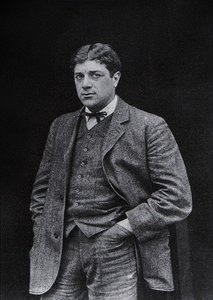
Born in Argenteuil, France, in 1882, Georges Braque’s early life was shaped by his family's profession as house painters and decorators. This experience instilled a deep understanding of form, color, and material – skills that would later inform his revolutionary approach to painting. “Aria de Bach” exemplifies this fusion of technical skill with artistic vision. It represents a crucial moment in Braque’s development, solidifying his position as one of the most important figures in early 20th-century art. This drawing is not just a beautiful object; it's a tangible link to a pivotal period in art history – a testament to Braque’s daring experimentation and enduring legacy.
Вопросы и ответы
Как стиль произведения «Aria de Bach» соотносится с эпохой его создателя?
В работе «Aria de Bach», Жорж Брак направление Cubist Analytical встречается с эпохой — Модернизм.
Какой размер репродукции рекомендуется для «Aria de Bach», Жорж Брак?
Для работы «Aria de Bach», Жорж Брак рекомендуется репродукция размером Medium. Размер можно изменить, сохраняя пропорции.
Насколько сильно цвета в произведении «Aria de Bach» кажутся отражающими свет?
Цвета произведения «Aria de Bach» обладают Bright Balance яркостью.


 Переключиться на печать


 Для произведений искусства или репродукций, размер которых превышает 105 см (приблизительно 41 дюйм) по любой из сторон, рама будет доставлена в разобранном виде (в виде комплекта). Этот метод обеспечивает безопасную доставку и предотвращает повреждения при транспортировке.