

Acrylic On Canvas.

§ 1Данные каталога


Данное произведение защищено авторским правом
Произведение искусства, представленное на этой странице, защищено законом об авторском праве, что исключает возможность законного создания или продажи его точной репродукции. Данная защита обеспечивается международными соглашениями, такими как Бернская конвенция и национальным законодательством, включая положения, изложенные в Закон США об авторском праве — Раздел 17.
В качестве достойной и законной альтернативы мы предлагаем авторские картины ручной работы, вдохновленные оригиналом. Наши опытные профессиональные художники тщательно изучают стиль, настроение и художественную суть оригинала, чтобы создать новое, уникальное произведение, которое вызывает те же чувства, оставаясь при этом самостоятельным оригинальным творением.
Этот метод полностью соответствует нормам авторского права, так как он не предполагает копирования или дублирования защищенного произведения. Напротив, это творческая реинтерпретация — создание новой картины, которая вдохновлена оригиналом, но не является его точной копией.
 Узнать больше
§ 2Абстракция
Описание предмета коллекционирования
Explore Georges Braque’s ‘untitled (1705)’ – a striking Cubist sketch of a cello & Bach aria. Geometric abstraction, raw lines, and minimalist design. A unique artwork for collectors.
Биография художника
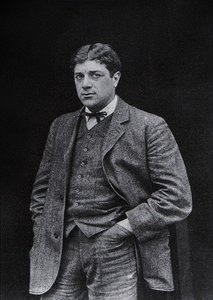
Жорж Брэк – пионер кубизма и мастер фавианства! Его новаторские картины, такие как «Дома в Л’Эстаке», поражают смелостью форм и цветом. Откройте мир искусства 20 века!
§ 3Комментарий
A Glimpse into Genesis: Deconstructing Form with Braque’s Untitled Cello (c. 1705)
Georges Braque's untitled sketch of around 1705 isn’t merely a study; it is a pivotal moment captured on paper, a visual articulation of the seismic shift occurring within the artist’s mind and, consequently, in the trajectory of modern art. It exists as a powerful precursor to Cubism, a delicate balance between representation and abstraction where the familiar forms of a cello and sheet music are dissected and re-presented through a lens of geometric inquiry. The work doesn't offer the comforting illusion of reality; instead, it presents us with fragments, planes, and lines that demand intellectual engagement rather than passive observation.
The Language of Lines and Planes
The composition is strikingly austere. A cello, dominating the upper left quadrant, isn’t rendered as a sensuous, organic form but as an assembly of angular shapes defined by rich red-brown tones. The strings are suggested not through texture or shading, but with precise, parallel lines—a deliberate emphasis on linearity over tactile sensation. Below it, a pale cream rectangle bearing the inscription ‘Aria de Bach’ overlaps with the cello's structure, creating a dynamic interplay of positive and negative space that disrupts traditional depth perception. This overlapping isn’t accidental; it is a key element in Braque’s dismantling of conventional pictorial space. The neutral grey background serves not as an environment but as an isolating force, intensifying the visual impact of these fragmented forms. Executed with visible pencil strokes, the sketch possesses a raw, unfinished quality that underscores its exploratory nature. This isn't a preparatory drawing *for* something else; it *is* the exploration itself—a rapid unfolding of thought manifested in line and plane.
Braque’s Intellectual Journey & The Dawn of Cubism
Born into a family of painters, Braque initially followed a traditional path before seeking a more intellectually rigorous approach to art. His early work flirted with Fauvism's bold colors, but he quickly moved beyond its purely emotional expression, drawn instead towards the structural foundations of painting. This untitled cello sketch falls squarely within this transitional period, preceding his full immersion into Cubism alongside Pablo Picasso. It demonstrates a growing fascination with reducing objects to their essential geometric components—an idea that would become central to the Cubist revolution. The choice of a cello and Bach’s music is significant; both represent order, structure, and intellectual discipline. By deconstructing these symbols, Braque seems to be questioning the very nature of harmony and representation itself. He isn't attempting to capture the joy of music or the beauty of an instrument but rather to analyze their underlying forms and challenge our perceptions.
A Statement for Modern Spaces
For collectors and designers, this piece—or a meticulously crafted reproduction—offers a sophisticated statement. Its monochromatic palette and geometric abstraction lend themselves seamlessly to modern and minimalist interiors. Beyond its aesthetic appeal, the artwork’s historical significance and intellectual depth make it a compelling conversation starter, appealing to those who appreciate art history and the evolution of abstract thought. It is a work that rewards close observation and contemplation—a testament to Braque's enduring legacy as a pioneer who dared to dismantle convention and forge a new visual language.
Вопросы и ответы
Насколько насыщенны и выразительны цвета в работе «untitled (1705)», Жорж Брак?
В работе «untitled (1705)», Жорж Брак запечатлена Subtle Color насыщенность и Monochromatic интенсивность цвета.
Является ли «untitled (1705)», Жорж Брак картиной, рисунком или принтом?
«untitled (1705)», Жорж Брак относится к категории WallArt. Данная категория определяет тип оригинального произведения искусства.
Насколько насыщенны цвета в работе «untitled (1705)», Жорж Брак?
Палитра произведения «untitled (1705)» отличается Subtle Color насыщенностью.


 Перейти к печатным копиям


 Для произведений искусства или репродукций, размер которых превышает 105 см (приблизительно 41 дюйм) по любой из сторон, рама будет доставлена в разобранном виде (в виде комплекта). Этот метод обеспечивает безопасную доставку и предотвращает повреждения при транспортировке.


