Гарантия возврата средств · 100 дней Бесплатная доставка по всему миру
449 564произведения искусства 30 613художники 4 660музеи 32языки
Catalogue entry

Diogenes

1891. Oil On Canvas, 178.0 x 208.0 cm.

Fig. 1. Корнит Ловис, Diogenes, 1891. Shown as the reproduction you are specifying: , .

§ 1Catalogue data

Размеры
178.0 x 208.0 cm

§ 2Abstract

Описание предмета

Experience Lovis Corinth’s "Diogenes" – a monumental 1891 oil painting depicting a vibrant group of figures. Explore Expressionism & German art history. Hand-painted reproduction available.

Биография художника

Ловис Корнит – немецкий художник, соединивший импрессионизм и экспрессионизм. Известен портретами, пейзажами и яркими, эмоциональными картинами. Исследуйте его творчество!

§ 3Commentary

A Symphony of Flesh and Light: Rediscovering Lovis Corinth’s Diogenes

In the grand tapestry of late 19th-century European art, few works capture the raw, pulsating vitality of human existence quite like Lovis Corinth’s "Diogenes." Painted in 1891, this monumental oil on canvas serves as a breathtaking bridge between the soft, flickering light of Impressionism and the visceral, emotive power of the burgeoning Expressionist movement. At first glance, the viewer is swept into a crowded, sun-drenched outdoor assembly where a group of figures—naked, unashamed, and profoundly human—interact in a scene that feels both ancient and startlingly modern. The sheer scale of the work, measuring an impressive 178 x 208 cm, commands the room, demanding an emotional response from anyone standing before its textured surface.

The composition is a masterclass in controlled chaos. Corinth orchestrates a gathering of at least twelve figures, men and women alike, whose bodies create a rhythmic landscape of skin tones and shadows. Some figures hold baskets, suggesting a communal ritual or perhaps a moment of respite during labor, while others are caught in the quiet intimacy of conversation. The presence of a solitary chair near the center acts as an anchor for the eye, grounding the swirling movement of the crowd. Through his masterful use of impasto and visible, energetic brushstrokes, Corinth breathes life into the canvas; the paint does not merely represent flesh, it seems to vibrate with the warmth of sunlight and the heat of human presence.

The Philosophical Echo: Symbolism and Historical Resonance

To understand "Diogenes," one must look beyond the surface of the painted bodies to the philosophical weight suggested by its title. Named after the famous Cynic philosopher who lived a life of extreme simplicity and rejected societal conventions, the painting evokes a sense of primal truth. The nudity of the subjects is not merely an exercise in anatomical study but a symbolic return to nature—a stripping away of the artifice of civilization to reveal the essential, unadorned human condition. This theme of radical authenticity was a cornerstone of the era's shifting artistic consciousness, as painters began to move away from the polished perfection of Academicism toward a more honest, often gritty, depiction of reality.

Historically, this work emerges from a period of profound transition in Germany and across Europe. As Corinth navigated his path through the academies of Munich and Paris, he absorbed the light-centric techniques of the French masters while infusing them with a uniquely Germanic intensity. "Diogenes" stands as a testament to this synthesis, capturing a moment where the boundaries of classical subject matter were being pushed by a new, more visceral way of seeing. For the collector or the enthusiast, the painting offers more than just aesthetic beauty; it offers a window into a pivotal moment in art history when the soul of modernism was being forged in paint.

An Essential Masterpiece for the Discerning Collector

For interior designers and connoisseurs of fine art, a high-quality reproduction of "Diogenes" offers an unparalleled opportunity to introduce a sense of drama and historical depth into a space. The painting’s large-scale presence and rich, earthy palette make it a transformative centerpiece for a sophisticated gallery wall or a grand salon. Its ability to evoke both tranquility and intense energy allows it to complement diverse decor styles, from classical European estates to contemporary minimalist lofts that crave a touch of organic warmth.

Investing in a hand-painted reproduction of this caliber means bringing a piece of the Berlin Secession's legacy into the home. The meticulous attention to the texture of the oil paint and the nuanced play of light across the figures ensures that the emotional impact of Corinth’s original vision remains undiminished. "Diogenes" is not merely a decoration; it is an invitation to contemplate the enduring beauty of the human spirit, making it a timeless acquisition for those who seek art that speaks, moves, and inspires.

Вопросы и ответы

Как мне найти произведения, похожие на «Diogenes», Корнит Ловис?

Работы, похожие на «Diogenes», представлены на странице Похожие работы произведения.

К какому стилю относится «Diogenes»?

«Diogenes», Корнит Ловис относится к направлению Expressionism. Это направление определяет стилистический контекст произведения.

Кто создал(а) «Diogenes» и в каком году?

Корнит Ловис создал(а) «Diogenes» в 1891 году.
§ 4The artist

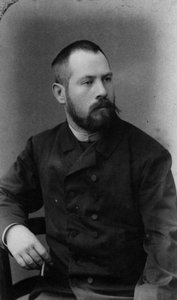
Корнит Ловис

Корнит Ловис

1858 - 1925, Нидерланды

Quick facts about Корнит Ловис

  • Artistic Movement Or Style: Импрессионизм и экспрессионизм
  • Artists Or Movements Influenced By This Artist: ['Экспрессионизм']
  • Artists Who Influenced This Artist:
    • Корбет
    • Рембрандт
  • Date Of Birth: 21 июля 1858
  • Date Of Death: 17 июля 1925
  • Full Name: Франц Генрих Людвиг Корнт
  • Nationality: Немецкий
  • Notable Artworks:
    • Убой на скотобоенке
    • Автопортрет
    • Женщина в шляпе
  • Place Of Birth: Тяуваде, Нидерланды

Биография художника

A Life Forged in Paint: The World of Lovis Corinth

Lovis Corinth, born Franz Heinrich Louis on July 21, 1858, in the Prussian province of East Prussia, was a figure who embodied the dramatic shift occurring between the 19th and early 20th centuries within the art world. His life wasn’t one defined by immediate acclaim but rather a gradual evolution—a testament to relentless study, diverse influences, and ultimately, profound personal tragedy. Corinth's origins were deeply rooted in the rural landscapes of his birthplace, Tapiau, where his father worked as a tanner. This early exposure to the physicality of labor and the raw beauty of nature subtly permeated his later work, even amidst more sophisticated stylistic explorations. Initially, he pursued studies at the Academy of Königsberg in 1876, but quickly realized that traditional academic training alone wouldn’t satisfy his artistic ambitions—a yearning for something beyond mere imitation. A period of travel followed, taking him to Munich, Antwerp, and finally Paris – each city acting as a crucial stepping stone in his artistic development. In Munich, he absorbed the meticulous realism championed by Ludwig von Löfftz, honing his observational skills and mastering technique with remarkable precision. Antwerp introduced him to the dramatic intensity of Baroque art through the works of Rubens, while Paris exposed him to the burgeoning Impressionist movement – though initially, his response was one of cautious observation rather than immediate embrace.

From Naturalism to a Synthesis of Styles

Corinth’s artistic development wasn't marked by sudden revolutions but by a gradual assimilation and synthesis of diverse influences. His early work leaned heavily towards naturalism, reflecting the prevailing academic standards of the time. Paintings like “In the Slaughterhouse” (1878), with its unflinching depiction of animal carcasses, demonstrate this commitment to realistic representation—a willingness to confront uncomfortable truths. Yet, even here, a nascent emotional intensity begins to surface; the subject matter itself – gruesome and visceral – hints at a deeper engagement beyond mere observation. This wasn’t simply about depicting reality; it was about conveying a feeling, an experience. His time spent studying the works of Courbet and the Barbizon school, through the interpretations offered by Munich artists like Wilhelm Leibl and Wilhelm Trübner, further shaped his approach. These influences instilled in him a desire to capture not just appearances but also the essence of the subject—the soul if you will. However, it was his exposure to Impressionism – initially viewed with skepticism – that ultimately proved transformative. He didn’t simply adopt the broken color and fleeting light effects of Monet or Renoir; instead, he integrated these elements into his own unique vision, creating a style that blended impressionistic vibrancy with a distinctly German sensibility—a synthesis that would define his artistic legacy.

The Influence of Rubens and Parisian Modernity

Corinth’s fascination with the Baroque master Rubens was particularly significant. Antwerp became a crucial destination during his travels, where he immersed himself in the dramatic compositions, dynamic figures, and rich color palettes of Rubens' paintings. This influence is evident in Corinth’s later work, particularly in his portraits and landscapes—a sense of movement, energy, and theatricality that echoes Rubens’ style. Simultaneously, Paris offered a different kind of artistic stimulation. He studied under William-Adolphe Bouguereau and Tony Robert-Fleury at the Académie Julian, absorbing the latest trends in Parisian art. However, it was the Impressionists who truly captivated him—not just their techniques but also their spirit of experimentation and their willingness to challenge traditional conventions. Corinth’s initial response wasn't one of immediate acceptance; he approached Impressionism with a critical eye, carefully observing its strengths and weaknesses before incorporating its principles into his own work. This cautious approach allowed him to develop a unique style that was both rooted in the past and oriented towards the future.

A Berlin Secession Pioneer

In 1888, Corinth settled permanently in Berlin, a city rapidly becoming a center for avant-garde art. He joined the influential Berlin Secession group in 1902, initially as a member but later assuming the role of president after Max Liebermann’s departure in 1915. The Secession was a bold move—a rejection of the conservative artistic establishment and an embrace of modernism. Corinth's leadership helped to shape the group’s aesthetic direction, promoting experimentation and encouraging artists to push the boundaries of traditional art forms. His involvement with the Berlin Secession reflected his own evolving artistic philosophy—a commitment to innovation, a willingness to challenge conventions, and a desire to create art that was both aesthetically pleasing and intellectually stimulating. During this period, he also established an art school for women, demonstrating his belief in the importance of education and opportunity for all artists.

Tragedy, Resilience, and Enduring Legacy

A pivotal moment in Corinth’s life—and arguably in his artistic development—was a stroke he suffered in December 1911. The paralysis it caused on his left side threatened to end his career altogether. However, with unwavering determination and the support of his wife, Charlotte Berend-Corinth, he relearned to paint, adapting to his physical limitations and developing an even more expressive style. This period marked a turning point in his work—as his paintings became increasingly bold, gestural, and emotionally charged. The experience of confronting mortality and physical vulnerability infused his art with a new sense of urgency and authenticity. He embraced a looser brushstroke and intensified color palette, anticipating many of the stylistic innovations that would define Expressionism. Corinth’s legacy extends beyond his remarkable body of work; he was also a respected teacher and writer on art, publishing essays such as “On Learning to Paint” in 1908, offering insights into his artistic philosophy and technical approach. He served as president of the Berlin Secession until his death in 1925, championing progressive artistic ideas and fostering a vibrant creative community. Lovis Corinth’s art remains a testament to the power of resilience, the beauty of observation, and the enduring spirit of an artist who bridged two eras and left an indelible mark on the history of German art.

§ 5Comparanda

§ 6Questions

Краткая справка

  • Medium: Oil on canvas
  • Dimensions: 178 x 208 cm
  • Artistic style: Impressionism & Expressionism
  • Year: 1891

§ 7Cite this entry

AllPaintingsStore.com, “Корнит Ловис, Diogenes (1891)”, https://allpaintingsstore.com/ru/art/lovis-corinth-diogenes-8LJA6P-en/ (accessed 5 Октябрь 2026).

§ 8The reproduction

Масляная репродукция ручной работы

Картина маслом на холсте в выбранном вами размере и раме, написанная на заказ нашими художниками. ( Переключиться на печать Перейти к цифровым изображениям)

It is specified on the order sheet in the margin; the present state of that sheet reads as follows.

Diogenes

Материал репродукции

Размер репродукции

-

Ведущий мастер элитного уровня

Более высокая детализация, изысканность и дополнительное время на создание работы

-

Рама для репродукции

-

-

Для произведений искусства или репродукций, размер которых превышает 105 см (приблизительно 41 дюйм) по любой из сторон, рама будет доставлена в разобранном виде (в виде комплекта). Этот метод обеспечивает безопасную доставку и предотвращает повреждения при транспортировке.

Требуется профессиональная сборка — это не продукт для самостоятельной сборки (DIY).
Комплект должен быть собран, а холст натянут опытным мастером по багетным рамам с использованием клеевого ПВА (не входит в комплект), струбцин для натяжки холста и зажимов, чтобы удерживать подрамник ровным до полного высыхания клея. Неправильная сборка или неравномерное натяжение холста могут привести к необратимому повреждению произведения искусства и не являются гарантийным случаем.

  • В комплект входят все бруски из массива дерева, точно вырезанные по размеру.

  • Собирается с помощью предоставляемых винтов, а также столярного клея для угловых соединений, который не входит в комплект и должен быть приобретен вашим мастером.

  • Требуются профессиональные инструменты, не входящие в комплект: щипцы для натяжки холста (натяжитель) и зажимы, чтобы удерживать рейки ровно во время высыхания клея.

Важно:
Для соединения углов требуется клей для дерева, перекладины необходимо зафиксировать струбцинами до полного высыхания клея, а для натяжки холста на собранную раму требуются щипцы для натяжки холста. Ни один из этих инструментов не входит в комплект. Пожалуйста, убедитесь в наличии опытного мастера по багетным работам перед заказом рамы такого размера.

Экспликация

-

-

Защитный лак

Глянцевый лак (насыщает цвета, защищает от воздействия света и влаги)

-

Настроить мою картину

Примеры возможных изменений: замена лица на фото клиента; добавление домашнего питомца (например, замена кошки на собаку); добавление скрытого сообщения на фоне; изменение пейзажа или элементов фона.

-

Срочно

Доставка по всему миру () за 3–4 недели вместо стандартных 5 недель. (2 Ноябрь). Без компромиссов в качестве.

-

Экспресс-доставка

Доставка по всему миру () в течение 5 недель. (9 Ноябрь).

Включено

Итоговая стоимость

$ 258

Included with every order

  • Бесплатная экспресс-доставка по всему миру
  • Высококачественный льняной холст
  • Полное страхование при транспортировке
  • Гарантия возврата таможенных пошлин
  • Гарантия точного цветового соответствия
  • 100-дневный период возврата (только при обнаружении дефектов)
  • Гарантия возврата 100% средств
  • Скидка при заказе нескольких работ
Order sheet