Предпросмотр
 Поделиться
 Поделиться
 Детали произведения

 Скачать
 Похожие работы
 Рентгенография
 Слайд-шоу
A la manera de Delvaux


 Читать далее
Жикле / Арт-принт
Печать (жикле) или холст музейного качества с быстрыми сроками изготовления и широким выбором вариантов отделки. ( Купить картину ручной работы Купить изображение)




P118B $10

P118H $10

P118W $10

P438Z $10

P508JH $12

P508YH $12

P805H $10

P805Z $10

P919BZ $10

P919G $10

P919XJ $10

P959ZH $10

P968JZ $12

W106C $8

W218G $10

W218JH $8

W218Y $10

W307PJ $10

W316G $10

W316PJ $8

W316Y $10

W398PJ $8

W4111J $10

W500HY $15

W500JH $15

W692G $12

W849H $8

W940BG $15

W953PJ $8




Выберите один из наших стандартных размеров, соответствующих оригинальным пропорциям произведения искусства.

Вы можете указать свои собственные размеры, чтобы репродукция идеально подошла под конкретную раму или пространство. Если выбранный вами размер не будет соответствовать пропорциям оригинала, мы либо обрежем произведение, либо дополним изображение зеркальным отражением краев или однотонной заливкой. Перед началом производства вам будет отправлен цифровой макет для утверждения.
Пожалуйста, обратите внимание, что предварительный просмотр на экране не отображает фактическую обрезку или расширение изображения. Только макет точно покажет финальную композицию.
Несмотря на возможность заказа индивидуальных размеров, мы рекомендуем выбирать размер из предопределенного списка, чтобы сохранить оригинальные пропорции.
Доставка по всему миру () за 2 недели вместо стандартных 4/5 недель. (21 Август)

Бесплатная экспресс-доставка по всему миру

Высококачественный льняной холст

Полное страхование доставки

Гарантия возмещения таможенных пошлин

Гарантия точного соответствия цветов

Политика возврата в течение 60 дней (только при наличии дефектов)

Гарантия возврата 100% средств

Предложение оптовых скидок
 Вариант со стеклом доступен только для размеров менее 110 см

A la manera de Delvaux
Жикле / Арт-принт
Размер репродукции
-


Итоговая стоимость
$ 64
Описание предмета коллекционирования
A Whisper of Delvaux: Duchamp’s Enigmatic Reverie
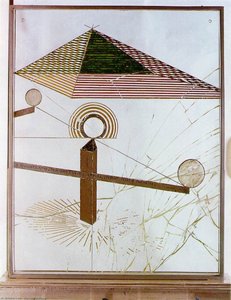
Marcel Duchamp's *A la manera de Delvaux* (In the Manner of Delvaux) is not a painting in the traditional sense, but rather a meticulously constructed collage that operates as a fascinating echo of Surrealist painter Paul Delvaux. Created in 1942, this work exists as a subtle yet potent exploration of desire, memory, and the unsettling beauty found within the subconscious. It’s a piece born from exile and artistic questioning, reflecting Duchamp's evolving stance towards representation and the very definition of art itself.
The image centers around a poignant scene: a baby, seemingly nursing from a bottle held by a maternal figure. This intimate act is framed within a larger composition populated by shadowy figures, hinting at a narrative that remains tantalizingly out of reach. The sepia tone imbues the work with a nostalgic quality, evoking faded photographs and half-remembered dreams. Duchamp doesn’t attempt to replicate Delvaux's style directly; instead, he *interprets* it, distilling its essence into a fragmented visual poem. He achieves this through the skillful juxtaposition of found imagery – likely cut from magazines or other printed sources – creating a dreamlike atmosphere that is both alluring and disquieting.
The Shadow of Surrealism and Duchamp’s Conceptual Shift
To understand *A la manera de Delvaux*, one must consider the artistic climate of the time. Duchamp had already shaken the foundations of the art world with his “readymades” – ordinary manufactured objects elevated to the status of art through sheer force of conceptual intent, most famously exemplified by *Fountain* (1917). By 1942, he was living in New York, having fled Europe during World War II. He found himself amidst a burgeoning Surrealist movement, and while not fully embracing its tenets, he engaged with its ideas about the unconscious mind and the power of irrationality. Delvaux’s paintings, with their eerie depictions of classical architecture populated by nude figures and trains, provided a particularly resonant visual language for Duchamp to explore.
However, *A la manera de Delvaux* isn't merely an homage; it’s a subtle critique. Duchamp wasn’t interested in simply mimicking another artist’s style. He was probing the nature of representation itself. By creating a work “in the manner of” Delvaux, he highlights the act of imitation and questions originality. The collage format further emphasizes this deconstruction, breaking down images into their constituent parts and reassembling them to create something new – or rather, something that *comments* on what already exists. It’s a precursor to his later, more ambitious conceptual works, like *Étant donnés*, where the viewer is confronted with a hidden world revealed through a peephole.
Emotional Resonance and Interior Spaces
The emotional impact of *A la manera de Delvaux* is subtle but profound. The image evokes feelings of longing, vulnerability, and perhaps even a touch of melancholy. The nursing baby, a universal symbol of innocence and dependence, is rendered with a delicate ambiguity. Is it a scene of comfort or one of quiet desperation? The shadowy figures surrounding the central subject add to this sense of unease, suggesting hidden anxieties and unspoken desires.
For collectors and interior designers, a reproduction of *A la manera de Delvaux* offers a unique opportunity to introduce a touch of intellectual sophistication into any space. Its muted tones and enigmatic imagery lend themselves well to a variety of settings, from modern lofts to classic libraries. The work’s conceptual depth invites contemplation, making it a conversation starter and a testament to the power of art to challenge our perceptions. It is not simply a decorative piece; it's an invitation to delve into the complexities of the human psyche and the ever-evolving nature of artistic expression.
Похожие произведения


![Genre Allegory [george Washington] — Марсель Дюшан, Surrealism](/media/artworks/images/thumbnails/d5/e4/d5e4be0dfecf484fa25788135248eb9c.jpg)


Биография художника
Marcel Duchamp: A Revolutionary Spirit
Marcel Duchamp, born Henri-Robert-Marcel Duchamp in 1887 in Blainville-Crevon, Normandy, was more than an artist; he was a philosophical provocateur who fundamentally altered the course of modern art. His early life, though seemingly conventional – nurtured within a family that appreciated artistic expression with both brothers pursuing successful careers as artists – hinted at the iconoclasm to come. Duchamp initially pursued formal training, mastering traditional techniques and experimenting with post-impressionist styles. However, this academic foundation served not as an end in itself, but as a springboard for questioning the very nature of art, its purpose, and its definition. He wasn’t content merely to depict the world; he sought to challenge how we perceive it, and what constitutes artistic value. This restless intellectual curiosity would become the defining characteristic of his prolific career.Early Artistic Explorations: Cubism and Impressionism
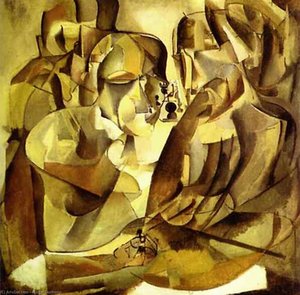
Duchamp's initial foray into art began with a fascination for Cubism, spearheaded by Pablo Picasso and Georges Braque. Influenced by Cézanne’s exploration of geometric forms and spatial relationships, Duchamp produced works like *Portrait of Chess Players* (1911), demonstrating an early grasp of fragmented perspectives and multiple viewpoints – a decisive departure from the single-point perspective dominant in traditional painting. Yet, he swiftly recognized that simply rearranging visual elements wasn't sufficient to address the deeper philosophical concerns animating him. He diligently honed his skills in watercolor and gouache, mastering techniques that allowed for nuanced tonal gradations and subtle textural variations. These formative experiences instilled a disciplined approach to artistic practice, informing his later conceptual explorations.The Dadaist Rebellion: Challenging Artistic Conventions
The horrors of World War I profoundly impacted Duchamp’s worldview, fueling a vehement rejection of the prevailing cultural values and intellectual complacency of the time. This disillusionment propelled him into the embrace of Dadaism – a movement born from nihilistic protest against rationality, logic, and bourgeois morality. Dada artists deliberately undermined established artistic conventions, embracing absurdity and chance as expressive tools. Duchamp’s Dadaist output included collages and assemblages that juxtaposed disparate materials in jarring combinations, disrupting conventional notions of visual harmony. He famously declared “Dada is not a painting,” encapsulating the movement's rejection of aesthetic judgment and its insistence on questioning artistic dogma. The Dadaists sought to dismantle the hierarchy between art and everyday life, arguing that true creativity resided in challenging accepted norms.The Birth of Conceptual Art: ‘Ready-Made’ Sculpture
Duchamp’s most enduring contribution to art history arrived with his groundbreaking concept of “ready-made” sculpture – a radical departure from traditional sculptural practice. Rejecting the notion that artistic skill was paramount, Duchamp questioned whether an object could be considered art simply by virtue of its selection and presentation as such. In 1917, he submitted *Fountain*, a porcelain urinal signed "R. Mutt," to Marcel Broodthaers’s exhibition in Cologne – a deliberate provocation designed to expose the arbitrariness of aesthetic judgment and dismantle the distinction between artist and craftsman. This audacious act ignited considerable controversy, sparking debates about authorship, originality, and the very definition of art itself. *Fountain* became emblematic of Conceptual Art, establishing Duchamp as its progenitor and cementing his legacy as one of the most influential figures in 20th-century art.Legacy and Enduring Influence
Marcel Duchamp’s impact on subsequent generations of artists is undeniable. He fundamentally reshaped our understanding of artistic expression, prioritizing conceptual ideas over visual aesthetics—a paradigm shift that continues to resonate within contemporary art practice. His unwavering commitment to questioning assumptions and challenging conventions serves as an inspiration for artists striving to push boundaries and redefine the role of art in society. Notable works include *L.H.O.O.Q.* (1919), a satirical reworking of Leonardo da Vinci’s Mona Lisa, and *The Large Glass* (1915–1923), an ambitious multi-faceted installation that explores themes of illusion, perception, and the subconscious—a testament to his intellectual rigor and enduring influence. Duchamp's legacy extends beyond specific artworks; it resides in his unwavering belief that art should provoke thought and inspire dialogue—a conviction that continues to shape artistic discourse today.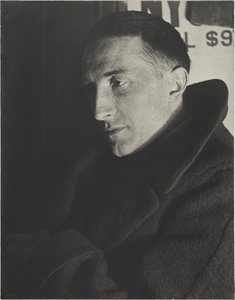
Марсель Дюшан
1887 - 1968 , Франция
Основные сведения
- Artistic Movement Or Style:
- Кубизм
- Дадаизм
- Концептуальное искусство
- Artists Or Movements Influenced By This Artist: ['Минимализм']
- Date Of Birth: 28 июля 1887 г.
- Date Of Death: 2 октября 1968 г.
- Full Name: Marcel Duchamp
- Nationality: Французский
- Notable Artworks:
- Фонтан
- Л.Х.О.О.К.
- Большое стекло
- Place Of Birth: Блейнвиль-сур-Мер, Франция
Похожие статьи

Marcel Duchamp: Challenging Conventions & Redefining Art in the 20th Century
Explore the revolutionary art of Marcel Duchamp! Discover how his Dadaist readymades challenged artistic conventions & redefined modern art. A deep dive into 'Fountain', conceptual shifts, and his lasting impact.
Dada: A Revolution of Anti-Art & the Rejection of Reason in Early 20th Century Aesthetics
Explore the revolutionary Dada art movement! Discover its origins, key artists like Duchamp & Arp, and lasting impact on modern art. A deep dive into anti-art & challenging conventions.

The Enigmatic Realm of Paul Delvaux: Surrealism, Memory & the Poetics of Disquiet
Explore the haunting dreamscapes of Paul Delvaux, a master of Surrealism. Discover his iconic motifs, classical influences & enduring legacy with AllPaintingsStore.com.
Dadaism: A Rebellion Against Reason – Exploring the Origins, Characteristics, and Enduring Legacy of an Anti-Art Movement
Explore the revolutionary Dada art movement! Discover its origins in WWI, key artists like Duchamp & Höch, core principles, and lasting impact on modern and contemporary art. A comprehensive guide for enthusiasts.
Рене Магритт: Топ-25 шедевров сюрреализма для ценителей искусства и декора интерьера
Погрузитесь в мир сюрреализма с Рене Магриттом! 25 культовых картин, истории создания и визуальный анализ шедевров. Купите репродукции высокого качества для вашего интерьера на AllPaintingsStore.com – вдохновение и искусство онлайн.