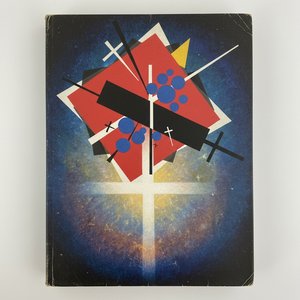
1916. Collage.

§ 1Данные каталога


§ 2Абстракция
Описание предмета коллекционирования
A dynamic collage of overlapping red, blue, and yellow rectangles and black lines that creates a rhythmic sense of movement on paper.
 Читать далее
Биография художника
Ольга Розанова (1886–1918) – русская авангардистка, смело сочетавшая Suprematism, Кубо-Футуризм и неопримитивизм в ярких абстрактных работах. Откройте для себя ее влиятельный стиль «цветной живописи» и наследие!
§ 3Комментарий
Identification of Non-objective Composition
The gaze meets Non-objective Composition, a work that exists as a collage on paper. Created by the artist Olga Rozanova, this piece emerges from the year 1916. It presents a world where the physical boundaries of the medium begin to shift, inviting a sense of wonder at how simple materials can suggest such complex, rhythmic movement.
In this specific arrangement, Olga Rozanova moves away from the recognizable world. The paper holds layers of shapes that seem to float and intersect, creating a tension between the flat surface and a perceived depth. It is a moment of pure abstraction, where the artist's hand is felt through the careful placement of geometric forms and the interplay of color.
Visual Elements and Compositional Structure
A large yellow rectangle anchors the center of the space, acting as a steady focal point amidst a shifting field of geometry. Around this central weight, smaller rectangles in red, blue, and purple drift through the composition. These shapes do not sit still; they suggest a rhythmic movement, as if caught in a moment of sudden, silent transit. The arrangement creates a complex structure, a pattern of intersecting energies that defines the very essence of Suprematist thought.
Diagonal lines in black and white cut through the arrangement, slicing across the colored forms to add a sense of dynamism. These sharp intersections disrupt the stillness, creating a tension between the solid blocks of color and the fleeting paths of the lines. The composition relies on simple, non-representational shapes, including arcs and rectangles, to build its internal logic. This interplay of elementary forms builds a sense of depth and perspective, blurring the line between a flat surface and a three-dimensional space.
Technique and Material Application
The work exists as a collage on paper, a choice that immediately disrupts the traditional expectations of a flat canvas. Through this method, the artist engages in a textural play between translucency and opacity, allowing light and layers to interact in unexpected ways. One moment, a shape appears solid and heavy; the next, it seems to drift with a ghostly, see-through quality. This tension creates a sense of depth that defies the physical limitations of the paper itself.
As the eye moves across the surface, the boundaries between a two-dimensional illusion and a three-dimensional surface begin to blur. The arrangement of elements is not dictated by a recognizable scene, but is instead organized by the visual weight and the specific relationship of color. Shapes seem to float or collide, held in place by an invisible equilibrium of hue and form. This structural logic relies entirely on how the colors pull against one another, creating a rhythmic movement that feels both spontaneous and carefully measured.
Artistic Context and Movement
The canvas breathes within the radical atmosphere of Suprematism, a movement that seeks to strip away the distractions of the material world. Here, the artist moves beyond the recognizable, trading the familiar shapes of life for a language of pure feeling. This work emerges from a period of intense experimentation in the early 20th century, where the boundaries of what a painting can represent are being pushed to their absolute limits. It exists at a threshold, acting as a precursor to the painterly abstractions that will define much of the coming century.
The composition pulses with a tension between sharp angles and bold colors. These geometric elements do not merely sit upon the surface; they interact to create a sense of rhythm and movement. By utilizing simple, non-representational shapes like arcs and rectangles, the work participates in a larger search for a "zero point" of painting. This pursuit of spiritual geometry aims to connect the viewer directly to an inner experience, bypassing rational thought through the sheer power of color and form.
Historical Significance and Influence
This work acts as a vital bridge, pointing toward the profound abstractions that would later define the era. By incorporating simple, non-representational shapes like arcs and rectangles, the piece offers a glimpse into the evolution of the Russian avant-garde. It helps shift the movement toward the aesthetic stance of Suprematism, moving away from the recognizable world and toward a new visual language. The way these elementary, overlapping forms interact suggests a departure from traditional representation, signaling a shift in how space and color might function on a surface.
The influence of these geometric arrangements reaches into the very core of early 20th-century abstraction. The incorporation of such simple shapes serves as an inspiration for the turn toward non-objective abstraction seen in 1915. This piece functions as a precursor to later painterly abstractions, marking a moment where the boundaries between two-dimensional illusion and a non-representational surface begin to blur. It captures a transition where the focus moves from the object itself to the pure relationship between color and form.
Вопросы и ответы
Насколько сильно цвета в произведении «Non-objective Composition» кажутся отражающими свет?
Яркость произведения «Non-objective Composition», Ольга Владимировна Розанова составляет Bright Balance. Яркость определяет, какой объем света отражают цвета.
Есть ли путеводитель по «Non-objective Composition», Ольга Владимировна Розанова?
Страница Справочный материал для работы «Non-objective Composition», Ольга Владимировна Розанова представляет собой печатный информационный лист из двух страниц: само произведение с таблицей идентификации, временную шкалу, позволяющую соотнести его с периодом жизни автора, другие работы художника, измеренную цветовую палитру и готовые к копированию цитаты в четырех стилях.
Где я могу найти статистику по поводу «Non-objective Composition», Ольга Владимировна Розанова?
Страница Статистика просмотров для работы «Non-objective Composition», Ольга Владимировна Розанова содержит публичную статистику посещений: ежемесячное количество просмотров данного произведения, сравнение с наиболее популярными работами автора, а также географию посетителей.


 Купить картину ручной работы


 Для произведений искусства или репродукций, размер которых превышает 105 см (приблизительно 41 дюйм) по любой из сторон, рама будет доставлена в разобранном виде (в виде комплекта). Этот метод обеспечивает безопасную доставку и предотвращает повреждения при транспортировке.