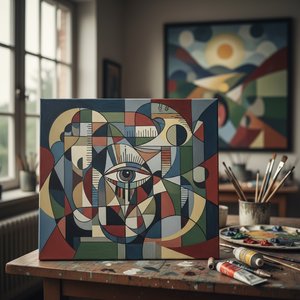
Oil On Canvas.

§ 1Данные каталога


§ 2Абстракция
Описание предмета коллекционирования
Discover Paul Cézanne’s iconic self-portrait (2058). This Post-Impressionist masterpiece showcases his unique geometric style, muted colors, and introspective mood – a pivotal work bridging art history.
 Читать далее
Биография художника
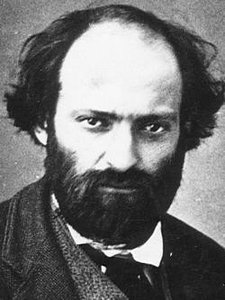
Поль Сезанн: основоположник постимпрессионизма, предвосхитивший кубизм! Откройте для себя его новаторские пейзажи, натюрморты и портреты, изменившие ход искусства.
§ 3Комментарий
A Quiet Intensity: Unveiling Paul Cézanne’s “Untitled (2058)”
Paul Cézanne's "Untitled (2058)" isn’t merely a portrait; it’s a distilled essence of the artist’s revolutionary approach to seeing and representing the world. Completed in 1908, this intimate study captures not just his likeness but also a profound sense of introspection – a quiet contemplation that speaks volumes about the man behind the brushstrokes. The painting immediately draws the eye with its muted palette: a symphony of earthy greens, deep browns, and subtle greys punctuated by delicate flesh tones. These aren’t vibrant hues meant to dazzle; instead, they create an atmosphere of subdued seriousness, mirroring the contemplative mood it evokes.
Cézanne's masterful technique is evident in every plane and line. He employs a deliberate fragmentation of form, anticipating the tenets of Cubism that would later revolutionize art. Notice how he breaks down his face – not with sharp angles, but with carefully placed planes of color, reminiscent of stacked blocks or geometric shapes. This isn’t an attempt at photographic realism; rather, it's a conscious decision to reveal the underlying structure of the subject, as if peeling back layers to expose the essential geometry beneath. The brushstrokes themselves are visible and textured, building up the image with thick impasto in certain areas, adding depth and physicality to the portrait.
Bridging Impressionism and Modernity
Cézanne’s work sits squarely within the Post-Impressionist movement, a pivotal moment in art history where artists began to move beyond the fleeting impressions of light and color championed by Impressionism. However, Cézanne wasn't simply reacting against Impressionism; he was actively building upon it, pushing its boundaries with a new focus on form and structure. He sought to capture not just what something *looked* like, but how it *felt* – the solidity, weight, and essential nature of objects. This is particularly evident in his still lifes, which became increasingly important throughout his career.
Born in Aix-en-Provence in 1839, Cézanne’s upbringing provided him with a unique advantage: financial security afforded by his family's banking business. This allowed him to dedicate himself entirely to his art without the pressures of commercial success that often hampered young artists. His early influences included the works of Ingres and Millet, but he quickly developed his own distinctive style, characterized by an intense study of nature and a relentless pursuit of formal perfection. His exploration of color and form was deeply influenced by Japanese prints, which he collected avidly and studied with great attention.
Symbolism and Emotional Resonance
While the painting’s surface appears deceptively simple, it's rich in symbolic meaning. The turned head, a characteristic feature of many of Cézanne’s self-portraits, suggests introspection and perhaps even a degree of melancholy. The lighting – soft and diffused with highlights on his forehead, nose, and chin – avoids dramatic contrasts, contributing to the overall sense of quiet seriousness. It's as if Cézanne is inviting us into his inner world, offering a glimpse of his thoughts and feelings.
The flattened perspective, a hallmark of Cézanne’s style, further emphasizes this feeling of intimacy. He deliberately avoids traditional techniques of linear perspective, instead relying on variations in color intensity and overlapping planes to create the illusion of depth. This creates a sense of immediacy, drawing us directly into the portrait and fostering a connection with the subject. “Untitled (2058)” is more than just a likeness; it’s a profound meditation on selfhood, observation, and the enduring power of art.
A Legacy in Reproduction
AllPaintingsStore offers meticulously crafted hand-painted reproductions of this iconic work by Paul Cézanne. Each reproduction captures the nuances of the original – the subtle textures, the muted colors, and the underlying geometric structure – with exceptional detail and fidelity. Whether you’re a seasoned art collector or simply seeking to add a touch of timeless elegance to your interior space, our reproductions provide an authentic and beautiful way to experience the genius of Cézanne's vision. Explore our collection today and bring this captivating portrait into your home.
Вопросы и ответы
Можно ли скачать изображение «untitled (2058)»?
Для произведения «untitled (2058)» доступна загрузка: на странице Скачать цифровое изображение вы можете скачивание цифрового изображения в высоком разрешении.
Какой рекомендуемый размер печати для «untitled (2058)», Поль Сезанн?
Для работы «untitled (2058)», Поль Сезанн рекомендуется репродукция размером Large. Размер можно изменить с сохранением пропорций.
Под какими еще именами известен Поль Сезанн?
Другие имена, зафиксированные для Поль Сезанн, автора произведения «untitled (2058)», включают Пауль Сезанн.


 Перейти к печатным копиям


 Для произведений искусства или репродукций, размер которых превышает 105 см (приблизительно 41 дюйм) по любой из сторон, рама будет доставлена в разобранном виде (в виде комплекта). Этот метод обеспечивает безопасную доставку и предотвращает повреждения при транспортировке.