

1949. Oil, 646.0 x 1070.0 cm. National Gallery of Modern Art.

§ 1Catalogue data

- 646.0 x 1070.0 cm


Данное произведение защищено авторским правом
Произведение искусства, представленное на этой странице, защищено законом об авторском праве, что исключает возможность законного создания или продажи его точной репродукции. Данная защита обеспечивается международными соглашениями, такими как Бернская конвенция и национальным законодательством, включая положения, изложенные в Закон США об авторском праве — Раздел 17.
В качестве достойной и законной альтернативы мы предлагаем авторские картины ручной работы, вдохновленные оригиналом. Наши опытные профессиональные художники тщательно изучают стиль, настроение и художественную суть оригинала, чтобы создать новое, уникальное произведение, которое вызывает те же чувства, оставаясь при этом самостоятельным оригинальным творением.
Этот метод полностью соответствует нормам авторского права, так как он не предполагает копирования или дублирования защищенного произведения. Напротив, это творческая реинтерпретация — создание новой картины, которая вдохновлена оригиналом, но не является его точной копией.
 Подробнее
§ 2Abstract
Описание предмета
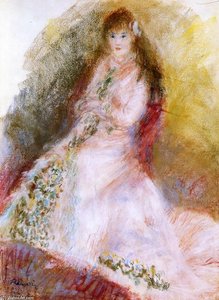
Experience the captivating inner conflict of Binodini, a striking portrait by Ramkinkar Baij (1949), whose textured oil work invites you to discover its depth.
Биография художника
Ramkinkar Baij (1906-1980) was a pioneering Indian sculptor & painter, considered the father of modern Indian sculpture. Known for contextual modernism and blending Western & Indian styles in works like 'Santal Family'. Explore his legacy at AllPaintingsStore
§ 3Commentary
The Enigma in White: Exploring Ramkinkar Baij's 'Binodini'
To stand before Binodini is not merely to observe a portrait; it is to step into a moment of profound, suspended contemplation. This masterful work by Ramkinkar Baij captures the essence of an inner life—a beautiful young woman from Manipur’s aristocratic lineage, caught in what seems to be a delicate confluence of thought and emotion. The painting transcends simple representation, offering instead a window into the complexities of the human spirit. Baij, whose genius was rooted in his ability to perceive the soul beneath the surface, has gifted us an image that resonates with both timeless elegance and modern psychological depth.
Technique and Tactility: A Masterclass in Medium
What immediately draws the eye is the remarkable texture achieved by Baij. Executed in oil upon gunny cloth—a material choice that speaks to his daring experimentation—the surface itself becomes a participant in the artwork’s narrative. He has not simply painted; he has built up layers of pigment, creating a palpable, almost sculptural quality to the paint. This thick application gives the slim figure an undeniable volume, making the portrait feel intensely present. The artist's handling is both tender and robust, allowing the viewer to sense the physical weight of the subject while simultaneously feeling the lightness of her dilemma.
Symbolism and the Gaze: Capturing Inner Conflict
The subject’s gaze is perhaps the most arresting element. Her eyes, wide and directed straight out of the canvas, meet the viewer's scrutiny with an unnerving directness. It is a look that seems to ask questions without uttering a single word. The flowing white dress enhances this sense of ethereal vulnerability, contrasting beautifully with the warm, yellowish embrace of the background. Noticeable details, such as the books placed near her—one in the lower left and another toward the upper right—suggest themes of knowledge, study, or perhaps conflicting narratives vying for her attention. These elements anchor the emotional ambiguity, suggesting that her internal conflict is intellectual as much as it is emotional.
Historical Resonance and Enduring Appeal
Painted in 1949, Binodini stands at a pivotal moment in Indian modern art. Ramkinkar Baij was not content with tradition; he was forging a new visual language for India. This portrait exemplifies his lifelong fascination with capturing the subject’s inner self rather than merely documenting her outward appearance. For collectors and designers alike, this piece offers more than mere decoration; it is an heirloom of artistic revolution. Reproducing this work allows one to bring home not just a painting, but a tangible connection to the pioneering spirit of modern Indian art.
Вопросы и ответы
Почему произведение «Binodini» имеет именно такой статус авторского права?
«Binodini», Ramkinkar Baij находится в все еще защищено авторским правом. Срок действия авторского права исчисляется со смерти художника, которая наступила в 1980.
Какое место занимает «Binodini» в творческом наследии Ramkinkar Baij?
«Binodini» разделяет с другими работами Ramkinkar Baij характерный стиль Modern Indian Art и повторяющиеся темы: santiniketan art school influence, study of inner self, manipur aristocratic life depiction, exploration of human emotion.
Как контраст и гармония сочетаются в работе «Binodini»?
В работе «Binodini» Gentle контраст сочетается с Unified Palette гармонией.




 Переключиться на печать


 Для произведений искусства или репродукций, размер которых превышает 105 см (приблизительно 41 дюйм) по любой из сторон, рама будет доставлена в разобранном виде (в виде комплекта). Этот метод обеспечивает безопасную доставку и предотвращает повреждения при транспортировке.


