Гарантия возврата средств · 100 дней Бесплатная доставка по всему миру
449 587произведения искусства 30 613художники 4 660музеи 32языки
Catalogue entry

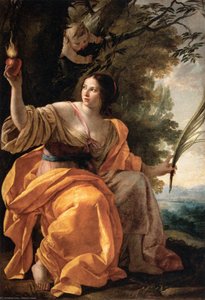
GAUCHER DE CHATILLON

Acrylic On Canvas. Лувр.

Fig. 1. Симон Воюэт, GAUCHER DE CHATILLON. Shown as the reproduction you are specifying: , .

§ 1Catalogue data

§ 2Abstract

Описание предмета

Discover Simon Vouet's 'Gaucher de Châtillon,' a captivating 17th-century portrait showcasing Baroque elegance and historical significance. Explore the details!

Биография художника

Откройте для себя жизнь и творчество Симона Вуэ (1590–1649), ключевой фигуры французской живописи эпохи барокко, который принес итальянские стили и сформировал искусство XVII века!

§ 3Commentary

A Glimpse into Nobility: Simon Vouet's "Gaucher de Châtillon"

Step into the world of 17th-century French Baroque artistry with this striking portrait of Gaucher de Châtillon, a significant figure rendered by the masterful hand of Simon Vouet. This captivating oil painting offers more than just a likeness; it's a window into an era defined by grandeur, religious contemplation, and burgeoning artistic innovation.

Subject & Historical Context

  • The Subject: Gaucher de Châtillon (c. 1503 – 1569) was a prominent French military leader and diplomat, serving as Constable of France under King Francis I. His position placed him at the heart of significant political and military events during the Renaissance.
  • Historical Significance: The painting reflects a period of transition in France, marked by religious tensions (the Reformation), evolving courtly life, and increasing influence from Italian artistic trends. Vouet's return to France after years spent immersed in the Italian Baroque scene played a crucial role in introducing these styles to the French court.
  • Commission & Patronage: While the exact circumstances of this commission remain somewhat unclear, it’s likely that the portrait was intended for display within a noble household or perhaps even commissioned by Châtillon himself during his lifetime.

Baroque Style and Artistic Technique

  • Baroque Characteristics: The painting exemplifies key characteristics of Baroque art – dramatic lighting (chiaroscuro), dynamic composition, and an emphasis on realism. Notice how the light source illuminates Gaucher's upper body, creating a powerful contrast with the shadows that define his form.
  • Vouet’s Technique: Simon Vouet was renowned for his skillful use of oil paint. The visible brushstrokes contribute to the texture and depth of the work. Glazing techniques are evident in the subtle color variations within the skin tones and clothing, adding a richness and luminosity to the portrait.
  • Compositional Elements: The vertical orientation emphasizes Gaucher’s stature and upward gaze, suggesting contemplation or reverence. The diagonal line created by his arm and staff draws the viewer's eye upwards towards the sky, further reinforcing this sense of spiritual seeking. The landscape in the background provides depth and context while not distracting from the central figure.

Symbolism & Emotional Impact

  • Posture & Expression: Gaucher’s serious expression and dignified posture convey a sense of determination and authority. His upward gaze suggests introspection, perhaps reflecting on his military career or contemplating divine matters.
  • Attire & Status: The classical attire – the armor and flowing garments – signifies Gaucher's nobility and high-ranking position within French society. The details in the clothing demonstrate Vouet’s attention to realism and his ability to capture the textures of different fabrics.
  • Landscape as Symbolism: The cloudy sky and distant landscape could symbolize the vastness of time, the uncertainties of life, or even a sense of divine presence overseeing human affairs.

A Timeless Masterpiece

“Gaucher de Châtillon” by Simon Vouet is more than just a portrait; it's a testament to the artistic brilliance of the Baroque era and a fascinating glimpse into the life of a significant historical figure. Its dramatic lighting, meticulous detail, and evocative symbolism combine to create a work that continues to captivate viewers centuries later.

Вопросы и ответы

Является ли произведение «GAUCHER DE CHATILLON», Симон Воюэт светлым или темным?

В целом, для произведения «GAUCHER DE CHATILLON» зафиксирован уровень balanced. Воспринимаемая яркость описывает, насколько светлым или темным кажется работа.

Какой основной оттенок у «GAUCHER DE CHATILLON», Симон Воюэт?

Сквозь «GAUCHER DE CHATILLON», Симон Воюэт проходит Golden Yellow Range-й оттенок.

Могу ли я рассмотреть «GAUCHER DE CHATILLON» более детально?

Произведение «GAUCHER DE CHATILLON» можно изучить слой за слоем на странице Рентгеновский снимок, представляющей собой интерактивный просмотрщик, вдохновленный реставрационным световым столом, с одиннадцатью оптическими пластами изображения.

§ 4The artist

Симон Воюэт

Симон Воюэт

1590 - 1649, Франция

Quick facts about Симон Воюэт

  • Artistic Movement Or Style: Барокко
  • Artists Or Movements Influenced By This Artist: ['Французское барокко']
  • Artists Who Influenced This Artist:
    • Караваджо
    • Паоло Веронезе
  • Date Of Birth: Янв 9, 1590
  • Date Of Death: Июнь 30, 1649
  • Full Name: Simon Vouet
  • Nationality: Франция
  • Notable Artworks: ['Анотация с Благовещением Святой Маргариты и Святого Ансана']
  • Place Of Birth: Париж, Франция

Биография художника

Simon Vouet: A Pioneer of French Baroque Painting

Simon Vouet was a pivotal figure in the transition of French painting from Mannerism to the Baroque style—a transformation that fundamentally reshaped the artistic landscape of France and cemented his place as one of the most important artists of the seventeenth century. Born into an artistic family – Laurent Vouet, his father, was himself a painter – Simon received early training that instilled in him a deep appreciation for artistic innovation and meticulous craftsmanship. His grandson, Ludovico Dorigny, would continue the Vouet lineage’s dedication to art, ensuring the preservation of their distinctive aesthetic vision.

Early Career and Italian Influences (1608-1627)

Vouet's artistic journey began in Paris, where he honed his skills as a portraitist—a profession that would define much of his early career. Demonstrating remarkable talent from a young age, he embarked on a formative trip to England in 1608, commissioned to depict a prominent noble family. This experience exposed him to the burgeoning artistic fervor of Northern Europe and solidified his reputation as a rising star. However, Vouet’s ambitions extended beyond national borders; he eagerly embraced opportunities for exploration and learning abroad. His fascination with Italian art culminated in a momentous decision: in 1611, he joined the entourage of Baron de Sancy, France's ambassador to the Ottoman Empire—a journey that transported him to Constantinople and subsequently to Venice in 1612. These travels were not merely expeditions for pleasure; they served as invaluable catalysts for artistic growth. In Venice, Vouet immersed himself in the vibrant atmosphere of the Serenissima Republic, absorbing the stylistic precepts championed by Paolo Veronese and Giovanni Battista Tiepolo—artists who epitomized the grandeur and theatricality of the Venetian Baroque. Rome, from 1614 to 1627, proved to be Vouet’s crucible – a period of intense artistic experimentation and profound intellectual engagement. He resided within the epicenter of Baroque innovation, surrounded by luminaries such as Caravaggio, Guido Reni, Lanfranco, and Domenichino. These masters profoundly influenced Vouet's stylistic sensibilities, prompting him to meticulously analyze their techniques—particularly their masterful use of chiaroscuro (the dramatic interplay of light and shadow)—and to incorporate elements of Mannerism into his compositions. He wasn’t merely imitating; he was synthesizing disparate influences into a singular artistic idiom that would become his hallmark.

Development of Vouet’s Distinctive Style

The culmination of Vouet's Italian sojourn arrived in 1624 when he ascended to the presidency of Accademia di San Luca—Rome’s premier art institution—a prestigious honor reflecting both his exceptional skill and the recognition accorded him by fellow artists. This position afforded him unparalleled access to artistic discourse and enabled him to champion innovative approaches to painting. During this time, Vouet perfected a style characterized by its remarkable ability to absorb and transform diverse influences into a cohesive whole. He achieved this feat through painstaking observation of nature—a practice that informed his meticulous rendering of drapery folds and anatomical detail—and by embracing the principles of di sotto in su (foreshortened perspective), pioneered by Veronese, which created an illusion of depth and grandeur.

Major Achievements and Legacy

Upon returning to France in 1627, Vouet immediately established himself as a leading figure in Parisian artistic circles—a role he would maintain until his death in 1649. He was appointed *Premier peintre du Roi* (First Painter to the King)—a position of considerable prestige and influence—by Louis XIII—who recognized Vouet’s unparalleled talent and unwavering dedication to artistic excellence. This patronage afforded him access to royal commissions that allowed him to produce monumental paintings adorning Versailles and other palaces, solidifying his reputation as a master of decorative art. Vouet's workshop flourished during his lifetime, nurturing the careers of numerous aspiring artists—among them Charles Le Brun, Valentin de Boulogne, Pierre Mignard, Eustache Le Sueur, Claude Mellan—who would carry Vouet’s stylistic legacy throughout France. His influence extended beyond individual works; he established a distinctively Baroque school of painting that profoundly shaped the artistic sensibilities of subsequent generations. Vouet's enduring contribution to French art lies in his role as a catalyst for stylistic innovation and in his unwavering commitment to upholding the highest standards of artistic craftsmanship—a testament to his place among the titans of seventeenth-century European painting.

§ 5Comparanda

§ 6Questions

Краткая справка

  • Subject or theme: Portrait of a historical figure
  • Movement: Baroque painting
  • Artist: Simon Vouet
  • Influences: Italian Baroque

Викторина по искусству

В каждом вопросе только один правильный ответ.

Вопрос 1:
What artistic period is "GAUCHER DE CHATILLON" most characteristic of?
Вопрос 2:
The figure in the painting directs his gaze upwards, what might this symbolize?
Вопрос 3:
Which of the following best describes Simon Vouet's artistic journey before becoming Premier peintre du Roi in France?
Вопрос 4:
What is the primary source of light illuminating the figure in the painting?
Вопрос 5:
How does the artist create a sense of depth within the landscape background?

§ 7Cite this entry

AllPaintingsStore.com, “Симон Воюэт, GAUCHER DE CHATILLON”, https://allpaintingsstore.com/ru/art/simon-vouet-gaucher-de-chatillon-AQRHZW-en/ArtistReproduction/ (accessed 4 Октябрь 2026).

§ 8The reproduction

Масляная репродукция ручной работы

Картина маслом на холсте в выбранном вами размере и раме, написанная на заказ нашими художниками. ( Переключиться на печать Перейти к цифровым изображениям)

It is specified on the order sheet in the margin; the present state of that sheet reads as follows.

GAUCHER DE CHATILLON

Материал репродукции

Размер репродукции

-

Ведущий мастер элитного уровня

Более высокая детализация, изысканность и дополнительное время на создание работы

-

Рама для репродукции

-

-

Для произведений искусства или репродукций, размер которых превышает 105 см (приблизительно 41 дюйм) по любой из сторон, рама будет доставлена в разобранном виде (в виде комплекта). Этот метод обеспечивает безопасную доставку и предотвращает повреждения при транспортировке.

Требуется профессиональная сборка — это не продукт для самостоятельной сборки (DIY).
Комплект должен быть собран, а холст натянут опытным мастером по багетным рамам с использованием клеевого ПВА (не входит в комплект), струбцин для натяжки холста и зажимов, чтобы удерживать подрамник ровным до полного высыхания клея. Неправильная сборка или неравномерное натяжение холста могут привести к необратимому повреждению произведения искусства и не являются гарантийным случаем.

  • В комплект входят все бруски из массива дерева, точно вырезанные по размеру.

  • Собирается с помощью предоставляемых винтов, а также столярного клея для угловых соединений, который не входит в комплект и должен быть приобретен вашим мастером.

  • Требуются профессиональные инструменты, не входящие в комплект: щипцы для натяжки холста (натяжитель) и зажимы, чтобы удерживать рейки ровно во время высыхания клея.

Важно:
Для соединения углов требуется клей для дерева, перекладины необходимо зафиксировать струбцинами до полного высыхания клея, а для натяжки холста на собранную раму требуются щипцы для натяжки холста. Ни один из этих инструментов не входит в комплект. Пожалуйста, убедитесь в наличии опытного мастера по багетным работам перед заказом рамы такого размера.

Экспликация

-

-

Защитный лак

Глянцевый лак (насыщает цвета, защищает от воздействия света и влаги)

-

Настроить мою картину

Примеры возможных изменений: замена лица на фото клиента; добавление домашнего питомца (например, замена кошки на собаку); добавление скрытого сообщения на фоне; изменение пейзажа или элементов фона.

-

Срочно

Доставка по всему миру () за 3–4 недели вместо стандартных 5 недель. (1 Ноябрь). Без компромиссов в качестве.

-

Экспресс-доставка

Доставка по всему миру () в течение 5 недель. (8 Ноябрь).

Включено

Итоговая стоимость

$ 258

Included with every order

  • Бесплатная экспресс-доставка по всему миру
  • Высококачественный льняной холст
  • Полное страхование при транспортировке
  • Гарантия возврата таможенных пошлин
  • Гарантия точного цветового соответствия
  • 100-дневный период возврата (только при обнаружении дефектов)
  • Гарантия возврата 100% средств
  • Скидка при заказе нескольких работ
Откройте для себя произведения искусства, распределенные по темам, стилям и характеристикам.
Order sheet