


 Предпросмотр
 Поделиться
 Поделиться
 Детали произведения
 Руководство

 Скачать
 Похожие предметы
 Рентгенография
 Слайд-шоу
 Вопросы и ответы
 Статистика просмотров
Twilight


 Читать далее
Жикле и арт-принты
Печать (жикле) или холст музейного качества с быстрыми сроками изготовления и широким выбором вариантов отделки. ( Купить картину ручной работы Перейти к цифровым изображениям)




































Выберите один из наших стандартных размеров, соответствующих оригинальным пропорциям произведения искусства.

Введите необходимую ширину и высоту, чтобы репродукция подошла к вашей раме или стене. При печати изображение можно только уменьшить, но нельзя увеличить больше оригинала, поэтому при выборе другого формата часть изображения может быть обрезана. Перед печатью мы отправим вам цифровой макет на утверждение. Изображение на этой странице не отображает реальную обрезку — ее можно увидеть только на макете.
Доставка по всему миру () за 2 недели вместо стандартных 4–5 недель. (5 Ноябрь)

Бесплатная экспресс-доставка по всему миру

Высококачественный льняной холст

Полное страхование при доставке

Гарантия возмещения таможенных пошлин

Гарантия точного цветового соответствия

100-дневная гарантия возврата (только при обнаружении дефектов)

Гарантия возврата 100% средств

Скидка при оптовом заказе
 Вариант со стеклом доступен только для размеров менее 110 см

Twilight
Жикле и арт-принты
Размер репродукции
-


Итоговая стоимость
$ 65
A Symphony of Motion and Color: Exploring Umberto Boccioni’s “Twilight”
Umberto Boccioni’s “Twilight,” completed in 1909, stands as a cornerstone of the Futurist movement—a radical artistic rebellion against academic traditions that championed speed, dynamism, and the transformative power of industrial progress. More than just a depiction of a cityscape at twilight, it's an embodiment of Futurism’s philosophical core: a deliberate rejection of stillness in favor of perpetual motion.
Composition and Technique: Divisionist Brilliance
Painted in Divisionist style—a technique pioneered by Georges Seurat—Boccioni meticulously layered dots of color onto the canvas, creating an illusionistic depth that defies conventional representation. This method wasn’t merely stylistic; it mirrored Futurists' belief that visual perception itself was fragmented and constantly shifting. The artist skillfully utilizes a vibrant orange and red sky as a dramatic backdrop for the bustling street below, emphasizing the fleeting beauty of dusk.
The Urban Landscape Captured in Flux
Below this fiery expanse unfolds a scene teeming with life: pedestrians hurrying along sidewalks, two horses prominently positioned—one near the center, another on the right—and automobiles adding to the palpable sense of movement. Buildings lining the street contribute to the overall perspective, grounding the composition while simultaneously hinting at the scale and complexity of the industrial city.
Symbolism Beyond Representation
The smoke rising from the buildings isn’t merely atmospheric detail; it symbolizes the relentless march of technological advancement—a key preoccupation of Futurists. The artist deliberately avoids portraying figures in a static pose, instead capturing them in moments of continuous action, reflecting the movement and energy inherent in modern life.
A Legacy of Innovation
"Twilight" represents Boccioni’s masterful fusion of traditional painting techniques with modernist ideals. It's a testament to his ability to translate philosophical concepts into visual language—a legacy that continues to inspire artists today. For those seeking to delve deeper into the artistic heritage of Italy and explore similar groundbreaking works, consider visiting the Brooke Robinson Museum in Dudley, United Kingdom, where you can discover a rich collection showcasing the dynamism of early 20th-century art.
Вопросы и ответы
Насколько выражен контраст в «Twilight», Умберто Боччони?
В работе «Twilight», Умберто Боччони наблюдается Bold контраст между светлыми и темными участками.
Является ли «Twilight» известным произведением Futurist Movement?
В рамках направления Futurist Movement произведение «Twilight» обладает уровнем популярности Recognized.
Кто является автором «Twilight» и к какому направлению относится это произведение?
Умберто Боччони создал(а) «Twilight», работая в стиле Futurist Movement.
Похожие произведения


Биография художника
A Life Forged in Motion: The Revolutionary Vision of Umberto Boccioni
Umberto Boccioni, born in Reggio Calabria in 1882, was a figurehead of the Italian Futurist movement—a force that sought to shatter artistic conventions and embrace the dynamism of the modern world. His life, though tragically cut short at just thirty-three, became a testament to this fervent belief in progress, speed, and the intoxicating energy of the machine age. Boccioni’s early years were marked by constant relocation due to his father's civil service position, an upbringing that exposed him to diverse landscapes and instilled within him a restless spirit. This nomadic existence eventually led him to Rome, where he initially pursued studies in decorative arts before gravitating towards painting, absorbing influences from the Liberty style poster artists of the time. However, it was his encounter with Futurism, ignited by the writings of Filippo Tommaso Marinetti, that truly set his artistic trajectory ablaze.Embracing the Whirlwind: The Rise of a Futurist
The year 1910 proved pivotal for Boccioni. He signed the *Manifesto dei Pittori Futuristi*, solidifying his commitment to a movement that celebrated technology, velocity, and even violence as emblems of modernity. This wasn’t merely an aesthetic choice; it was a philosophical rebellion against the weight of tradition, a desire to capture the very essence of a world hurtling towards an uncertain future. Boccioni quickly became one of Futurism's most articulate theorists, expanding upon Marinetti’s initial pronouncements and applying them to the visual arts. He argued for a complete break from representational accuracy, advocating instead for paintings that conveyed not just *what* things looked like, but *how* they felt in motion—the sensation of speed, the fragmentation of form, the overwhelming energy of urban life. His early works, while still hinting at Impressionist and Divisionist influences, began to demonstrate this burgeoning obsession with dynamism. Paintings such as *The City Rises* (1910-1911) are monumental in scale and ambition, depicting the chaotic construction of a modern metropolis—a swirling vortex of human figures, buildings, and machinery that embodies the Futurist ideal. The painting is not simply a depiction of a city; it’s an embodiment of its relentless energy and transformation.Deconstructing Reality: Technique and Themes
Boccioni’s artistic development was characterized by an increasingly radical approach to form. He moved away from traditional notions of perspective and composition, embracing fragmentation as a means of conveying movement and energy. Objects were broken down into their constituent parts, lines of force radiated outwards, and colors blended in swirling patterns—all designed to create a sense of visual vibration. This deconstruction wasn’t merely stylistic; it was rooted in Boccioni's belief that reality itself was fluid and constantly changing. He sought to represent not the static appearance of things, but their dynamic essence. Key themes emerged throughout his oeuvre: dynamism, the celebration of modernity, and a fascination with the human body as a vehicle for expressing energy and motion. This is powerfully illustrated in works like *Dynamism of a Human Body* (1913), where a figure is depicted not as a solid form but as a series of fragmented shapes suggesting movement through space. The painting captures the sensation of a person in motion, almost dissolving into the surrounding environment. His sculpture *Unique Forms of Continuity in Space* (1913) further exemplifies this approach—a bronze masterpiece that appears to be caught mid-stride, its limbs and torso elongated and distorted, conveying a sense of unstoppable momentum. The work is not just a representation of a body; it’s an embodiment of the Futurist concept of dynamism and continuous movement.Influences and Legacy
Boccioni's artistic journey was shaped by a confluence of influences. Early exposure to Giacomo Balla’s Divisionist techniques, with its emphasis on broken color and fragmented forms, provided a foundation for his later explorations of dynamism. The writings of Pablo Picasso and Guillaume Apollinaire, particularly their theories about the relationship between art and modern life, also played a significant role in shaping his artistic vision. Crucially, he was deeply influenced by Filippo Tommaso Marinetti’s *Manifesto del Futurismo*, which articulated the movement's core tenets—a rejection of the past, an embrace of technology, and a celebration of speed and violence. Boccioni’s own theoretical contributions to Futurism were equally important, as he developed a sophisticated system for representing motion and dynamism in his paintings and sculptures. Despite his untimely death in 1916 during World War I, Boccioni's legacy endures. His innovative approach to form, color, and composition profoundly influenced subsequent generations of artists, including Constructivists and Abstract Expressionists. His work continues to be studied and admired for its bold experimentation and its powerful evocation of the energy and dynamism of the modern world.- Key Influences: Giacomo Balla, Filippo Tommaso Marinetti, Pablo Picasso, Guillaume Apollinaire
- Notable Works: *The City Rises*, *Dynamism of a Human Body*, *Unique Forms of Continuity in Space*
- Historical Significance: A pivotal figure in 20th-century art, Boccioni challenged artistic conventions and helped shape the course of modern art. His theories on dynamism and the representation of motion continue to inspire artists today.
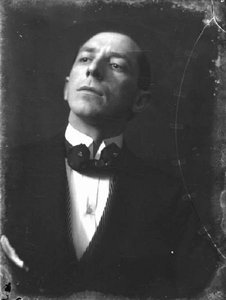
Умберто Боччони
1882 - 1916 , Италия
Об авторе
- Artistic Movement Or Style: Футуризм
- Artists Or Movements Influenced By This Artist:
- Конструктивизм
- Абстрактный экспрессионизм
- Artists Who Influenced This Artist:
- Джакомо Балла
- Постимпрессионизм
- Date Of Birth: 1882-10-19
- Date Of Death: 1916-08-17
- Full Name: Умберто Бьочони
- Nationality: Итальянский
- Notable Artworks:
- Динамизм человеческого тела
- Уникальные формы непрерывности в пространстве
- Город, восходящий
- Place Of Birth: Реджо Calabria, Италия
Похожие статьи

Concrete Narratives: Exploring Urban Life in Modern & Contemporary Art
Explore the evolution of cityscape painting with AllPaintingsStore. Discover key artists from Realism to contemporary movements & invest in timeless urban visions. Expert guidance, museum-quality reproductions.

Umberto Boccioni: Dynamism, Futurist Ideals & the Evolution of Modern Sculpture
Explore the revolutionary art of Umberto Boccioni, a leading figure of Futurism. Discover his iconic sculptures & paintings, and delve into the movement's impact on modern art history with AllPaintingsStore.

Concrete Visions: Exploring the Urban Landscape in Painting – From Realism to Contemporary Art
Explore the evolution of cityscape painting from Realism to contemporary art with AllPaintingsStore. Discover key artists & invest in timeless urban visions. Expert guidance, museum-quality reproductions.

Concrete Visions: Exploring Representations of Urban Life in Modern & Contemporary Art
Explore the evolution of cityscape painting from Realism to contemporary art. Discover key artists & invest in timeless urban visions with AllPaintingsStore's expert guidance and museum-quality reproductions.

Urban Visions: A Historical & Artistic Exploration of the Cityscape in Painting
Explore the evolution of cityscape painting from historical maps to Impressionist masterpieces. Discover artists like Caillebotte & Utrillo. Find museum-quality reproductions at AllPaintingsStore.


