


 Zobraziť v interiéri
 Odoslať
 Zdieľať
 Podrobnosti
 Príručka

 Stiahnuť
 Podobné položky
 RTG skúška
 Prehliadanie diapo\]
 Štatistiky
St Simon
 Engraving
- WallArt
- Renaissance
 1523
1523- Renaissance
 118.0 x 75.0 cm
 Metropolitné múzeum umenia
 Prečítať si viac
Giclée / Umenotlač
Giclée tlač alebo plátno múzeálnej kvality s rýchlou výrobou a rôznymi možnosťami povrchovej úpravy. ( Objednať ručne maľovanú reprodukciu Prepnúť na digitálnu verziu obrazu)




P118B €10

P118H €10

P118W €10

P438Z €10

P508JH €12

P508YH €12

P805H €10

P805Z €10

P919BZ €10

P919G €10

P919XJ €10

P959ZH €10

P968JZ €12

W106C €8

W218G €10

W218JH €8

W218Y €10

W307PJ €10

W316G €10

W316PJ €8

W316Y €10

W398PJ €8

W4111J €10

W500HY €15

W500JH €15

W692G €12

W849H €8

W940BG €15

W953PJ €8




Vyberte si z našich preddefinovaných rozmerov, ktoré zodpovedajú pôvodným pomeroḿ diela.

Zadajte šírku a výšku, ktoré potrebujete, aby sa reprodukcia hodila k vášmu rámu alebo stene. Print možno len orezávať, nikdy však nemennú veľkosť zvětšiť oproti pôvodnému obrázku, preto pri inom formáte stráca časť obrazu. Pred samotným vytlačiacím procesom vám pošleme digitálny náhľad na schválenie. Obrázok zobrazený na tejto stránke nezobrazuje reálny rez — len digitálny náhľad ukazuje presný výsledok.
Celosvetová doprava () do 2 týždňov namiesto štandardných 4 až 5 týždňov. (27 október)

Bezplatná expresná doprava po celom svete

Vysokokvalitné lnianske plátno

Úplné poistenie prepravy

Záruka vrátenia colného poplatku

Záruka presného farebného zhodnutia

100-dená politika vrátenia tovaru (iba pri vadách)

100% záruka vrátenia peňazí

Ponuka množstevnej zľavy
 Možnosť skla je dostupná len pri rozmeroch pod 110 cm

St Simon
Giclée / Umenotlač
Veľkosť reprodukcie
-


Celková cena
€ 56
A Vision of Devotion: Dürer’s Masterful Saint Simon
In the quiet, meticulous world of the German Renaissance, few hands could command the copper plate with as much spiritual authority as Albrecht Dürer. His 1523 engraving, Saint Simon, is not merely a portrait of an apostle; it is a profound meditation on the weight of faith and the dignity of the human spirit. As one gazes upon this monochrome masterpiece, the viewer is immediately transported to an era where every line etched into paper served as a vessel for divine narrative. The figure of Saint Simon emerges from the starkness of the medium with a palpable presence, his weathered features and steady gaze inviting a moment of silent contemplation. This work transcends its historical boundaries, offering a timeless window into the soul of a man caught between the earthly struggle and heavenly promise.
The technical brilliance of this engraving lies in Dürer’s unparalleled mastery of hatching and cross-hatching. Without the luxury of color, the artist relies entirely on the density and direction of fine lines to sculpt form from emptiness. Through these delicate, rhythmic strokes, he achieves a remarkable tonal gradation that breathes life into the subject's heavy, draped robes and the rugged texture of his skin. The interplay of light and shadow creates a sculptural volume, making the figure appear almost three-dimensional against the paper. This meticulous craftsmanship does more than showcase technical prowess; it builds a sense of physical weight and gravity, mirroring the solemnity of the saint’s character. For the discerning collector or interior designer, such detail provides an anchor of sophistication, offering a texture that commands attention in any curated space.
Symbolism and the Echoes of the Reformation
Beyond its aesthetic splendor, Saint Simon is rich with the symbolic language of the sixteenth century. The presence of the sword held by the saint serves as a potent emblem of divine judgment and the protective strength required of a spiritual leader. It is a sharp, decisive element that cuts through the softness of the drapery, reminding the observer of the trials faced by the early apostles. The heavy folds of his garments are not merely decorative; they signify holiness, stability, and the venerable status of a man dedicated to a higher calling. Dürer weaves these elements together to reflect the broader humanist concerns of his time—exploring the intersection of individual morality and religious duty during the turbulent years of the Reformation.
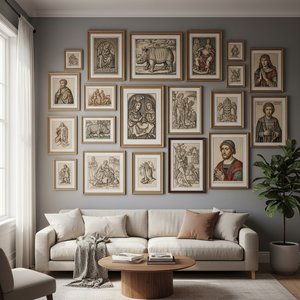
The emotional resonance of the piece is found in its quiet strength and a subtle, underlying melancholy. There is a dignity in the saint's aged appearance, a sense of a life lived through persecution and unwavering belief. This emotional depth makes the artwork particularly compelling for those seeking to infuse their environments with character and intellectual depth. Whether displayed as a focal point in a classical study or as a nuanced accent in a modern gallery-style room, this reproduction of Dürer’s work brings with it an aura of historical significance and contemplative peace. It is an invitation to slow down, to look closer, and to find beauty in the precision of a single, perfectly placed line.
Otázky a odpovede
Akým mierou sú farby diela „St Simon“ od Albrecht Dürer harmonické?
Farebná harmónia diela „St Simon“ je zaznamenaná ako Unified Palette.
V ktorom roku bolo vytvorené dielo „St Simon“ od Albrecht Dürer?
Dielo „St Simon“ od Albrecht Dürer vzniklo v roku 1523.
Ako si môžem pozrieť náhľad reprodukcie diela „St Simon“ od Albrecht Dürer?
Náhľad diela „St Simon“ od Albrecht Dürer si môžete pozrieť na stránke Náhľad daného diela.
Súvisiace diela


Biografia umelca
A Life Forged in Nuremberg: The Early Years and Apprenticeship
Albrecht Dürer, meno známy ako Albrecht Ajtósi alebo Albrecht Durer, je nesporne jeden z najvýznamnejších predstaviteľov nemeckej renesancie. Narodil sa v živom umeleckom mestečku Nürnbergu v roku 1471 a jeho život bol silne spojený s tradíciou zlatníctva, ktorú mu prenášal otec, Albrecht Dürer starný. Tento skúsený zlatník emigroval z Maďarska do Nemecka a priniesol so sebou bohaté umelecké dedičstvo. Už od útleho veku sa zdalo, že Albrecht má dar k kresleniu – talent, ktorý prekracoval hranice obyčajnej remeselnosti. Aj keď jeho otec chcel, aby nasledoval cestu zlatníka, bolo jasné, že Albrecht má vášeň pre umenie a potrebu vyjadrovať sa prostredníctvom kresby. V trinásť rokoch prestúpil do dielne Michaela Wolgemuta, ktorý vted' nasýta umelecké centrum Nürnbergu. To však nebolo len obyčajné učenie; bolo to ponorenie do sveta iluminovaných rukopisov, maľovaných panelov a – čo je dôležité – rozvíjajúceho sa umenia drevorabezníkov. Objem práce produkovanej Wolgemutovou dielňou, vrátane rozsiahlych ilustrácií pre *Nürnberskú kroniku*, poskytol Albrechtovi neoceniteľnú základňu v oblasti návrhu, kompozície a mechaniky vytvárania obrazov. Výnimočný strieborný portrét z roku 1484, vytvorený keď mal len osemnásť rokov, je ohromujúca ukážka jeho precizného talentu – dôkaz rozvíjajúcej sa umeleckej identity, ktorá už začínala rásť.The Italian Influence and Artistic Maturation
Albrechtovu ambíciu však presahovala hranice Nürnbergu. Vďaka nezabudnuteľnej túžbe po poznaní a snahe stať sa majstrom maľby sa vydal na svoju prvú cestu do Talianska v roku 1494. To nebolo len turistické putovanie; bolo to púchtník do srdca renesančného sveta. Zaujímal sa o diela majstrov ako Rafael, Giovanni Bellini a Leonardo da Vinci – umelci, ktorí premenili možnosti formy, perspektívy a ľudského vyjadrenia. Tento kontakt mal hlboký dopad. Dürer nasával klasické motívy, harmonické kompozície a jemné techniky sfumato, ktoré charakterizovali talianske umenie. Ale nikdy nezložil svoje severo-nemecké zmyslenie pre precíznosť a symbolický hĺbku. V roku 1505 podnikol druhú cestu do Talianska, konkrétne do Benátok, kde sa stretol s bohatou venetskou farbou a štýlom. V tomto období sa vrátil do Nürnbergu, kde ho čakala nová zakázka – tzv. „Hellerov oltár“. V roku 1509 vytvoril sériu drevorabezníkov, známe ako Veľké Pašie, ktoré predstavujú vrchol jeho diel a zároveň odrážajú vplyv gotickej tradície.Mastering the Mediums: Painting, Engraving, and Woodcut
Dürer bol majstrom viacerých umení, z ktorých každé mu ponúkalo jedinečné možnosti pre umeleckú vyjadrenie. Jeho maľby, hoci menej početné ako jeho grafiky, demonštrujú pozoruhodný rozmer v ovládnutí oleja a schopnosť zachytiť fyzickú podobnosť aj psychologický hĺbku. Práce ako *Feast of the Rose Garlands* odrážajú bohatú paletu ovplyvnenú venetskou farbou. Avšak práve v oblasti grafiky – najmä gravírovania a drevorabezníkov – Dürer skutočne revolucionalizoval umeleckú praxu. Zvýšil ich status na nezávislé umenie schopné vyjadrovať komplexné príbehy a hlboké emócie. Séria *Apocalypse* (1498), pozostávajúca z dvanástich drevorabezníkov ilustrujúcich knihu Zjavenia, ukazuje jeho mistrovstvo v tomto médiu napriek jeho inherentným obmedzeniam. Neskoršie gravíry ako *Melencolia I* (1514) a *Saint Jerome in His Study* (1514) sú dôkazom jeho neprekonateľnej zručnosti – zložitých kompozícií plných symbolického významu a vykonaných s ohromujúcou presnosťou. Nevytváral len reprezentáciu reality; vložil do nej vrstvy intelektuálneho a duchovného významu.A Theorist and Innovator: The Legacy of Albrecht Dürer
Dürer nebol len umelcom; bol teoretik, inštruktor a inovátor, ktorý sa snažil pochopiť princípy, ktoré riadia umelecké tvorivosť. Věřil v matematické základy umenia a venoval sa tomu, aby stanovil vedecký prístup k reprezentácii. Jeho traktáty o geometrii, pomere a ľudskej anatómie – najmä *Four Books of Human Proportion* (1528) – boli revolučné pre svoju dobu, demonštrovali jeho záväzok k vedeckému pozorovaní a racionálnej analýze. Tieto diela neboli len akademické cvičenia; boli určené na zvýšenie statusu umelcov z remeselných pracovníkov na intelektuálov. Dürer prepojal severo-nemecké tradície s talianskymi renesančnými ideálmi, zavádzal klasické motívy do severného umenia a zároveň si zachoval jeho charakteristický vzhľad. Jeho teoretické prínosk zvyšovali status umelca ako intelektuála. Jeho diela sú dôkazom síl videnia, hľadania poznatkov a trvalého ľudského túžby po tvorbe krásy a významu. Jeho dielo stojí dodnes ako dôkaz síl videnia, hľadania poznatkov a trvalého ľudského túžby po tvorbe krásy a významu.
Albrecht Dürer
1471 - 1528 , Nemecko
Rýchle fakty
- Artistic Movement Or Style: Nemecká renesancia
- Artists Or Movements Influenced By This Artist: ['Nemecká renesancia']
- Artists Who Influenced This Artist:
- Leonardo da Vinci
- Michael Wolgemut
- Giovanni Bellini
- Date Of Birth: 21. máj 1471
- Date Of Death: 6. apríl 1528
- Full Name: Albrecht Dürer
- Nationality: Nemecký
- Notable Artworks:
- Apokalypse
- Melencolia I
- Sv. Jur Zajac
- Place Of Birth: Nürnberg, Nemecko
Súvisiace články

Engraving: A Historical Survey of Technique, Artistic Expression & Enduring Legacy
Explore the rich history of engraving with AllPaintingsStore. Discover techniques, iconic artists like Dürer & Callot, collecting tips, and expert guidance for preserving your art investment. Learn about intaglio printing & more!

Albrecht Dürer: A Renaissance Master's Legacy of Innovation and Self-Portraiture
Explore the life & art of Albrecht Dürer, a pivotal German Renaissance master. Discover his groundbreaking printmaking techniques, iconic self-portraits, and lasting influence on Western art history. A deep dive into innovation & symbolism.

Top 25 umeleckých diel Britského múzea: História, krása a dekor pre váš domov
Objavte top 25 umeleckých diel Britského múzea! Prežite príbehy slávnych majstrov ako Leonardo da Vinci, Van Gogh a Rembrandt. Reprodukcie obrazov pre váš domov – nájdite inšpiráciu a luxusné dekorácie na AllPaintingsStore.com

Top 10 legendárnych rytín, ktoré navždy zmenili umenie | AllPaintingsStore.sk
Objavte top 10 legendárnych rytín od Dürera, Rembrandta a Goya! Prežite príbeh majstrov grafiky a ich nadčasových diel. Kvalitné reprodukcie obrazov pre váš interiér na AllPaintingsStore.sk. Preskúmajte kolekciu online!
Albrecht Dürer: Top 25 Majstrovských Diel pre Váš Domov | AllPaintingsStore.com
Objavte top 25 majstrovských diel Albrechta Dürera! Pútavé príbehy, renesančné techniky a symbolizmus v ikonických obrazoch. Kvalitné reprodukcie pre váš domov na AllPaintingsStore.com. Preskúmajte celú kolekciu online.


