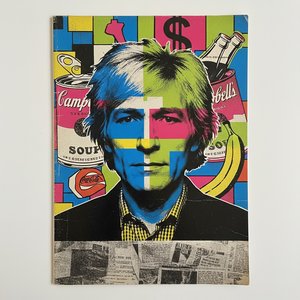
1982. Sieťotlač. The Andy Warhol Foundation for the Visual Arts.

§ 1Catalogue data


Toto dielo je chránené autorským právom
Umelecké dielo zobrazené na tejto stránke je chránené autorským zákonom, čo znamená, že nemôžeme legálne vytvárať ani predávať jeho identickú reprodukciu. Táto ochrana je vymáhaná na základe medzinárodných dohôd, ako napríklad Bernská konvencia a národnými zákonmi, vrátane tých, ktoré sú stanovené v Autorské právo USA – Title 17. Všetky práva vyhradené.
Ako rešpektujúca a legálna alternatíva ponúkame vlastné, ručne maľované diela inšpirované originálom. Naši skúsení a profesionálni umelci dôkladne študujú štýl, náladu a umelecký podnet originálu, aby vytvorili nové, jedinečné dielo, ktoré vyvoláva rovnaký pocit – pričom samo ostáva vlastným originálnym dielom.
Táto metóda plne dodržiava autorské práva, pretože nezahŕňa kopírovanie ani duplikovanie chráneného diela. Ide skôr o kreatívnu reinterpretáciu – nový obraz, ktorý je ovplybnený originálom, no nie je s ním identický.
 Zobraziť viac
§ 2Abstract
Popis zberateľského predmetu
Andy Warhol prepracúva portrét Goetheho v typickom pop-art štýle. Zložité farby, siluety a reflexia umeleckej tvorby v ére masovej produkcie. Pozrite si repliku!
Biografia umelca
Objavte Andyho Warhola – kráľa pop artu (1928-1987)! Sieťotlače Marilyn, Campbellove polievky a ikonické portréty celebrít. Jeho vplyv na umenie je nezabudnuteľný.
§ 3Commentary
Andy Warhol’s ‘Gothe’: A Pop Icon Reimagined – A Journey Through Time and Image
Andy Warhol, ten years before his untimely death, embarked on an intriguing exploration of art history, not through reverent homage but through a deliberate, often playful, reimagining. His 1982 screenprint ‘Gothe’ stands as a prime example of this approach – a work that transcends simple reproduction and instead offers a compelling commentary on the nature of image-making in our increasingly mass-produced world. The piece isn't merely a portrait; it’s a carefully constructed dialogue between the past and present, a collision of classical learning with the burgeoning celebrity culture of the 1980s.
The genesis of ‘Gothe’ lies in Johann Tischbein’s 1787 painting depicting Johann Wolfgang von Goethe, the celebrated German writer. Tischbein’s original work presented Goethe as a contemplative traveler amidst the ruins of Rome – a potent symbol of classical knowledge and artistic heritage. Warhol, however, strips away this grand Romantic scene, dramatically cropping the composition to focus solely on Goethe's head and shoulders. This seemingly simple act transforms the historical portrait into something strikingly familiar: a contemporary mugshot or a promotional image, instantly aligning it with Warhol’s signature Pop Art aesthetic. It’s as if he’s saying, “Here is Goethe, reduced to his essence, presented for our immediate gaze.” The deliberate reduction forces us to confront the subject not as an intellectual giant of the past, but as a recognizable figure within the realm of popular culture.
The Technique of Seriality: Screenprinting and Bold Color
‘Gothe’ is a testament to Warhol's mastery of screenprinting – a technique he championed throughout his career. This method allowed for both repetition and subtle variation, becoming a cornerstone of his artistic practice. The work exists in multiple color variations, each iteration possessing its own unique character and visual impact. Each square showcases a different interpretation of a man wearing a hat and coat, rendered in a Pop Art style reminiscent of Andy Warhol. The flat planes of color, devoid of traditional shading or blending, contribute significantly to the image’s graphic quality. This deliberate lack of nuance emphasizes the work's status as a manufactured object – a product of industrial production rather than handcrafted artistry.
Warhol’s use of bold, saturated colors isn’t arbitrary; it echoes the vibrancy and immediacy of commercial advertising. These aren’t the muted tones of traditional portraiture, but rather assertive hues designed to grab attention and evoke a specific emotional response. The color choices – often unexpected combinations – contribute to the work's overall sense of surprise and intrigue, challenging conventional notions of artistic skill and elevating the process of mass production to an art form in itself.
Symbolism and the Echoes of Goethe
The choice of Goethe as the subject is particularly rich in symbolic meaning. Goethe himself was fascinated by color theory, publishing his influential *Theory of Colors* in 1809, exploring the psychological effects of different hues. This intellectual curiosity about color aligns perfectly with Warhol’s own manipulation of chromatic values within ‘Gothe’. Furthermore, Goethe's legacy as a polymath – encompassing literature, science, and philosophy – speaks to Warhol’s broader interest in bridging disparate fields of knowledge.
By presenting Goethe in this cropped, almost iconographic form, Warhol invites us to consider the enduring power of historical figures. He elevates Goethe from a distant intellectual to a recognizable symbol, reflecting on how our perception of history is shaped by mass media and popular culture. The image becomes a meditation on celebrity, legacy, and the way we construct narratives about the past – all filtered through the lens of Warhol’s uniquely Pop Art perspective.
A Reproduction for Your Space: Bringing ‘Gothe’ Home
AllPaintingsStore offers meticulously hand-painted reproductions of Andy Warhol's ‘Gothe’, capturing the essence of this iconic work with unparalleled detail and fidelity. Each reproduction is created using archival quality materials, ensuring its longevity and vibrancy for generations to come. Whether you are a seasoned art collector or simply seeking a striking piece to elevate your interior design, our ‘Gothe’ reproduction provides an accessible and authentic way to experience the brilliance of Warhol's artistic vision. It’s more than just a print; it’s a conversation starter, a window into Pop Art history, and a testament to the enduring power of image-making.
Otázky a odpovede
Kde môžem nájsť diela podobné ako „Gothe“ od Andy Warhol?
Diela podobné dielu „Gothe“ nájdete na stránke Podobné diela daného diela.
Je „Gothe“ od Andy Warhol v portrétnej, krajinárskej alebo štvorcovej kompozícii?
„Gothe“ od Andy Warhol je Štvorcový formát kompozícia. Pred výberom veľkosti tlače sa oplatí skontrolovať jej proporcie.
Aké sú reprodukčné práva k dielu „Gothe“ v múzeu The Andy Warhol Foundation for the Visual Arts?
Originál diela „Gothe“ sa nachádza v múzeu The Andy Warhol Foundation for the Visual Arts a toto dielo je stále chránené autorským právom.


 Prepnúť na tlač


 V prípade umeleckých diel alebo reprodukcií, ktorých ktorákoľvek strana je väčšia ako 105 cm (cca 41 palcov), sa rám dodáva v rozloženom stave ako sada. Táto metóda zabezpečuje bezpečnú доставu a chráni pred poškodením počas prepravy.