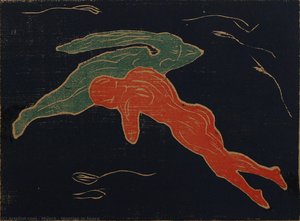
1895. Oil On Canvas.

§ 1Catalogue data


§ 2Abstract
Popis zberateľského predmetu
A hauntingly intense Expressionist masterpiece by Edvard Munch, Jealousy captures raw psychological tension through fiery crimson hues and distorted forms, inviting you to experience this profound exploration of emotion.
 Zobraziť viac
Biografia umelca
Edvard Munch (1863-1944): Nórske umelecké dielo plné úzkosti, smútku a symboliky. Pozrite si ikonické obrazy ako Výkrik a Madona! #Munch #Výkrik #Madona
§ 3Commentary
A Symphony of Unspoken Tension
In the hauntingly beautiful canvas of Edvard Munch’s Jealousy, painted in 1895, we are not merely observers of a scene, but witnesses to a psychological storm. This masterpiece serves as a cornerstone of the Expressionist movement, a period where artists began to tear away the veil of objective reality to reveal the raw, often uncomfortable, truths of the human psyche. The painting presents a triangular confrontation: a man with a heavy, bearded presence stares intently at two women, his gaze thick with suspicion and possessiveness. There is an undeniable magnetism in this composition, a sense that we have stumbled upon a private moment of profound emotional upheaval. For the collector or the designer, this piece offers more than just visual interest; it provides a window into the universal complexities of desire and resentment.
Munch’s technique is nothing short of visceral. Eschewing the delicate, light-dappled strokes of Impressionism, he embraced a bold, emotive approach that prioritizes feeling over form. The palette is dominated by a fiery crimson that pulses through the background, acting as a visual metaphor for the heat of passion and the consuming nature of envy. Through the use of thick impasto, Munch creates a textured surface that mirrors the agitation of the subjects' souls. The distorted facial features and fluid, almost liquid lines contribute to an atmosphere of instability, making the canvas feel alive with movement and unease. This tactile quality ensures that a high-quality reproduction remains a striking focal point in any curated space, drawing the eye with its rhythmic energy and dramatic depth.
Symbolism and the Echoes of History
Beyond the immediate visual drama, Jealousy is layered with profound symbolism that connects the personal to the primordial. The figures within the frame evoke the biblical archetypes of Adam and Eve, a theme Munch frequently revisited to explore themes of temptation and fallibility. The woman in red, positioned as a beacon of allure, represents the very object of desire that fuels the man's torment. Her presence is both captivating and threatening, much like the "sinful" apple that often accompanies such allegories. Even the subtle inclusion of greenery and natural elements serves to contrast the organic world with the unnatural, suffocating grip of human emotion. This interplay between the seen and the unseen allows the artwork to resonate on multiple intellectual levels.
To possess or display a work inspired by Munch is to invite a conversation about the depths of human experience. The painting does not offer easy comfort; instead, it celebrates the beauty found in vulnerability and the intensity of our most difficult emotions. For interior designers seeking to add a sense of narrative weight and intellectual sophistication to a room, this piece acts as an anchor of profound meaning. It is a work that demands attention, inviting viewers to contemplate the shadows of the human heart while appreciating the masterful execution of one of history's most influential psychological painters.
Otázky a odpovede
Koľko ľudí si prezría "Jealousy 3"?
Pre dielo „Jealousy 3“ je k dispozícii stránka Štatistiky. Zobrazuje mesačnú návštevnosť tohto diela a ďalších prác daného umelca s rozdelením podľa krajín a jazykov.
Aká je technika a dátum vytvorenia diela „Jealousy 3“ od Edvard Munch?
Technikou diela „Jealousy 3“ od Edvard Munch je Oil On Canvas a vzniklo v roku 1895.
Aká technika bola použitá pre „Jealousy 3“ od Edvard Munch?
Technikou diela „Jealousy 3“ od Edvard Munch je Oil On Canvas. Reprodukcie majú za cieľ verné odovzdanie vzhľadu tejto techniky.
 Prepnúť na tlač


 V prípade umeleckých diel alebo reprodukcií, ktorých ktorákoľvek strana je väčšia ako 105 cm (cca 41 palcov), sa rám dodáva v rozloženom stave ako sada. Táto metóda zabezpečuje bezpečnú доставu a chráni pred poškodením počas prepravy.