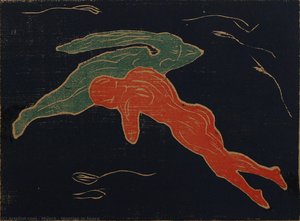
1899. Oil On Canvas.

§ 1Katalogové údaje


§ 2Abstraktné
Popis zberateľského predmetu
Explore Edvard Munch’s ‘Metabolism,’ a haunting Expressionist masterpiece. Discover its symbolic depth, dramatic use of color & form, and the artist's profound exploration of human emotion.
 Zobraziť viac
Biografia umelca
Pionier expresionizmu Edvard Munch vytvoril ikonický Výkrik. Preskúmajte jeho dojatie majstrovstva úzkosti a emócií ešte dnes.
§ 3Komentár
A Haunting Dialogue: Decoding Edvard Munch’s ‘Metabolism’
“Metabolism” (1899) is more than a painting; it's a visceral exploration of the human condition, rendered with haunting beauty and psychological depth by Norwegian master Edvard Munch. This evocative work stands as a pivotal piece bridging Symbolism and the burgeoning Expressionist movement, offering viewers a glimpse into the anxieties and complexities of modern life.Subject & Composition: Entwined Destinies
The painting centers on two nude figures – traditionally interpreted as male – enveloped within a dense, shadowy forest. Their bodies are intimately close yet remain distinctly separate, creating a palpable tension. This isn’t a depiction of conventional intimacy; rather, it suggests a silent confrontation, an introspective isolation *with* another being. The off-center composition further amplifies this sense of unease and imbalance, drawing the eye into the psychological space between them. The forest itself is not merely a backdrop but an oppressive presence, its looming vertical forms acting as both enclosure and metaphor for the subconscious mind.Style & Technique: A Mosaic of Emotion
Munch’s technique in “Metabolism” is strikingly meticulous. He employs a distinctive mosaic-like application of small dots or brushstrokes, building up a heavily textured surface that shimmers with an almost metallic quality. This deliberate texture isn't simply aesthetic; it heightens the emotional impact, suggesting fragility and instability beneath the surface. The color palette – dominated by dark blues, purples, and hints of gold – contributes to the painting’s somber mood. While echoes of Art Nouveau can be seen in the flowing lines of the female figure, Munch transcends stylistic categorization, forging his own path toward expressing inner psychological states.Historical Context: Dawn of a New Expression
Created at the cusp of the 20th century, “Metabolism” reflects a growing disillusionment with traditional artistic conventions and an increasing fascination with exploring the complexities of the human psyche. Munch was a pioneer of Expressionism, rejecting objective representation in favor of subjective emotional experience. Influenced by his time amongst Parisian Post-Impressionists like Van Gogh and Gauguin, he embraced bold color and distorted forms to convey inner turmoil – a shift that foreshadowed the anxieties and alienation defining much of modern art.Symbolism & Interpretation: The Cycle of Existence
The title itself, “Metabolism,” is profoundly suggestive. It alludes to processes of transformation, decay, and renewal—concepts deeply intertwined with Munch’s own preoccupation with life, death, and the cyclical nature of existence. The mirrored effect created by the figures can be interpreted as representing inner conflict, duality, or even a fragmented self. The forest setting symbolizes the unconscious mind and hidden dangers. Is this a scene of temptation? A reflection of internal struggle? Munch deliberately leaves these questions open-ended, inviting viewers to project their own interpretations onto the canvas.Emotional Impact & Lasting Legacy
“Metabolism” isn’t simply *about* emotion; it evokes emotion. It's a work that lingers in the mind long after viewing, prompting introspection and a confrontation with uncomfortable truths about human relationships and the darker aspects of the self. As a cornerstone of Expressionism, this piece continues to inspire artists today.- A reproduction of “Metabolism” serves as a compelling focal point for any interior.
- Its depth and intrigue add a touch of haunting beauty to a space.
- The painting’s psychological resonance sparks conversation and contemplation.
Otázky a odpovede
Sú farby diela „Metabolism“ od Edvard Munch sýte alebo tlmené?
Farby diela „Metabolism“ od Edvard Munch majú Subtle Color saturáciu. Saturácia určuje, ako sú farby živé alebo tlmené.
Do ktorého umeleckého smeru patrí „Metabolism“ od Edvard Munch?
„Metabolism“ je dielo smeru Expressionism. Tento smer odzrkadľuje umeleckú tradíciu, ktorej toto dielo súčasťou.
Do ktorej fázy kariéry Edvard Munch patrí dielo „Metabolism“ (1899)?
Datovanie do roku 1899 situuje dielo „Metabolism“ do obdobia Mature Period v rámci umeleckého vývoja Edvard Munch.


 Prepnúť na tlač


 V prípade umeleckých diel alebo reprodukcií, ktorých ktorákoľvek strana je väčšia ako 105 cm (cca 41 palcov), sa rám dodáva v rozloženom stave ako sada. Táto metóda zabezpečuje bezpečnú доставu a chráni pred poškodením počas prepravy.