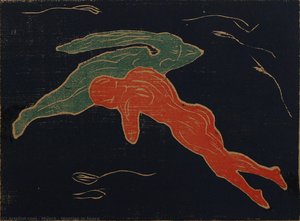
1894. Acrylic On Canvas.

§ 1Catalogue data


§ 2Abstract
Popis zberateľského predmetu
Explore Edvard Munch’s ‘Separation,’ a haunting Expressionist masterpiece of grief & despair. Black & white, loose brushstrokes capture intense emotion. Discover this iconic artwork's symbolism and profound impact.
 Zobraziť viac
Biografia umelca
Edvard Munch (1863-1944): Nórske umelecké dielo plné úzkosti, smútku a symboliky. Pozrite si ikonické obrazy ako Výkrik a Madona! #Munch #Výkrik #Madona
§ 3Commentary
Separation: A Descent Into Melancholy
The artwork, Edvard Munch’s *Separation*, transcends mere visual representation; it plunges viewers into the depths of existential anguish and profound sorrow. Painted in 1896, this haunting monochrome masterpiece embodies the core tenets of Expressionism—a movement dedicated to conveying inner emotional experience rather than objective observation—and stands as a testament to Munch’s unflinching exploration of human vulnerability. The painting's genesis lies within Munch’s deeply personal struggles with grief and loss following the untimely death of his sister, Johanne Sophie, marking a pivotal moment in his artistic trajectory.- Subject Matter: At its heart, *Separation* depicts a solitary figure kneeling in desolate contemplation, clutching his chest with palpable distress. Behind him looms a spectral female form—a ghostly apparition—reaching out towards him with an expression of yearning and sorrow. This juxtaposition immediately establishes a dynamic tension between despair and longing, central to Munch’s artistic vision.
- Style & Technique: Munch's distinctive style is characterized by loose brushstrokes and expressive lines that prioritize emotional impact over meticulous detail. The technique employs oil paints on canvas, resulting in a textured surface that conveys movement and dynamism—a deliberate departure from academic conventions of the time. Visible brushwork contributes to an overall feeling of urgency and vulnerability.
- Historical Context: Created during Munch’s formative years, *Separation* reflects the anxieties prevalent in European intellectual circles at the turn of the century. The painting aligns with broader artistic trends exploring themes of psychological disturbance and spiritual crisis—a response to the burgeoning influence of Nietzschean philosophy and Darwinian theory on Western thought.
- Symbolism: Munch’s masterful use of symbolism elevates *Separation* beyond a simple depiction of grief. The kneeling posture signifies submission to overwhelming emotion, while the outstretched hand embodies an attempt to grasp solace or connection—a futile gesture against the encroaching darkness. The ghostly female figure represents memory and regret, symbolizing the inescapable presence of past experiences shaping one’s emotional landscape.
- Emotional Impact: *Separation* achieves its profound emotive power through Munch's masterful manipulation of light and shadow. Uneven illumination casts deep shadows that accentuate the subject’s sorrowful expression and heighten the sense of drama, creating a claustrophobic atmosphere that compels contemplation. The painting’s monochrome palette amplifies its melancholic tone, mirroring the pervasive gloom of Munch’s inner world—a world scarred by trauma and haunted by mortality.
Otázky a odpovede
Čo zobrazuje „Separation“ od Edvard Munch?
Predmetmi diela „Separation“ sú grief, despair, isolation, spirituality, melancholy, spectral figure, emotional turmoil, symbolism.
Do ktorej fázy kariéry Edvard Munch spadá dielo „Separation“, vzhľadom na jeho dátum vytvorenia?
Datovanie do roku 1894 situuje dielo „Separation“ do obdobia Mature Period v rámci umeleckého vývoja Edvard Munch.
Akú luminanciu má „Separation“ od Edvard Munch?
Luminancia zaznamenaná pre dielo „Separation“ od Edvard Munch je Gentle Luminance.



 Prepnúť na tlač


 V prípade umeleckých diel alebo reprodukcií, ktorých ktorákoľvek strana je väčšia ako 105 cm (cca 41 palcov), sa rám dodáva v rozloženom stave ako sada. Táto metóda zabezpečuje bezpečnú доставu a chráni pred poškodením počas prepravy.