

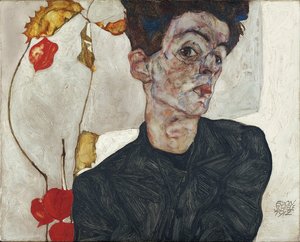
1913. Acrylic On Canvas, 89.0 x 90.0 cm.

§ 1Catalogue data

- 89.0 x 90.0 cm


§ 2Abstract
Popis zberateľského predmetu
Experience the raw emotion of Egon Schiele’s ‘The Bridge,’ a pivotal Expressionist masterpiece exploring themes of transition and introspection. Explore stunning reproductions at WikiArt.
 Zobraziť viac
Biografia umelca
Egon Schiele: expresionista s temnými témami, silnými portrétmi a unikátnymi čiarami. Objavte jeho podriadenú dušu v reprodukciách! #EgonSchiele #výtvarnýumelník #expresionizmus
§ 3Commentary
A Window Into Expressionism: Examining Egon Schiele’s “The Bridge”
Egon Schiele’s “The Bridge,” painted in 1913, stands as a cornerstone of early 20th-century Expressionist art—a movement that sought to convey raw emotion and psychological intensity rather than merely depicting the external world. More than just a landscape scene, it's a profound meditation on human experience, rendered with Schiele’s distinctive blend of bold lines and unsettling realism.
- Historical Context: The painting emerged during a period of seismic change in European art history. Artists like Schiele were reacting against the academic conventions of their time, rejecting idealized representations for unflinching portrayals of human vulnerability and anxiety. The influence of Cubism is palpable in the geometric structuring of the bridge itself, demonstrating Schiele’s willingness to experiment with innovative artistic approaches.
- Composition & Symbolism: Schiele meticulously crafted a scene dominated by two figures—one standing rigidly, one seated passively—positioned beneath a starkly rendered bridge. The bridge serves as a powerful symbol of transition and connection, representing the precarious balance between stability and upheaval. Its angular lines emphasize this duality, mirroring the internal struggles reflected in the postures of the subjects.
- Technique: Executed in oil on canvas, “The Bridge” showcases Schiele’s masterful control over texture and color. Thick impasto brushstrokes contribute to a palpable sense of physicality, conveying both vulnerability and resilience. The muted palette—primarily browns and reds—intensifies the emotional impact of the artwork, creating an atmosphere of quiet contemplation punctuated by moments of unsettling tension.
- The Figure’s Significance: Notably, the seated figure is often interpreted as Schiele's self-portrait, embodying introspection and confronting mortality. The posture conveys a sense of stillness amidst inner turmoil—a characteristic motif in Schiele’s oeuvre that speaks to his preoccupation with existential themes.
- Legacy & Influence: “The Bridge” cemented Schiele’s reputation as one of the most important artists of his generation and profoundly impacted subsequent artistic movements, including Surrealism and Absurdism. Its uncompromising honesty and psychological depth continue to resonate with viewers today, reminding us of art's capacity to explore the darkest recesses of human consciousness.
A reproduction of “The Bridge” offers an exceptional opportunity to bring Schiele’s visionary aesthetic into your home or workspace—capturing not only its striking visual qualities but also the enduring emotional power that defines this iconic masterpiece.
Otázky a odpovede
Je Egon Schiele, autor diela „The Bridge“, známy aj pod inými menami?
Medzi ďalšie známe mená umelca Egon Schiele, autora diela „The Bridge“, patria aj Egon Leo Adolf Ludwig Schiele.
Ako by sa malo opísať nálada diela „The Bridge“ od Egon Schiele?
„The Bridge“ má Dramatic atmosféru.
Aká sýta je paleta diela „The Bridge“?
„The Bridge“ od Egon Schiele je zachytené s Balanced Soft saturáciou.


 Prepnúť na tlač


 V prípade umeleckých diel alebo reprodukcií, ktorých ktorákoľvek strana je väčšia ako 105 cm (cca 41 palcov), sa rám dodáva v rozloženom stave ako sada. Táto metóda zabezpečuje bezpečnú доставu a chráni pred poškodením počas prepravy.


