

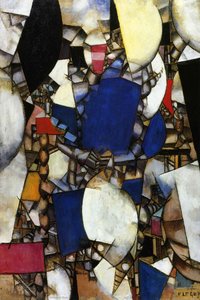
1912. Acrylic On Canvas.

§ 1Catalogue data


§ 2Abstract
Popis zberateľského predmetu
 Zobraziť viac
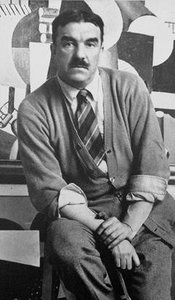
Biografia umelca
Fernand Léger (1881-1955): Francúzsky maliar, známy svojím tubistickým štýlom a oslavou moderny & strojárstva. Jeho diela sú predchodcami Pop Artu.
§ 3Commentary
The Level Crossing
Fernand Léger’s “The Level Crossing,” created in 1912, stands as a cornerstone of Cubism and Orphism—movements that irrevocably altered the trajectory of twentieth-century art. More than just a depiction of a railway station scene, it embodies Leger's profound engagement with the burgeoning industrial age and his masterful manipulation of geometric abstraction to convey its dynamism and underlying tension. This painting isn’t merely observed; it’s felt—a visceral reaction to the rapid pace of change that defined the era.Cubism: A Revolutionary Vision
Cubism, spearheaded by Pablo Picasso and Georges Braque, fundamentally challenged traditional artistic conventions. Rejecting illusionistic representation, Cubists fragmented objects into interlocking planes and multiple viewpoints simultaneously. This technique wasn’t simply about accuracy; it was about capturing the essence of an object's structure—its underlying geometry—rather than its surface appearance. Léger embraced this approach wholeheartedly, distilling complex scenes into simplified forms that prioritized visual impact over meticulous detail. The resulting images possess a striking immediacy and forcefulness, reflecting Leger’s conviction that art should engage with the realities of modern life.Composition and Symbolism: Decoding the Visual Language
The painting's composition is deliberately unsettling yet captivating. Léger arranges figures—a man standing on the platform, several individuals in the foreground—within a network of cylindrical forms reminiscent of pistons and machinery. These shapes dominate the canvas, conveying a sense of relentless movement and mechanical precision. Notably, a dog sits prominently near the center, acting as an anchor amidst the swirling abstraction. The inclusion of a chair suggests a waiting area, subtly hinting at themes of anticipation and transition. Léger’s use of bold colors—primarily reds, yellows, and blues—amplifies this emotional resonance. These hues aren't merely decorative; they contribute to the painting's overall sense of energy and urgency.Orphism: Embracing Pure Color and Geometric Harmony
Influenced by Fauvism and Paul Signac’s theoretical explorations into color perception, Léger adopted Orphism—a subset of Cubism—that prioritized pure chromatic hues over tonal gradations. This stylistic choice aligns with Orphism's belief that color alone could evoke emotion and convey meaning. Léger eschewed shading and blending techniques, opting instead for flat planes of vibrant pigment arranged in harmonious geometric patterns. The result is a visual experience akin to music—a deliberate disruption of conventional artistic norms designed to stimulate the viewer’s senses and provoke contemplation.A Legacy of Innovation
“The Level Crossing” cemented Léger's reputation as a pioneer of modern art, securing its place within the Solomon R. Guggenheim Museum’s Founding Collection alongside other seminal works from the early 20th century. Its enduring appeal lies in its ability to encapsulate the spirit of an era—the anxieties and aspirations associated with industrialization—through a uniquely expressive visual language. For those seeking inspiration or contemplating acquiring a high-quality reproduction, Léger's “The Level Crossing” remains a testament to artistic innovation and a captivating glimpse into the transformative power of abstraction.Otázky a odpovede
Ako je opísaná farebná paleta diela „The level Crossing“ od Fernand Léger?
„The level Crossing“ od Fernand Léger využíva Neutrals farebnú paletu, ktorá vystihuje celkový farebný charakter diela.
Aká je vnímaná svetlostnosť diela „The level Crossing“ od Fernand Léger?
Celkovo je dielo „The level Crossing“ zaznamenané ako bright. Vnímaná jasnosť popisuje, aký svetlý alebo tmavý sa tento kus zdá byť.
Patrí „The level Crossing“ od Fernand Léger do verejnej domény?
„The level Crossing“ od Fernand Léger patrí do v slobodnom prostredí – autorské práva vypršali. Tento stav určuje pravidlá pre reprodukciu obrazu tohto diela.




 Prepnúť na tlač


 V prípade umeleckých diel alebo reprodukcií, ktorých ktorákoľvek strana je väčšia ako 105 cm (cca 41 palcov), sa rám dodáva v rozloženom stave ako sada. Táto metóda zabezpečuje bezpečnú доставu a chráni pred poškodením počas prepravy.


