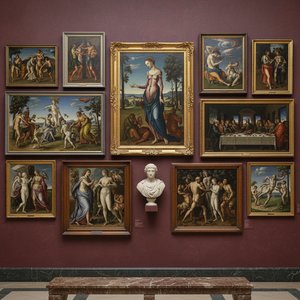
1573. Acrylic, 76.0 x 63.0 cm. Louvre.

§ 1Catalogue data

- 76.0 x 63.0 cm


§ 2Abstract
Popis zberateľského predmetu
Experience Giuseppe Arcimboldo's 'Winter': A captivating portrait of a tree-like man crafted from fruits, vegetables, and leaves – a unique Renaissance masterpiece.
 Zobraziť viac
Biografia umelca
Slovenská Meta Popis: Giuseppe Arcimboldo (1527-1593) bol taliansky maliar známy svojimi fantastickými portrétmi zloženými z ovocia, zeleniny a predmetov. Jeho jedinečný štýl, kombinujúci renesančnú eleganciu s surrealistickým humorom, fascinuje dodnes.
§ 3Commentary
A Portrait Unlike Any Other: Exploring Giuseppe Arcimboldo’s “Winter”
- Subject Matter & Composition The artwork presents an arresting visual paradox – a human face meticulously crafted from botanical elements. Arcimboldo's genius lies in transforming the familiar portrait genre into something utterly revolutionary, presenting a man whose visage is reimagined as a stylized tree. Antlers dominate the upper portion of the composition, immediately establishing a connection between humanity and nature’s grandeur. Leaves cascade through his hair and drape around his neck, reinforcing this symbolic fusion.
- Style & Technique Arcimboldo's distinctive style epitomizes Mannerism, characterized by exaggerated forms and stylized representations. He employs meticulous trompe l'oeil techniques—creating illusions of depth and texture—to convincingly integrate disparate objects into a cohesive whole. The artist’s painstaking attention to detail is evident in every carefully positioned fruit, vegetable, and flower, demonstrating an unparalleled mastery of artistic craft.
- Historical Context Created in 1573 during the Renaissance, “Winter” reflects the intellectual currents of its time—a fascination with alchemy, astrology, and the pursuit of universal harmony. Arcimboldo’s work aligns with humanist ideals that celebrated human intellect and creativity alongside reverence for the natural world. It served as a visual commentary on the anxieties surrounding mortality and decay prevalent during the Reformation.
- Symbolism & Allegory Beyond its striking appearance, “Winter” is laden with symbolic meaning. The tree represents resilience and regeneration amidst adversity—a potent emblem of hope and renewal—particularly relevant in the context of religious upheaval. Fruits like apples and bananas symbolize fertility and abundance, while books signify knowledge and erudition. Each element contributes to a complex tapestry of ideas intended to provoke contemplation.
- Emotional Impact & Artistic Legacy “Winter” transcends mere visual spectacle; it evokes a profound emotional response in the viewer. The juxtaposition of organic forms with human representation generates an unsettling yet captivating tension, prompting reflection on themes of identity and transformation. Arcimboldo’s innovative approach cemented his place as one of the most influential artists of his era and continues to inspire admiration for its audacious creativity and intellectual depth. Its enduring appeal speaks to a timeless fascination with blending artifice and nature—a concept that resonates powerfully in contemporary artistic discourse.
Otázky a odpovede
Aká je dominantná farba diela „Winter“ od Giuseppe Arcimboldo?
Celé dielo „Winter“ od Giuseppe Arcimboldo prechádza Amber to Saffron odtieňom.
Kde sa dielo „Winter“ zaradí do doterajšieho tvoru umelca Giuseppe Arcimboldo?
V rámci tvorby umelca Giuseppe Arcimboldo sa dielo „Winter“ radí do štýlu Northern Renaissance, pričom sprevádzajú ho témy ako botanical tradition, renaissance idealism, court patronage, symbolic portraiture, arcimboldo legacy.
Aká sýta je paleta diela „Winter“?
„Winter“ od Giuseppe Arcimboldo je zachytené s Balanced Soft saturáciou.


 Prepnúť na tlač


 V prípade umeleckých diel alebo reprodukcií, ktorých ktorákoľvek strana je väčšia ako 105 cm (cca 41 palcov), sa rám dodáva v rozloženom stave ako sada. Táto metóda zabezpečuje bezpečnú доставu a chráni pred poškodením počas prepravy.