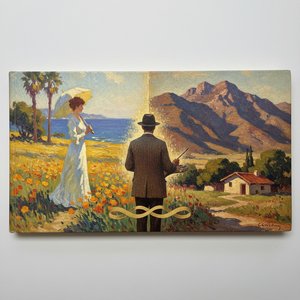
Olej na plátne. Children's Museum of the Arts.

§ 1Katalogové údaje


Toto dielo je chránené autorským právom
Umelecké dielo zobrazené na tejto stránke je chránené autorským zákonom, čo znamená, že nemôžeme legálne vytvárať ani predávať jeho identickú reprodukciu. Táto ochrana je vymáhaná na základe medzinárodných dohôd, ako napríklad Bernská konvencia a národnými zákonmi, vrátane tých, ktoré sú stanovené v Autorské právo USA – Title 17. Všetky práva vyhradené.
Ako rešpektujúca a legálna alternatíva ponúkame vlastné, ručne maľované diela inšpirované originálom. Naši skúsení a profesionálni umelci dôkladne študujú štýl, náladu a umelecký podnet originálu, aby vytvorili nové, jedinečné dielo, ktoré vyvoláva rovnaký pocit – pričom samo ostáva vlastným originálnym dielom.
Táto metóda plne dodržiava autorské práva, pretože nezahŕňa kopírovanie ani duplikovanie chráneného diela. Ide skôr o kreatívnu reinterpretáciu – nový obraz, ktorý je ovplybnený originálom, no nie je s ním identický.
 Zobraziť viac
§ 2Abstraktné
Popis zberateľského predmetu
Výrazný olejový obraz od Hung Liu zobrazujúci mladého ženského autora v červenom svetle s výrazným vyjadrením osobnosti – umelecké dielo reflektuje obdobie revolúcie a boj za slobodu.
Biografia umelca
Hung Liu (1948-2021) bola známa americko-čínska umelkyňa, ktorá sa preslávila svojimi obrazmi založenými na historických fotografiách Číny a Ameriky. Jej štýl 'pláčovej realizmu' odráža pocity spomienok, identity a osudových príbehov, čím sa stala významnou figúrou v súčasnom umení.
§ 3Komentár
Hung Liu: A Portrait of Resilience Amidst Revolution
Hung Liu’s artistic journey is profoundly shaped by China's turbulent 20th century—a narrative interwoven with personal hardship and unwavering dedication to her craft. Born in Changchun in 1948, Liu experienced the formative years under Mao Zedong’s rule, witnessing firsthand the fervor of revolutionary zeal and its subsequent chilling grip on societal freedoms. The imprisonment of her father for dissenting views instilled within Liu a deep empathy for injustice—a sentiment that would become a cornerstone of her artistic vision. Her relocation to Beijing at age ten afforded access to elite education but simultaneously immersed her in an environment increasingly governed by Maoist ideology, culminating in the harrowing Cultural Revolution. This period demanded resilience and fortitude as Liu endured “re-education,” laboring in rural communities—experiences that fueled her exploration of identity and memory.- Subject Matter: Liu’s oeuvre centers on portraits of women—primarily peasant women—often rendered with meticulous detail, capturing their dignity and strength despite challenging circumstances.
- Style: Her distinctive style leans heavily toward realism, albeit imbued with a subtle expressive quality that transcends mere representation. She eschews flamboyant brushstrokes in favor of smooth, blended surfaces, prioritizing tonal harmony and nuanced observation.
- Technique: Liu’s mastery lies in her masterful application of oil paint on canvas—a technique she honed rigorously at Beijing’s Central Academy of Fine Art. Her meticulous layering process allows for gradual build-up of color and texture, resulting in canvases that radiate warmth and luminosity.
“Daughter of the Revolution”: Symbolism and Context
“Daughter of the Revolution” stands as a poignant testament to Liu’s artistic exploration of memory and trauma—a reflection on her own experiences during the Cultural Revolution. The painting depicts Liu herself in a pink shirt, juxtaposed against an antique glass bottle from the California Gold Rush—a deliberate pairing designed to evoke contrasting narratives: the idealism of Maoist China and the ambition of westward migration. This juxtaposition underscores Liu’s preoccupation with themes of displacement, identity formation, and the enduring legacy of historical events. The inclusion of the bottle symbolizes not merely material wealth but also a yearning for connection—a desire to bridge cultural divides and grapple with the complexities of personal history.- Color Palette: The dominant hues—pink, lavender, and jade green—reflect Liu’s deliberate choice to liberate her image from the oppressive monochrome of Maoist propaganda, signaling instead a celebration of femininity and vitality.
- Composition: Liu employs a balanced compositional arrangement, centering her figure against a muted yellow background—a color that subtly enhances the luminosity of her skin tone and reinforces the painting’s contemplative mood.
Emotional Resonance and Legacy
Liu's work transcends mere visual representation; it communicates profound emotional resonance—capturing the vulnerability and fortitude inherent in human experience. “Daughter of the Revolution” embodies this ethos, conveying a sense of quiet dignity amidst hardship—a testament to Liu’s unwavering commitment to portraying the realities of everyday life with sensitivity and compassion. Her artistic legacy extends far beyond her individual canvases; it serves as an inspiration for artists confronting similar challenges—a reminder that beauty can emerge from adversity and that truthfulness remains paramount in conveying human emotion. Liu's enduring influence is palpable in contemporary art, where her stylistic innovations continue to inspire new generations of painters—solidifying her place as a pivotal figure in the history of Chinese art.Otázky a odpovede
Môžem si pomocou rozšírenej reality prezrieť „Samportrét“ od Hung Liuová vo svojej miestnosti?
Dielo „Samportrét“ od Hung Liuová si môžete vyskúšať priamo na vašej stene pomocou rozšírenej reality na kompatibilnom zariadení na stránke Náhľad v AR pre AR náhľad.
Do ktorého obdobia tvorby Hung Liuová patrí dielo „Samportrét“?
"Samportrét" predstavuje Mature Period umelca Hung Liuová.
Akú veľkosť by som mal pre svoju miestnosť vytlačiť pri diele "Samportrét"?
Pre miestnosť typu Denná miestnosť sa pre dielo „Samportrét“ odporúča veľkosť tlače Large.


 Prepnúť na tlač


 V prípade umeleckých diel alebo reprodukcií, ktorých ktorákoľvek strana je väčšia ako 105 cm (cca 41 palcov), sa rám dodáva v rozloženom stave ako sada. Táto metóda zabezpečuje bezpečnú доставu a chráni pred poškodením počas prepravy.