

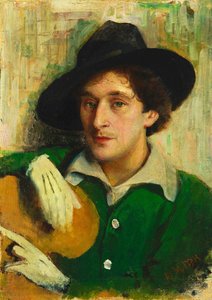
1923. Acrylic On Canvas.

§ 1Katalogové údaje


Toto dielo je chránené autorským právom
Umelecké dielo zobrazené na tejto stránke je chránené autorským zákonom, čo znamená, že nemôžeme legálne vytvárať ani predávať jeho identickú reprodukciu. Táto ochrana je vymáhaná na základe medzinárodných dohôd, ako napríklad Bernská konvencia a národnými zákonmi, vrátane tých, ktoré sú stanovené v Autorské právo USA – Title 17. Všetky práva vyhradené.
Ako rešpektujúca a legálna alternatíva ponúkame vlastné, ručne maľované diela inšpirované originálom. Naši skúsení a profesionálni umelci dôkladne študujú štýl, náladu a umelecký podnet originálu, aby vytvorili nové, jedinečné dielo, ktoré vyvoláva rovnaký pocit – pričom samo ostáva vlastným originálnym dielom.
Táto metóda plne dodržiava autorské práva, pretože nezahŕňa kopírovanie ani duplikovanie chráneného diela. Ide skôr o kreatívnu reinterpretáciu – nový obraz, ktorý je ovplybnený originálom, no nie je s ním identický.
 Zobraziť viac
§ 2Abstraktné
Popis zberateľského predmetu
Biografia umelca
Pozrite si Marc Chagalla – slovenského židovského impresionistu a surrealistu! Jeho tvorba je oslavovaná svojimi fantastickými obrazmi, výraznými farbami a nezabuditeľným životopisom.
§ 3Komentár
Asking the Way: A Dreamscape in Black Ink
Marc Chagall’s “Asking the Way,” created around 1923 during his Parisian period, isn't merely an image; it’s a portal into a subconscious realm—a testament to Chagall’s unwavering commitment to capturing the essence of memory and imagination. Executed in black ink on white paper, this etching embodies the spirit of Naïve Art (Primitivism), prioritizing expressive line work over meticulous realism.
- Composition & Perspective: The artwork presents an asymmetrical arrangement dominated by a colossal head—a motif recurrent throughout Chagall’s oeuvre—positioned prominently at the lower half. A man, adorned with a hat, navigates this landscape atop the head, holding reins or a whip, suggesting guidance and control amidst a simplified backdrop of trees and buildings. Notably absent is traditional perspective; instead, spatial relationships are dictated by symbolic significance, fostering a dreamlike atmosphere.
- Technique & Line Work: Chagall’s masterful technique relies on freehand drawing utilizing black ink on paper—a deliberate choice that maximizes tonal variation through hatching and cross-hatching. These lines aren't merely descriptive; they pulsate with emotion, conveying a sense of movement and capturing the fluidity characteristic of Chagall’s artistic vision.
- Symbolism & Emotional Impact: The oversized head likely represents memory or perhaps societal structures—a recurring symbol in Chagall’s work. The man's posture speaks to an active quest for direction, mirroring a broader exploration of identity and navigating complex realities. An undercurrent of melancholy pervades the scene, reflecting Chagall’s profound sensitivity to human experience.
- Historical Context: Produced during the turbulent years following World War I, “Asking the Way” reflects the anxieties and aspirations of its time—a period marked by disillusionment yet brimming with artistic experimentation. Chagall's embrace of Naïve Art aligns with a broader movement rejecting academic conventions in favor of unfiltered emotion and intuitive representation.
This etching’s monochromatic palette amplifies the impact of line work, emphasizing texture and creating depth without resorting to illusionistic techniques. It invites contemplation—a journey into Chagall's inner world where dreams intertwine with reality, leaving an indelible impression on any viewer fortunate enough to experience its evocative beauty.
Recommended Reproduction: A high-quality hand-painted reproduction of “Asking the Way” captures the essence of Chagall’s artistic spirit, bringing his dreamlike vision to life in vibrant color—a stunning addition to any art collection or interior design scheme.Otázky a odpovede
V akom orientovaní je dielo „Asking the Way“ od Marc Chagall?
Formát diela „Asking the Way“ je Portrait, čo je užitočná informácia pri plánovaní miesta, kam bude reprodukcia umiestnená.
Čo vysvetľuje situáciu s autorskými právami diela „Asking the Way“ od Marc Chagall?
Dielo „Asking the Way“ od umelca Marc Chagall patrí do stále chránené autorským právom. Autorské práva sa vypočítavajú od roku úmrtia umelca, pričom Marc Chagall zomrel v roku 1985.
Ako je vybudovaná farebná kompozícia diela „Asking the Way“ od Marc Chagall?
Farebná kompozícia diela „Asking the Way“ od Marc Chagall spája Serene kontrast s Discordant Palette harmóniou.


 Prepnúť na tlač


 V prípade umeleckých diel alebo reprodukcií, ktorých ktorákoľvek strana je väčšia ako 105 cm (cca 41 palcov), sa rám dodáva v rozloženom stave ako sada. Táto metóda zabezpečuje bezpečnú доставu a chráni pred poškodením počas prepravy.


