


 Náhľad v interiéri
 Odoslať ako digitálnu kartu
 Zdieľať
 Podrobnosti o dielo
 Príručka

 Stiahnuť obraz
 Podobné položky
 RTG skúška
 Prehliadanie diapozoje
 Q&A
Q&A Štatistiky
Peasant with a Clock


 Zobraziť viac
Umelecké dielo zobrazené na tejto stránke je chránené autorským zákonom, čo znamená, že nemôžeme legálne vytvárať ani predávať jeho identickú reprodukciu. Táto ochrana je vymáhaná na základe medzinárodných dohôd, ako napríklad Bernská konvencia a národnými zákonmi, vrátane tých, ktoré sú stanovené v Autorské právo USA – Title 17. Všetky práva vyhradené.
Táto metóda plne dodržiava autorské práva, pretože nezahŕňa kopírovanie ani duplikovanie chráneného diela. Ide skôr o kreatívnu reinterpretáciu – nový obraz, ktorý je ovplybnený originálom, no nie je s ním identický.
Giclée / Umenotlač
Giclée tlač alebo plátno múzeálnej kvality s rýchlou výrobou a rôznymi možnosťami povrchovej úpravy. ( Kúpiť ručne maľovaný obraz Prepnúť na digitálny obraz)




P118B €10

P118H €10

P118W €10

P438Z €10

P508JH €12

P508YH €12

P805H €10

P805Z €10

P919BZ €10

P919G €10

P919XJ €10

P959ZH €10

P968JZ €12

W106C €8

W218G €10

W218JH €8

W218Y €10

W307PJ €10

W316G €10

W316PJ €8

W316Y €10

W398PJ €8

W4111J €10

W500HY €15

W500JH €15

W692G €12

W849H €8

W940BG €15

W953PJ €8




Vyberte si z našich preddefinovaných rozmerov, ktoré zodpovedajú pôvodným pomeroḿ diela.

Zadajte šírku a výšku, ktoré potrebujete, aby sa reprodukcia hodila k vášmu rámu alebo stene. Print možno len orezávať, nikdy však nemennú veľkosť zvětšiť oproti pôvodnému obrázku, preto pri inom formáte stráca časť obrazu. Pred samotným vytlačiacím procesom vám pošleme digitálny náhľad na schválenie. Obrázok zobrazený na tejto stránke nezobrazuje reálny rez — len digitálny náhľad ukazuje presný výsledok.
Celosvetová doprava () do 2 týždňov namiesto štandardných 4 až 5 týždňov. (30 október)

Bezplatná expresná doprava po celom svete

Vysokokvalitné lnianske plátno

Kompletné poistenie prepravy

Záruka vrátenia colného poplatku

Záruka presného farebného zhodnutia

100-dená politika vrátenia tovaru (iba pri vadách)

100% záruka vrátenia peňazí

Zľava pri väčšom množstve
 Možnosť skla je dostupná len pri rozmeroch pod 110 cm

Peasant with a Clock
Giclée / Umenotlač
Veľkosť reprodukcie
-


Celková cena
€ 57
A Portal to the Subconscious: The Dreamscape of Marc Chagall
To encounter Marc Chagall’s "Peasant with a Clock" is to step beyond the threshold of the tangible world and enter a realm where the laws of physics surrender to the whims of memory. Created in 1968, this evocative lithograph serves as more than a mere depiction of rural existence; it is a profound invitation into the artist’s extraordinarily imaginative universe—a place where reality bends to the dictates of emotion and the soft glow of nostalgia. Chagall, a master weaver of myths, utilizes a vibrant palette dominated by luminous yellows, deep blues, and spirited reds, colors that are deeply rooted in his recollections of Vitebsk. Through his brush—or in this case, the intricate precision of the lithographic stone—he recreates the spiritual fervor of his Jewish heritage, transforming a simple scene into a celestial dance of light and shadow.
The composition unfolds with a sense of theatrical mystery, pulling the viewer into a narrative that feels both ancient and immediate. At the heart of the work stands a peasant man, an arresting figure who holds aloft a clock, creating a striking juxtaposition between the humble nature of his station and the cosmic weight of time itself. In Chagall’s vision, time is rarely a linear progression; instead, it is a cyclical force, intertwined with human experience and the enduring rhythms of folklore. This sense of enchantment is heightened by the presence of other figures, partially obscured by masks or costumes, which lend the piece an air of dreamlike ritual, as if we are witnessing a private moment from a forgotten folk tale.
Symbolism and the Texture of Memory
Every element within this masterpiece is imbued with a symbolic resonance that rewards the contemplative eye. As one wanders through the golden, rolling hills reminiscent of the Belarusian landscape, subtle details emerge to deepen the artwork's narrative layers. Near the bottom right corner, the appearance of a bird and a dog provides a grounding touch of warmth; the bird often serves as a symbol of hope, while the dog represents steadfast loyalty. These small, poignant details act as anchors within the swirling abstraction, connecting the fantastical elements of the piece to the fundamental truths of the human condition.
The technique of lithography plays a crucial role in the emotional impact of this reproduction. It allows for an exceptional level of detail and tonal accuracy, capturing the soft, painterly transitions that define Chagall’s signature style. The flattened perspectives and simplified forms characteristic of naive art are preserved with such clarity that the viewer can almost feel the texture of the dream itself. For the collector or interior designer, this piece offers a unique opportunity to introduce a sense of poetic movement and intellectual depth into a space. It is not merely a decoration but a conversation starter—a window into a world where gravity is a suggestion and color speaks the very language of the soul.
Otázky a odpovede
S akým pocitom sa spája „Peasant with a Clock“?
„Peasant with a Clock“ je spojené s Mysterious pocitom. Emocionálny tón opisuje dojem, ktorý toto dielo vyvoláva.
Ako "Peasant with a Clock" vyvažuje svetlo a tieň?
Zaznamenané hodnoty pre „Peasant with a Clock“ od Marc Chagall sú: jas balanced, luminancia Gentle Luminance.
Akú farebnú harmóniu predstavuje „Peasant with a Clock“ od Marc Chagall?
„Peasant with a Clock“ od Marc Chagall predstavuje Softly Mixed Palette farebnú harmóniu.
Podobné diela


Biografia umelca
A Life Painted in Dreams: The World of Marc Chagall
Marc Chagall, born Moishe Shagal in 1887 in the small Belarussian town of Liozna near Vitebsk, wasn’t merely a painter; he was a poet of color, a weaver of dreams, and a chronicler of memory. His life, spanning nearly a century, mirrored the tumultuous currents of the 20th century, yet his art remained steadfastly rooted in a deeply personal vision—one infused with the folklore of his Hasidic Jewish upbringing and an unwavering belief in the power of imagination. Vitebsk itself was more than just a birthplace; it became the emotional core of his artistic universe, a recurring motif populated by flying figures, whimsical animals, and the vibrant hues of remembered landscapes. The town’s unique blend of cultures—Russian Orthodox churches alongside bustling Jewish marketplaces—forged an aesthetic sensibility that would defy easy categorization throughout his long career. Though he sought formal training first with a local sign painter and later in St. Petersburg under Léon Bakst, and then in Paris at the Académie de la Grande Chaumière, Chagall never fully embraced any single artistic movement. He absorbed elements of Cubism, Symbolism, and Fauvism, but always filtered them through his own intensely personal lens, creating a style that was uniquely, unmistakably Chagall.Early Years and Artistic Formation
Chagall’s formative years were marked by hardship and displacement. Born into a Jewish family in Vitebsk—a town steeped in Orthodox tradition—he experienced firsthand the challenges faced by Jews living under Tsarist rule. Despite limited formal education, he possessed an innate artistic talent that quickly blossomed. His initial training began with a local sign painter, honing his skills in draftsmanship and color theory. Subsequently, he pursued studies at St. Petersburg’s Zvantseva School of Drawing and Painting, where he encountered the influential teachings of Léon Bakst—a pioneer of theatrical design who championed avant-garde aesthetics. This exposure to Bakst's ideas profoundly shaped Chagall’s artistic sensibilities, introducing him to the principles of Cubism and fostering his fascination with geometric abstraction. Recognizing the importance of broadening his horizons, he traveled to Paris in 1908, immersing himself in the vibrant intellectual and artistic milieu of the École de Paris—a collective of artists who rejected academic conventions and embraced experimentation. During this period, he befriended fellow artists like Pablo Picasso and André Derain, absorbing their stylistic innovations and refining his own visual language.The Symbolist Vision
Chagall’s early paintings—such as I and the Village (1911)—demonstrate a distinctive preoccupation with symbolism and memory. Unlike traditional landscapes that strive for objective representation, Chagall's depictions of Vitebsk are fragmented recollections imbued with emotional significance. Figures float amidst stylized forms, conveying feelings of longing and nostalgia—a characteristic trait that would define his artistic style throughout his career. The artist’s palette is bold and expressive, employing vibrant hues to communicate emotion rather than literal accuracy. This stylistic approach reflects Chagall's deep connection to Jewish folklore and mythology, as well as his profound engagement with the spiritual traditions of his upbringing. His use of color—particularly yellows, blues, and reds—is deliberately unconventional, creating a dreamlike atmosphere that transcends rational perception.The Turbulent Years: Revolution and Exile
The Russian Revolution dramatically altered Chagall’s life trajectory. Returning to Vitebsk in 1917 amidst the upheaval of Bolshevik rule, he became involved in cultural initiatives aimed at revitalizing Belarusian art and culture. He established an Art School in Vitebsk—a bold experiment in artistic education that briefly flourished before succumbing to political pressures. During this period, Chagall wrestled with conflicting ideological impulses—embracing socialist ideals while simultaneously cherishing his Jewish heritage. The outbreak of World War I forced him into exile, disrupting his creative pursuits and propelling him back to Paris. Despite the hardships endured during wartime, Chagall continued to produce artwork that reflected the anxieties and uncertainties of the era. His painting White Crucifixion (1938)—a poignant meditation on suffering and persecution—stands as a testament to this period’s emotional intensity.International Recognition and Artistic Legacy
Chagall achieved international acclaim during World War II, escaping occupied France with his wife in May 1941. He found refuge in New York City, where he resided for seven years, fostering collaborations with fellow artists and engaging in prolific creative activity. His work gained prominence during the Abstract Expressionist movement, cementing his reputation as one of the most influential figures in modern art. Following the war, Chagall returned to France, continuing to paint until his death in 1985 at Saint-Paul-de-Vence—a picturesque Provençal village that served as his artistic sanctuary for decades. His enduring legacy resides not only in his stunning paintings and stained glass windows but also in his unwavering commitment to artistic integrity and imaginative vision—a vision that continues to inspire artists and audiences alike. Chagall’s art transcends cultural boundaries, conveying universal themes of love, loss, faith, and remembrance—a testament to the transformative power of creativity and the enduring beauty of dreams.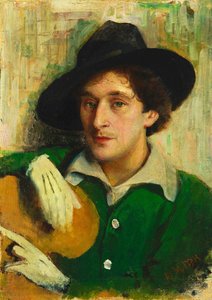
Marc Chagall
1887 - 1985 , Bielorusko
Základné informácie
- Artistic Movement Or Style: Modernizmus, Kubizmus
- Artists Or Movements Influenced By This Artist:
- Surrealizmus
- Cubizmus
- Artists Who Influenced This Artist:
- Leon Bakst
- Pablo Picasso
- Jean Metzinger
- Date Of Birth: 7. júl 1887
- Date Of Death: 28. marec 1985
- Full Name: Marc Chagall
- Nationality: Rusínsky-Francúzsky
- Notable Artworks:
- I a dedina
- Žltý osol
- Kôň s tiennikom
- Place Of Birth: Ľozna, Bielorusko
Súvisiace články

The Essence of Naïve Art: A Professional Guide to Unfiltered Creativity and Aesthetic Sincerity
Explore the profound beauty of Naïve Art. Discover its unique characteristics, historical significance, and how this unfiltered, sincere aesthetic can elevate professional interior design through high-quality, hand-painted reproductions.

Naïve Art Guide: Leveraging Bold Colors and Simple Aesthetics for High-Impact Modern Hotel Interiors
Elevate hospitality interiors with the bold colors of Naïve Art. A professional guide for hotel designers on integrating high-impact, custom oil reproductions and large-scale multi-panel works into modern commercial spaces with reliable bulk procurement and global delivery.


