


 Zobraziť v interiéri
 Odoslať
 Zdieľať
 Podrobnosti
 Príručka

 Stiahnuť
 Podobné položky
 RTG skúška
 Prehliadanie diapo\]
 Štatistiky
Prosecutor's death


 Prečítať si viac
Umelecké dielo zobrazené na tejto stránke je chránené autorským zákonom, čo znamená, že nemôžeme legálne vytvárať ani predávať jeho identickú reprodukciu. Táto ochrana je vymáhaná na základe medzinárodných dohôd, ako napríklad Bernská konvencia a národnými zákonmi, vrátane tých, ktoré sú stanovené v Autorské právo USA – Title 17. Všetky práva vyhradené.
Táto metóda plne dodržiava autorské práva, pretože nezahŕňa kopírovanie ani duplikovanie chráneného diela. Ide skôr o kreatívnu reinterpretáciu – nový obraz, ktorý je ovplybnený originálom, no nie je s ním identický.
Giclée / Umenotlač
Giclée tlač alebo plátno múzeálnej kvality s rýchlou výrobou a rôznymi možnosťami povrchovej úpravy. ( Objednať ručne maľovanú reprodukciu Prepnúť na digitálnu verziu obrazu)




P118B €10

P118H €10

P118W €10

P438Z €10

P508JH €12

P508YH €12

P805H €10

P805Z €10

P919BZ €10

P919G €10

P919XJ €10

P959ZH €10

P968JZ €12

W106C €8

W218G €10

W218JH €8

W218Y €10

W307PJ €10

W316G €10

W316PJ €8

W316Y €10

W398PJ €8

W4111J €10

W500HY €15

W500JH €15

W692G €12

W849H €8

W940BG €15

W953PJ €8




Vyberte si z našich preddefinovaných rozmerov, ktoré zodpovedajú pôvodným pomeroḿ diela.

Zadajte šírku a výšku, ktoré potrebujete, aby sa reprodukcia hodila k vášmu rámu alebo stene. Print možno len orezávať, nikdy však nemennú veľkosť zvětšiť oproti pôvodnému obrázku, preto pri inom formáte stráca časť obrazu. Pred samotným vytlačiacím procesom vám pošleme digitálny náhľad na schválenie. Obrázok zobrazený na tejto stránke nezobrazuje reálny rez — len digitálny náhľad ukazuje presný výsledok.
Celosvetová doprava () do 2 týždňov namiesto štandardných 4 až 5 týždňov. (27 október)

Bezplatná expresná doprava po celom svete

Vysokokvalitné lnianske plátno

Úplné poistenie prepravy

Záruka vrátenia colného poplatku

Záruka presného farebného zhodnutia

100-dená politika vrátenia tovaru (iba pri vadách)

100% záruka vrátenia peňazí

Ponuka množstevnej zľavy
 Možnosť skla je dostupná len pri rozmeroch pod 110 cm

Prosecutor's death
Giclée / Umenotlač
Veľkosť reprodukcie
-


Celková cena
€ 56
A Silent Echo: Marc Chagall’s “Prosecutor’s Death”
Marc Chagall's "Prosecutor’s Death," painted in 1923, isn’t merely a depiction of mortality; it’s a hauntingly beautiful meditation on vulnerability, loss, and the unsettling juxtaposition of everyday life with sudden, irreversible tragedy. Emerging from the fertile ground of Chagall’s Vitebsk upbringing – a place where folklore intertwined seamlessly with Orthodox faith and Jewish tradition – this work embodies his signature style: a potent blend of dreamlike realism and expressive symbolism. The painting immediately arrests the viewer with its stark monochrome palette—a deliberate choice that amplifies the scene's gravity, stripping away any potential distraction from the central drama. The absence of color forces us to confront the raw emotion of the image, mirroring the emotional intensity characteristic of Chagall’s oeuvre.
At the heart of the composition lies a prone figure, a man seemingly collapsed onto the floor, his posture conveying both defeat and a strange sense of liberation. The meticulous hatching and cross-hatching employed by Chagall to define the form create a remarkable textural depth, suggesting not just the physicality of the body but also the weight of its experience. The careful rendering of the limbs, the subtle curve of the head – all contribute to an unnerving realism that underscores the suddenness of the event. Around this central figure, everyday objects—a chair angled aggressively, a table offering a fragile sense of stability, and two sports balls resting incongruously on the floor—serve as potent symbols. These seemingly random elements disrupt the somber mood, hinting at interrupted routines, lost potential, and perhaps even the shattered dreams of the deceased.
The Language of Line and Form
Chagall’s technique is a masterclass in expressive draughtsmanship. The extensive use of lines—thick, decisive outlines defining the furniture and the figure itself, contrasted with finer, more delicate strokes for shading and detail – creates a dynamic tension within the static image. These gestural lines aren't simply descriptive; they convey movement, energy, and an underlying sense of unease. The geometric shapes—rectangles representing the chairs and table, circles embodying the sports balls—are deliberately juxtaposed with the organic form of the fallen man, creating a visual dialogue between order and chaos, structure and dissolution. This interplay of forms contributes significantly to the painting’s unsettling atmosphere.
Furthermore, Chagall's masterful manipulation of light – or rather, its absence – is crucial to the work’s impact. There’s no discernible light source; instead, a strong directional illumination seems to originate from above, casting deep shadows and highlighting the contours of the figure and objects. This creates an almost theatrical effect, as if we are witnessing a pivotal moment frozen in time. The flattening of perspective—a characteristic feature of Chagall's style—further enhances this dreamlike quality, dissolving the boundaries between reality and imagination.
Symbolism and Emotional Resonance
“Prosecutor’s Death” is rich with symbolic meaning, inviting multiple interpretations. The fallen man himself can be seen as a representation of vulnerability, a symbol of humanity stripped bare in the face of mortality. The sports balls—a striking element within this somber scene—are particularly intriguing. They could represent lost potential, interrupted joy, or perhaps even the fleeting nature of life itself. Considering Chagall’s own experiences during the turbulent years following the Russian Revolution, the image may also be interpreted as a commentary on the fragility of justice and the arbitrary nature of fate. The inclusion of everyday objects—the chair, the table—underscores the contrast between the mundane routines of daily life and the sudden intrusion of death.
Ultimately, “Prosecutor’s Death” is not simply a depiction of a single event; it's an exploration of universal themes – loss, mortality, and the enduring power of memory. It’s a testament to Chagall’s ability to transform personal experience into profoundly moving art, leaving the viewer with a lingering sense of melancholy and contemplation. A hand-painted reproduction captures this emotional depth and artistic brilliance with unparalleled fidelity, offering a window into the soul of one of the 20th century's most visionary artists.
Otázky a odpovede
Ako sa dielo „Prosecutor's death“ zapísalo do tém a štýlu umelca Marc Chagall?
V rámci tvorby umelca Marc Chagall sa dielo „Prosecutor's death“ radí do štýlu Expressionistic Naïve Art, pričom sprevádzajú ho témy ako jewish folklore, symbolism, chagall’s dreams, russian rural life, vitebsk memories, biblical narratives, religious imagery, expressionistic distortion.
Kedy bolo vytvorené dielo „Prosecutor's death“ od Marc Chagall?
Dielo „Prosecutor's death“ od Marc Chagall vzniklo v roku 1923.
Existuje k dielu „Prosecutor's death“ od Marc Chagall informačný list pre študentov?
Pre dielo „Prosecutor's death“ od Marc Chagall je k dispozícii stránka Sprievodca: tlačiteľný informačný list o umedení, navrhnutý pre študentov a využitie v triedach.
Súvisiace diela


Biografia umelca
A Life Painted in Dreams: The World of Marc Chagall
Marc Chagall, born Moishe Shagal in 1887 in the small Belarussian town of Liozna near Vitebsk, wasn’t merely a painter; he was a poet of color, a weaver of dreams, and a chronicler of memory. His life, spanning nearly a century, mirrored the tumultuous currents of the 20th century, yet his art remained steadfastly rooted in a deeply personal vision—one infused with the folklore of his Hasidic Jewish upbringing and an unwavering belief in the power of imagination. Vitebsk itself was more than just a birthplace; it became the emotional core of his artistic universe, a recurring motif populated by flying figures, whimsical animals, and the vibrant hues of remembered landscapes. The town’s unique blend of cultures—Russian Orthodox churches alongside bustling Jewish marketplaces—forged an aesthetic sensibility that would defy easy categorization throughout his long career. Though he sought formal training first with a local sign painter and later in St. Petersburg under Léon Bakst, and then in Paris at the Académie de la Grande Chaumière, Chagall never fully embraced any single artistic movement. He absorbed elements of Cubism, Symbolism, and Fauvism, but always filtered them through his own intensely personal lens, creating a style that was uniquely, unmistakably Chagall.Early Years and Artistic Formation
Chagall’s formative years were marked by hardship and displacement. Born into a Jewish family in Vitebsk—a town steeped in Orthodox tradition—he experienced firsthand the challenges faced by Jews living under Tsarist rule. Despite limited formal education, he possessed an innate artistic talent that quickly blossomed. His initial training began with a local sign painter, honing his skills in draftsmanship and color theory. Subsequently, he pursued studies at St. Petersburg’s Zvantseva School of Drawing and Painting, where he encountered the influential teachings of Léon Bakst—a pioneer of theatrical design who championed avant-garde aesthetics. This exposure to Bakst's ideas profoundly shaped Chagall’s artistic sensibilities, introducing him to the principles of Cubism and fostering his fascination with geometric abstraction. Recognizing the importance of broadening his horizons, he traveled to Paris in 1908, immersing himself in the vibrant intellectual and artistic milieu of the École de Paris—a collective of artists who rejected academic conventions and embraced experimentation. During this period, he befriended fellow artists like Pablo Picasso and André Derain, absorbing their stylistic innovations and refining his own visual language.The Symbolist Vision
Chagall’s early paintings—such as I and the Village (1911)—demonstrate a distinctive preoccupation with symbolism and memory. Unlike traditional landscapes that strive for objective representation, Chagall's depictions of Vitebsk are fragmented recollections imbued with emotional significance. Figures float amidst stylized forms, conveying feelings of longing and nostalgia—a characteristic trait that would define his artistic style throughout his career. The artist’s palette is bold and expressive, employing vibrant hues to communicate emotion rather than literal accuracy. This stylistic approach reflects Chagall's deep connection to Jewish folklore and mythology, as well as his profound engagement with the spiritual traditions of his upbringing. His use of color—particularly yellows, blues, and reds—is deliberately unconventional, creating a dreamlike atmosphere that transcends rational perception.The Turbulent Years: Revolution and Exile
The Russian Revolution dramatically altered Chagall’s life trajectory. Returning to Vitebsk in 1917 amidst the upheaval of Bolshevik rule, he became involved in cultural initiatives aimed at revitalizing Belarusian art and culture. He established an Art School in Vitebsk—a bold experiment in artistic education that briefly flourished before succumbing to political pressures. During this period, Chagall wrestled with conflicting ideological impulses—embracing socialist ideals while simultaneously cherishing his Jewish heritage. The outbreak of World War I forced him into exile, disrupting his creative pursuits and propelling him back to Paris. Despite the hardships endured during wartime, Chagall continued to produce artwork that reflected the anxieties and uncertainties of the era. His painting White Crucifixion (1938)—a poignant meditation on suffering and persecution—stands as a testament to this period’s emotional intensity.International Recognition and Artistic Legacy
Chagall achieved international acclaim during World War II, escaping occupied France with his wife in May 1941. He found refuge in New York City, where he resided for seven years, fostering collaborations with fellow artists and engaging in prolific creative activity. His work gained prominence during the Abstract Expressionist movement, cementing his reputation as one of the most influential figures in modern art. Following the war, Chagall returned to France, continuing to paint until his death in 1985 at Saint-Paul-de-Vence—a picturesque Provençal village that served as his artistic sanctuary for decades. His enduring legacy resides not only in his stunning paintings and stained glass windows but also in his unwavering commitment to artistic integrity and imaginative vision—a vision that continues to inspire artists and audiences alike. Chagall’s art transcends cultural boundaries, conveying universal themes of love, loss, faith, and remembrance—a testament to the transformative power of creativity and the enduring beauty of dreams.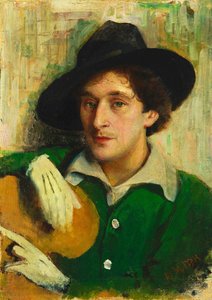
Marc Chagall
1887 - 1985 , Bielorusko
Rýchle fakty
- Artistic Movement Or Style: Modernizmus, Kubizmus
- Artists Or Movements Influenced By This Artist:
- Surrealizmus
- Cubizmus
- Artists Who Influenced This Artist:
- Leon Bakst
- Pablo Picasso
- Jean Metzinger
- Date Of Birth: 7. júl 1887
- Date Of Death: 28. marec 1985
- Full Name: Marc Chagall
- Nationality: Rusínsky-Francúzsky
- Notable Artworks:
- I a dedina
- Žltý osol
- Kôň s tiennikom
- Place Of Birth: Ľozna, Bielorusko
Súvisiace články

Top 10 slávnych obrazov v odtieňoch bielej: Krása, história a dekor pre váš domov
Objavte top 10 slávnych obrazov v odtieňoch bielej – Monet, Renoir a ďalší majstri. História umenia, techniky a inšpirácia pre váš interiér. Reprodukcie obrazov najvyššej kvality na AllPaintingsStore.com.

The Intricate World of Etching: A Historical Survey of Technique, Aesthetic Evolution, and Enduring Artistic Impact
Explore the rich history of etching, from its origins to modern practice. Discover techniques, key artists like Rembrandt, and insights for collectors. A comprehensive guide by AllPaintingsStore.
Top 10 legendárnych leptov, ktoré zmenili umenie navždy | AllPaintingsStore
Objavte 10 legendárnych leptov od Rembrandta, Goya a ďalších majstrov. Prežite príbehy umenia, techniky a nadčasovej krásy. Reprodukcie obrazov pre váš interiér na AllPaintingsStore.com – múzejná kvalita a inšpirácia!

Top 10 slávnych obrazov s dominantnou čiernou farbou | AllPaintingsStore.sk
Objavte top 10 slávnych obrazov s dominantnou čiernou farbou od Rembrandta, Goya a ďalších majstrov. Prežite príbehy umenia, techniky a nadčasovej krásy. Reprodukcie obrazov pre váš interiér na AllPaintingsStore.sk – múzejná kvalita!

Etching: A Historical Survey of Technique, Aesthetic Qualities & Enduring Artistic Significance
Explore the rich history of etching, from its origins to Rembrandt's masterful innovations. Discover the technique, aesthetic qualities & enduring legacy of this captivating art form. Expert insights for collectors and enthusiasts.


