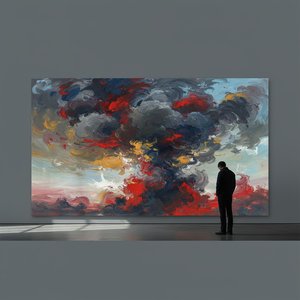
Akryl na plátne.

§ 1Katalogové údaje


Toto dielo je chránené autorským právom
Umelecké dielo zobrazené na tejto stránke je chránené autorským zákonom, čo znamená, že nemôžeme legálne vytvárať ani predávať jeho identickú reprodukciu. Táto ochrana je vymáhaná na základe medzinárodných dohôd, ako napríklad Bernská konvencia a národnými zákonmi, vrátane tých, ktoré sú stanovené v Autorské právo USA – Title 17. Všetky práva vyhradené.
Ako rešpektujúca a legálna alternatíva ponúkame vlastné, ručne maľované diela inšpirované originálom. Naši skúsení a profesionálni umelci dôkladne študujú štýl, náladu a umelecký podnet originálu, aby vytvorili nové, jedinečné dielo, ktoré vyvoláva rovnaký pocit – pričom samo ostáva vlastným originálnym dielom.
Táto metóda plne dodržiava autorské práva, pretože nezahŕňa kopírovanie ani duplikovanie chráneného diela. Ide skôr o kreatívnu reinterpretáciu – nový obraz, ktorý je ovplybnený originálom, no nie je s ním identický.
 Zobraziť viac
§ 2Abstraktné
Popis zberateľského predmetu
Experience the emotional depth of Mark Rothko's 'No. 14'. This iconic color field painting, featuring vibrant purple and orange hues, embodies Abstract Expressionism’s power & invites contemplation.
Biografia umelca
Pozrite si ikonické Color Field maľby Marka Rothka – abstraktné výtvory vyjadrujúce hlboké emócie a filozofický základ. Obrazárske diela svetového významu!
§ 3Komentár
The Genesis of a Masterpiece: Mark Rothko’s Early Years
Mark Rothko, a name synonymous with profound color fields, didn't emerge fully formed from the canvas. His artistic journey began in Daugavpils, Latvia—a city steeped in history and cultural crossroads—in 1903. Born Marcus Yakovlevich Rothkowitz to a Jewish family deeply rooted in intellectual pursuits, his early life was profoundly shaped by his father’s Marxist leanings and the vibrant, often turbulent, atmosphere of pre-war Europe. This formative period instilled within him a sensitivity to social and political currents, an element that would subtly permeate his later work. The family's emigration to Portland, Oregon, in 1913 marked a significant shift, introducing Rothko to a new landscape and a burgeoning American identity. His childhood was characterized by rigorous education—he mastered Lithuanian Yiddish, Hebrew, and Russian—and a passionate engagement with social justice issues, mirroring his father’s commitment to revolutionary ideals. This complex blend of heritage, intellectual stimulation, and early exposure to societal challenges laid the groundwork for the emotionally resonant art he would eventually create.
The Emergence of Color Field Painting: A Radical Shift
Rothko's artistic trajectory underwent a dramatic transformation during the 1940s. Initially exploring figurative painting—depicting urban scenes and portraits—he began to experiment with mythological themes and Surrealism, a response to the anxieties and uncertainties of World War II. However, it was in this decade that he embarked on a radical shift towards abstraction, driven by a desire to express fundamental human emotions rather than represent external reality. This pivotal period witnessed the birth of what would become known as Color Field painting—a movement characterized by vast expanses of luminous color applied in broad, unmodulated washes. Rothko’s focus moved away from recognizable forms and narratives, concentrating instead on the evocative power of pure color itself. He sought to create paintings that could induce a meditative state in the viewer, allowing them to experience emotions directly through the interplay of hue and tone.
‘No. 14’: A Symphony of Purple and Orange
'No. 14' exemplifies Rothko’s mastery of this technique. The painting immediately commands attention with its bold juxtaposition of purple on the left side and orange on the right. These aren’t merely colors; they are imbued with a palpable sense of depth, luminosity, and emotional weight. The application of oil paint is remarkably subtle—layers build upon layers to create an almost velvety texture, while variations in tone suggest both distance and intimacy. The rectangular forms, devoid of sharp edges or defined boundaries, seem to dissolve into the surrounding color fields, drawing the viewer inward. It’s a deliberate strategy designed to bypass rational thought and tap directly into the viewer's emotional core. Rothko himself described his intention as “to express basic human emotions: tragedy, ecstasy, doom, and so on.” ‘No. 14’ powerfully embodies this ambition, inviting contemplation of these profound states.
Legacy and Influence: A Lasting Impact
Mark Rothko's influence extends far beyond his own lifetime. He is considered a pivotal figure in the development of Abstract Expressionism, alongside artists like Wassily Kandinsky and Arthur Dove. His work has been exhibited at prestigious institutions worldwide, including the Tate Gallery and the National Gallery of Australia, and its resale value continues to rise significantly. The iconic ‘No. 6 (Violet, Green and Red)’ sold for an astounding $186 million in 2014, a testament to the enduring power and appeal of his art. Rothko’s legacy lies not only in his individual paintings but also in his pioneering approach to color and form—a radical departure from traditional representation that continues to inspire artists and captivate audiences today. For those seeking a deeper understanding of this extraordinary artist and his work, we encourage you to explore the AllPaintingsStore website for further information and high-quality reproductions.
Otázky a odpovede
Je Mark Rothko, autor diela „No. 14“, známy aj pod inými menami?
Medzi ďalšie známe mená umelca Mark Rothko, autora diela „No. 14“, patria aj Marcus Rothkowitz.
Akú náladu vyjadruje „No. 14“ od Mark Rothko v rámci smeru Abstract Expressionism?
Tajomný emócia diela „No. 14“ dopĺňa jeho štýl, ktorý patrí do smeru Abstract Expressionism.
Ako sa v díle „No. 14“ spájajú médium a pohyb?
„No. 14“ od Mark Rothko spája techniku Akryl na plátne s výtvarným smerom Abstract Expressionism. Technika a smer definujú spôsob vytvorenia a štýl diela.


 Prepnúť na tlač


 V prípade umeleckých diel alebo reprodukcií, ktorých ktorákoľvek strana je väčšia ako 105 cm (cca 41 palcov), sa rám dodáva v rozloženom stave ako sada. Táto metóda zabezpečuje bezpečnú доставu a chráni pred poškodením počas prepravy.