Záruka vrátenia peňazí · 100 dní Bezplatné celosvetové doručenie
449 564artworks 30 613umelci 4 660múzeá 32jazyky
Katalogový záznam

The acrobats

1939. Oil On Canvas.

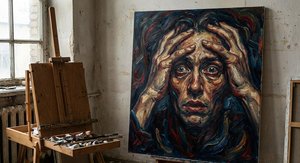
Obr. 1. Max Beckmann, The acrobats, 1939. Zobrazené ako špecifikovaná reprodukcia: , .

§ 1Katalogové údaje

§ 2Abstraktné

Popis zberateľského predmetu

A powerful Expressionist triptych by Max Beckmann featuring distorted figures and vibrant colors that explore social anxiety and human drama, inviting you to experience this masterpiece of German modernism.

Biografia umelca

Európa po dažďovi II – Fantastický obraz Max Ernsta zobrazuje surrealistické krajiny bohatými farbami a komplexnými detailmi. Pozrite si umelecké dielo z roku 1942, ktoré oslňuje svojím významom!

§ 3Komentár

A Chaotic Symphony of Human Drama

In the profound and often unsettling world of Max Beckmann, The Acrobats emerges as a breathtaking spectacle of movement and existential tension. Painted in 1939, a year shadowed by the gathering storms of global conflict, this masterpiece serves as a vibrant yet distorted stage where humanity performs its most precarious balancing acts. The canvas is a dense, almost claustrophobic collage of figures, each caught in a moment of intense physical or emotional exertion. At first glance, the eye is drawn to the sheer variety of poses—some figures sit in quiet contemplation, while others are suspended in mid-motion, mimicking the daring feats of circus performers. This sense of a theatrical troupe, caught between a rehearsal and a performance, creates an atmosphere that is simultaneously energetic and deeply unsettling.

The composition defies traditional spatial logic, opting instead for a layered, almost dreamlike arrangement that pushes the boundaries of German Expressionism. Beckmann utilizes a technique reminiscent of medieval stained glass, where bold outlines and compressed spaces force the viewer to confront the weight of every figure. The background is cluttered with the mundane artifacts of domestic life—chairs, dining tables, and various household objects—yet these familiar items feel strangely displaced within this acrobatic chaos. This juxtaposition between the ordinary setting and the extraordinary physical feats suggests a deeper metaphor: that life itself is a continuous, often dangerous, performance played out against the backdrop of an unstable world.

Symbolism and the Expressionist Vision

To gaze upon The Acrobats is to witness Beckmann’s unique ability to translate personal and historical trauma into universal symbolism. Having been profoundly changed by his experiences as a medical orderly during World War I, Beckmann developed a visual language characterized by distorted forms and heavy, symbolic weight. In this work, the acrobats are not merely entertainers; they represent the fragility of the human condition. The act of balancing, of holding onto objects like books or bowls amidst a sea of shifting bodies, mirrors the struggle to maintain dignity and order in an era of encroaching madness. Every limb stretched toward an unseen goal and every tilted gaze carries the burden of social anxiety and existential dread.

The color palette plays a crucial role in driving this emotional impact. Beckmann employs vivid, often jarring colors that clash with one another, heightening the sense of psychological unrest. These hues do not merely decorate the scene; they pulse with the rhythm of the performance, guiding the viewer through the labyrinthine layers of the painting. For the discerning collector or interior designer, this piece offers more than just visual interest; it provides a profound intellectual and emotional anchor. A high-quality reproduction of such a work brings into a space a sense of historical gravity and a conversation about the resilience of the human spirit amidst chaos.

A Timeless Masterpiece for Modern Spaces

For those seeking to curate an environment filled with depth and narrative power, The Acrobats stands as an incomparable choice. Its complex layers of meaning and striking visual rhythm make it a centerpiece capable of transforming a room from a mere living space into a gallery of contemplation. Whether placed in a contemporary setting where its bold lines can contrast with minimalist decor, or in a more classical interior to provide a dramatic focal point, the painting commands attention through its sheer expressive force.

Owning a reproduction of this Beckmann masterpiece allows for an intimate connection with one of the 20th century's most significant artistic legacies. It is an invitation to explore the tension between movement and stillness, between the public spectacle and the private struggle. In every brushstroke of a faithful reproduction, the spirit of the German Expressionist movement lives on, offering timeless inspiration to anyone who finds beauty in the complex, the distorted, and the profoundly human.

Otázky a odpovede

Kde by mala byť zavesená reprodukcia diela „The acrobats“ od Max Beckmann?

Vďaka svojmu tvaru Panoramic je reprodukcia diela „The acrobats“ ideálnou voľbou do Restaurant.

Obsahuje „The acrobats“ výrazné svetlo-tmavé kontrasty?

„The acrobats“ od Max Beckmann vykazuje Statement kontrast medzi svetlými a tmavými časťami diela.

Kedy a v akom štýle vzniklo dielo „The acrobats“ od Max Beckmann?

Dielo „The acrobats“ od Max Beckmann pochádza z roku 1939 a patrí do smeru German Expressionism.

§ 4Umenec

Max Beckmann

Max Beckmann

1884 - 1950, Nemecko

Rýchle fakty o umelcovi Max Beckmann

  • Artistic Movement Or Style: Expresionizmus
  • Artists Or Movements Influenced By This Artist: ['Rembrandt']
  • Artists Who Influenced This Artist:
    • Georges Seurat
    • Vincent van Gogh
  • Date Of Birth: február 12, 1884
  • Date Of Death: december 27, 1950
  • Full Name: Max Carl Friedrich Beckmann
  • Nationality: Nemecký
  • Notable Artworks:
    • The Bark
    • Self-Portrait in Tuxedo
  • Place Of Birth: Lipsko, Nemecko

Biografia umelca

early life and artistic development

Max Beckmann, a renowned german painter, draftsman, printmaker, sculptor, and writer, was born on february 12, 1884, in leipzig, saxony. his artistic journey began with academically correct depictions, which later transformed into distorted figures and spaces, reflecting his altered vision of humanity after serving as a medical orderly in world war i. Beckmann’s formative years were marked by a fascination for classical art and a desire to emulate the masters—a pursuit that would ultimately shape his distinctive style. Despite initial inclinations toward academic painting, he swiftly rejected convention, embracing experimentation and forging connections with avant-garde movements like Expressionism. This pivotal experience of the First World War profoundly impacted Beckmann’s artistic sensibilities, triggering a dramatic stylistic shift away from traditional techniques towards a more emotionally charged and symbolically rich approach.

artistic style and influences

Beckmann's artistic style—rooted in the imagery of medieval stained glass—was significantly influenced by a constellation of artists who captivated his imagination during his formative years. Among these were Cézanne, whose geometric explorations challenged conventional perspective; Van Gogh, whose vibrant colors and expressive brushstrokes conveyed raw emotion; Blake, whose visionary symbolism infused his art with spiritual depth; Rembrandt, whose masterful use of chiaroscuro created dramatic contrasts of light and shadow; and Rubens, whose opulent compositions celebrated grandeur and dynamism. Furthermore, Beckmann drew inspiration from northern european artists of the late middle ages and early renaissance—Bosch, Bruegel, and Matthias Grünewald—whose unsettling visions of humanity and their preoccupation with moral themes resonated deeply within him. These influences coalesced into a singular artistic vision characterized by distortion, fragmentation, and psychological intensity.

notable works and exhibitions

Beckmann’s oeuvre encompasses a vast array of paintings, prints, sculptures, and literary endeavors, yet certain artworks stand out as exemplifying his stylistic prowess and thematic concerns. *The Bark*, acquired by the National Gallery in Berlin, exemplifies Beckmann's masterful command of composition and color—a testament to his unwavering dedication to artistic excellence. Similarly, *Self-Portrait in Tuxedo* captures a moment of introspective contemplation, reflecting Beckmann’s profound engagement with existential questions. His retrospectives at the Städelschule Mannheim (1928) and Basel and Zurich (1930) provided invaluable opportunities for audiences to appreciate the breadth and depth of his artistic legacy. These exhibitions showcased not only his stylistic evolution but also his unwavering commitment to confronting complex social and psychological realities through art.

later life and exile

Beckmann’s fortunes took a decisive turn with the ascendancy of Adolf Hitler, resulting in his dismissal from the Frankfurt Art School and the confiscation of over 500 of his artworks—a devastating blow to his artistic career. Forced into self-imposed exile in Amsterdam for ten years, Beckmann faced insurmountable obstacles in securing a visa for the United States, thereby perpetuating his separation from his homeland. Despite these hardships, he continued to produce prolifically during his exile, establishing a studio at Rokin No. 85 and fostering connections with fellow artists and intellectuals. His unwavering belief in artistic freedom—a conviction born from his experiences under Nazi oppression—fueled his creative endeavors and solidified his reputation as one of the most courageous and uncompromising voices of German Expressionism. Beckmann’s legacy extends beyond his artistic creations; he served as a professor at Washington University in St. Louis and the Brooklyn Museum, imparting invaluable knowledge to aspiring artists and shaping the intellectual landscape of his time. His first retrospective in the United States occurred in 1948 at the City Art Museum, Saint Louis—a triumphant return that affirmed his enduring artistic significance. Max Beckmann’s oeuvre remains a powerful testament to the transformative power of art—a realm where distorted figures grapple with existential dilemmas and haunting landscapes convey profound psychological truths.

§ 5Súvisiace diela

§ 6Otázky

Základné informácie

  • Artist: Max Beckmann
  • Artistic style: Expressionist triptych
  • Movement: German Expressionism
  • Location: Private collection, St. Louis

§ 7Citujte tento príspevok

AllPaintingsStore.com, “Max Beckmann, The acrobats (1939)”, https://allpaintingsstore.com/sk/art/max-beckmann-the-acrobats-8XYK3M-en/ArtistReproduction/ (dátum prístupu 7 október 2026).

§ 8Reprodukcia diela

Ručne maľovaná olejová reprodukcia

Ručne maľovaný olej na plátne vo vašej zvolenej veľkosti a v ráme, vyrobený na mieru našimi umelcami. ( Prepnúť na tlač Prepnúť na digitálny obraz)

Je uvedené na objednávke v okrajovej časti; súčasný stav tejto listiny je nasledovný.

The acrobats

Technika reprodukcie

Veľkosť reprodukcie

-

Výborne skúsený umelec

Viac detailov, jemnosti a dodatočného času na výrobu

-

Rámovanie reprodukcie

-

-

V prípade umeleckých diel alebo reprodukcií, ktorých ktorákoľvek strana je väčšia ako 105 cm (cca 41 palcov), sa rám dodáva v rozloženom stave ako sada. Táto metóda zabezpečuje bezpečnú доставu a chráni pred poškodením počas prepravy.

Vyžaduje sa odborná montáž – toto nie je produkt na vlastnú prípravu (DIY).
Sada musí byť zmontovaná a plátno napnuté skúseným profesionálnym rámovaníkom, s použitím drevárneho lepidla (nie je súčasťou sady), klieš na napínanie plátna a svoriek na udržanie prav角的 rámov počas schnutia lepidla. Nesprávna montáž alebo nerovnomerné napnutie plátna môže trvalo poškodiť umelecké dielo, čo nie je kryté našou zárukou.

  • Všetky lišty z masívneho dreva sú súčasťou balenia, presne narezané na mieru.

  • Montuje sa pomocou súčasťou balenia dodaných skrutiek, plus drevolepu na spoje v rohoch, ktorý nie je súčasťou balenia a musí si ho zabezpečiť váš montážnik.

  • Vyžadujú sa profesionálne nástroje, ktoré nie sú súčasťou sady: kliešte na napínanie plátna (napínací nástroj) a svorky na udržanie pravých uhlov rámov počas schnutia lepidla.

Dôležité:
Spoje v rohoch si vyžadujú lepidlo na drevo, tyče je potrebné upevniť pomocou svoriek, kým lepidlo úplne newyschne, a napnutie plátna na zostavený rám si vyžaduje klieže na napínanie plátna. Žiadna z týchto pomôcok nie je súčasťou sady. Pred objednaním tejto veľkosti si, prosím, zabezpečte skúseného odborníka na zakladanie rámov.

Popisné označenie

-

-

Ochranný lak

Lesklý lak (zvýrazňuje farby, chráni pred svetlom a vlhkosťou)

-

Prispôsobiť moje dielo

Príklady možností úprav: nahradenie tváre vlastnou fotografiou; pridanie domáceho zvieraťa (napr. nahradenie mačky psom); vloženie skrytého odkazu do pozadia; zmena krajiny alebo prvkov v pozadí.

-

Prioritné doručenie

Celosvetová doprava () za 3 až 4 týždne namiesto štandardných 5 týždňov. (4 november). Bez kompromisov v kvalite.

-

Rýchle doručenie

Celosvetová doprava do za 5 týždňov. (11 november).

V cene

Celková cena

€ 229

Súčasťou každej objednávky

  • Bezplatná expresná doprava po celom svete
  • Vysokokvalitné lnianske plátno
  • Kompletné poistenie prepravy
  • Záruka vrátenia colného poplatku
  • Záruka presného farebného zhodnutia
  • 100-dená politika vrátenia tovaru (iba pri vadách)
  • 100% záruka vrátenia peňazí
  • Zľava pri väčšom množstve
Objednávací list