Záruka vrátenia peňazí · 100 dní Bezplatné celosvetové doručenie
449 587artworks 30 613umelci 4 660múzeá 32jazyky
Mena
    Jazyk
      Ateliér · Založené 2015 · Paríž, Francúzsko
      AllPaintingsStore
      allpaintingsstore.com
      Catalogue entry

      Mural

      1943. Acrylic On Canvas, 247.0 x 605.0 cm.

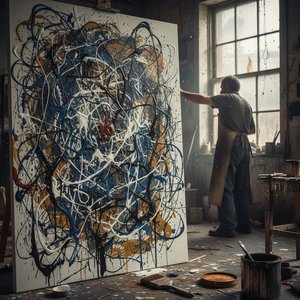
      Fig. 1. Paul Jackson Pollock, Mural, 1943. Shown as the reproduction you are specifying: , .

      § 1Catalogue data

      § 2Abstract

      Popis zberateľského predmetu

      Experience Jackson Pollock's iconic 1943 'Mural,' a monumental drip painting from the abstract expressionist movement. This dynamic canvas, filled with vibrant colors and energetic brushstrokes, captures a stampede of wildlife – explore this masterpiece and own a piece of art history.

      Biografia umelca

      Paul Jackson Pollock (1912-1956) bol americký maliar, ktorý sa stal inovatívnym predstaviteľom abstraktného expresionizmu a techniky "drip painting". Jeho ikonické diela, ako "Číslo 1" a "Modré polia", odrážajú dynamiku, emócie a revolučný prístup k tvorbe.

      § 3Commentary

      A Symphony of Movement: Unveiling Jackson Pollock’s “Mural”

      Jackson Pollock's "Mural," completed in 1943, isn't merely a painting; it’s an immersive experience, a visceral embodiment of the burgeoning abstract expressionist movement. Commissioned by Peggy Guggenheim as a centerpiece for her Manhattan townhouse, this monumental work – measuring a commanding 247 x 605 cm – immediately announces Pollock’s arrival as a revolutionary force in the art world. The sheer scale invites contemplation, drawing the viewer into a swirling vortex of color and energy that speaks to the primal forces of nature and the human condition.

      • The Technique: Drip Painting Redefined – Pollock's signature “drip painting” technique is on full display here. Abandoning traditional brushwork, he laid the canvas directly on the floor and, with a frenetic dance around it, poured, flung, and dripped paint from cans, utilizing a whip-like brush to manipulate the cascading pigments. This process, born of spontaneity and intuitive gesture, created an unprecedented level of textural complexity and visual dynamism.
      • Historical Context: A Pivotal Moment – “Mural” arrived during a period of intense artistic experimentation following World War II. The rise of abstract expressionism reflected a desire to move beyond representational art and explore the depths of human emotion and subconscious thought. Pollock’s work, alongside that of artists like Willem de Kooning and Mark Rothko, helped establish New York as the global center of modern art.

      Echoes of the Wild West: Symbolism and Narrative

      At first glance, “Mural” appears to be a chaotic explosion of color, yet closer inspection reveals a carefully constructed narrative rooted in Pollock’s personal experiences and cultural influences. The artist himself described the work as an evocation of a "stampede," conjuring images of American cowboys and the vast landscapes of the Wild West – cows, horses, antelopes, and buffaloes surging across the canvas. This imagery isn't simply decorative; it represents freedom, movement, and the untamed spirit of the frontier.

      Interestingly, Pollock’s childhood memories of the American West, shaped by his father’s surveying work and encounters with Native American art, subtly informed this symbolic landscape. The raw energy and spiritual resonance he absorbed from these early experiences are palpable in the painting's forceful composition and bold use of color. The vertical lines, acting as a visual counterpoint to the chaotic splashes, provide a structural framework that prevents the piece from dissolving into pure abstraction.

      A Masterpiece of Abstract Expressionism

      "Mural" stands as a testament to Pollock’s artistic evolution, bridging the gap between surrealist abstraction and the action painting movement. The work's abstract nature, with its deliberate hints of figuration – the implied forms of animals in motion – showcases his unique ability to balance spontaneity and control. The interplay of blues, blacks, yellows, reds, and whites creates a powerful visual rhythm, drawing the eye across the canvas and inviting endless interpretation.

      Originally housed at the University of Iowa Museum of Art, “Mural” continues to captivate audiences with its raw energy and profound emotional impact. It’s a work that demands attention, challenging viewers to confront their own perceptions of art and beauty.

      Recreating Pollock's Vision: A Hand-Painted Reproduction

      At AllPaintingsStore, we are proud to offer exquisite, hand-painted oil painting reproductions of Jackson Pollock’s “Mural.” Each reproduction is meticulously crafted by our team of skilled artisans, ensuring an unparalleled level of detail and authenticity. We utilize the same techniques and materials as Pollock himself, capturing not just the visual appearance but also the very spirit and energy of this iconic masterpiece.

      Whether you’re a seasoned collector, an interior designer seeking to add a touch of artistic drama to your space, or simply someone who appreciates the power of great art, a hand-painted reproduction of “Mural” is a timeless investment that will bring years of enjoyment.

      Otázky a odpovede

      Je „Mural“ od Paul Jackson Pollock obrazom, kresbou alebo grafikou?

      „Mural“ je WallArt dielo.

      Čo vysvetľuje situáciu s autorskými právami diela „Mural“ od Paul Jackson Pollock?

      Dielo „Mural“ od umelca Paul Jackson Pollock patrí do v slobodnom prostredí – autorské práva vypršali. Autorské práva sa vypočítavajú od roku úmrtia umelca, pričom Paul Jackson Pollock zomrel v roku 1956.

      Ako sa v díle „Mural“ od Paul Jackson Pollock stretávajú umelecký smer a éra?

      Dielo „Mural“ patrí do smeru Abstract Expressionism a jeho autor tvoril v období Modernizmus.

      § 4The artist

      Paul Jackson Pollock

      Paul Jackson Pollock

      1912 - 1956, Spojené štáty americké

      Základné informácie

      • Artistic Movement Or Style: Abstraktný expresionizmus
      • Artists Or Movements Influenced By This Artist:
        • Color Field painting
        • Surrealizmus
      • Artists Who Influenced This Artist:
        • Thomas Hart Benton
        • José Clemente Orozco
      • Date Of Birth: 28.1.1912
      • Date Of Death: 11.8.1956
      • Full Name: Paul Jackson Pollock
      • Nationality: Americký
      • Notable Artworks:
        • Číslo 1, 1949
        • Jeseňský rytmus
        • Číslo 1A
      • Place Of Birth: Cody, USA

      Biografia umelca

      Early Life and the Seeds of Innovation

      Paul Jackson Pollock, born in Cody, Wyoming, in 1912, was a restless spirit from the very beginning. His early life was marked by constant movement; his father, LeRoy Pollock, pursued work as a land surveyor across the vast landscapes of the American West, relocating the family frequently. This itinerant existence instilled in young Pollock a deep connection to the natural world and an exposure to diverse cultures – particularly through encounters with Native American art during those surveying trips. These early experiences, filled with the raw energy of the frontier and the traditions of indigenous peoples, subtly shaped his artistic vision later in life, though he never explicitly imitated these styles. Despite the challenges of a nomadic upbringing, Pollock’s mother, Stella May McClure, recognized and nurtured her son's creative potential, fostering an appreciation for art within the family. Pollock’s formal artistic training began at the Manual Arts High School in Los Angeles, where he developed a foundational understanding of drawing and design. Following this, he continued his studies at the Art Students League of New York under the guidance of Thomas Hart Benton, a prominent figure in the Regionalist movement. Benton emphasized rhythmic composition and narrative themes rooted in American life – a style that initially influenced Pollock’s work, encouraging him to explore dynamic forms and tell stories through visual elements. However, Pollock's inherent inclination leaned towards more abstract explorations, seeking ways to express emotions and ideas beyond representational imagery. Furthermore, he was profoundly impacted by Mexican muralists like José Clemente Orozco, whose powerful depictions of social struggle resonated deeply with his own sense of justice and the human condition. These early influences – the rugged beauty of the American West, the traditions of Native Americans, and the dramatic narratives of Regionalist art combined with the passionate social commentary of Mexican murals – laid a foundation for Pollock’s unique artistic voice.

      The Birth of Action Painting and a Revolutionary Technique

      The 1930s witnessed a period of experimentation for Pollock as he sought alternatives to traditional brushwork, driven by a desire to capture spontaneity and emotion in his art. He began exploring various techniques, including pouring paint directly onto the canvas – an unconventional approach that would ultimately revolutionize painting. Around 1947, however, Pollock’s artistic trajectory underwent a radical transformation. Abandoning the easel entirely, he laid canvases directly on the floor of his studio, initiating what would become known as his “drip technique.” This involved dripping, splashing, and flinging paint onto the canvas from above, orchestrating a dynamic dance between artist, medium, and surface. This wasn’t merely about applying paint; it was about embodying the act of creation itself. Pollock's canvases became arenas for physical expression, capturing the immediacy of his gestures and emotions. The resulting paintings are characterized by their “all-over” composition – a lack of central focus that invites the viewer to explore the entire surface as a unified field of energy. Intricate networks of lines and colors intertwine, creating a visual complexity that is both captivating and challenging. He employed unconventional tools—sticks, knives, even syringes—to manipulate the paint in unpredictable ways, further emphasizing the spontaneous nature of his process. This innovative approach positioned Pollock as a central figure in the burgeoning Abstract Expressionist movement, which emerged in post-World War II New York City.

      Iconic Works and Lasting Legacy

      Pollock’s most celebrated works—such as Number 1, 1950 (Lavender Mist), One: Number 31, 1950, Blue Poles: Number 11, 1952, and *Convergence*—are testaments to his revolutionary technique. These paintings are not simply images; they are records of a performance, imbued with the artist’s physical presence and emotional intensity. The dynamic energy that emanates from these canvases is palpable, drawing viewers into a world of pure abstraction. Works like *Blue Poles*, with its vibrant blue hues and swirling patterns, became instantly iconic, capturing the public's imagination and solidifying Pollock’s reputation as a groundbreaking artist. Beyond the technical aspects of his technique, Pollock’s work explored profound themes related to human experience – anxiety, spirituality, and the search for meaning in a rapidly changing world. His paintings are often described as “action paintings,” reflecting the physical energy and process involved in their creation. The scale of these works—often monumental in size—further emphasized the immersive nature of Pollock’s artistic practice, inviting viewers to engage with his art on a visceral level.

      Influence and Historical Significance

      Jackson Pollock's impact on the history of art is immeasurable. He fundamentally altered the way artists approached painting, breaking free from easel-based methods and embracing a more performative approach. His work helped solidify New York City’s position as a global center for modern art, shifting the focus away from European dominance. Pollock's influence can be seen in the work of countless artists who followed, including those associated with Color Field painting and later forms of abstract expressionism. He wasn’t simply creating beautiful images; he was redefining what it meant to be an artist in the 20th century. His legacy continues to inspire artists today, demonstrating the power of experimentation, spontaneity, and emotional honesty in artistic creation. Despite initial skepticism from some critics, Pollock's work has since been recognized as a cornerstone of modern art, securing his place among the most important and influential figures in the history of painting.

      § 5Comparanda

      § 6Questions

      Základné informácie

      • Year: 1943
      • Dimensions: 247 x 605 cm
      • Influences: Marcel Duchamp
      • Movement: Abstract Expressionism
      • Artist: Paul Jackson Pollock
      • Title: Mural

      § 7Further reading

      Cite this entry

      AllPaintingsStore.com, “Paul Jackson Pollock, Mural (1943)”, https://allpaintingsstore.com/sk/art/paul-jackson-pollock-mural-8XYAG4-en/ArtistReproduction/ (accessed 1 október 2026).

      § 8The reproduction

      Ručne maľovaná olejová reprodukcia

      Ručne maľovaný olej na plátne vo vašej zvolenej veľkosti a v ráme, vyrobený na mieru našimi umelcami. ( Prepnúť na tlač Prepnúť na digitálny obraz)

      It is specified on the order sheet in the margin; the present state of that sheet reads as follows.

      Mural

      Technika reprodukcie

      Veľkosť reprodukcie

      -

      Výborne skúsený umelec

      Viac detailov, jemnosti a dodatočného času na výrobu

      -

      Rámovanie reprodukcie

      -

      -

      V prípade umeleckých diel alebo reprodukcií, ktorých ktorákoľvek strana je väčšia ako 105 cm (cca 41 palcov), sa rám dodáva v rozloženom stave ako sada. Táto metóda zabezpečuje bezpečnú доставu a chráni pred poškodením počas prepravy.

      Vyžaduje sa odborná montáž – toto nie je produkt na vlastnú prípravu (DIY).
      Sada musí byť zmontovaná a plátno napnuté skúseným profesionálnym rámovaníkom, s použitím drevárneho lepidla (nie je súčasťou sady), klieš na napínanie plátna a svoriek na udržanie prav角的 rámov počas schnutia lepidla. Nesprávna montáž alebo nerovnomerné napnutie plátna môže trvalo poškodiť umelecké dielo, čo nie je kryté našou zárukou.

      • Všetky lišty z masívneho dreva sú súčasťou balenia, presne narezané na mieru.

      • Montuje sa pomocou súčasťou balenia dodaných skrutiek, plus drevolepu na spoje v rohoch, ktorý nie je súčasťou balenia a musí si ho zabezpečiť váš montážnik.

      • Vyžadujú sa profesionálne nástroje, ktoré nie sú súčasťou sady: kliešte na napínanie plátna (napínací nástroj) a svorky na udržanie pravých uhlov rámov počas schnutia lepidla.

      Dôležité:
      Spoje v rohoch si vyžadujú lepidlo na drevo, tyče je potrebné upevniť pomocou svoriek, kým lepidlo úplne newyschne, a napnutie plátna na zostavený rám si vyžaduje klieže na napínanie plátna. Žiadna z týchto pomôcok nie je súčasťou sady. Pred objednaním tejto veľkosti si, prosím, zabezpečte skúseného odborníka na zakladanie rámov.

      Popisné označenie

      -

      -

      Ochranný lak

      Lesklý lak (zvýrazňuje farby, chráni pred svetlom a vlhkosťou)

      -

      Prispôsobiť moje dielo

      Príklady možností úprav: nahradenie tváre vlastnou fotografiou; pridanie domáceho zvieraťa (napr. nahradenie mačky psom); vloženie skrytého odkazu do pozadia; zmena krajiny alebo prvkov v pozadí.

      -

      Prioritné doručenie

      Celosvetová doprava () za 3 až 4 týždne namiesto štandardných 5 týždňov. (29 október). Bez kompromisov v kvalite.

      -

      Rýchle doručenie

      Celosvetová doprava do za 5 týždňov. (5 november).

      V cene

      Celková cena

      € 227

      Included with every order

      • Bezplatná expresná doprava po celom svete
      • Vysokokvalitné lnianske plátno
      • Kompletné poistenie prepravy
      • Záruka vrátenia colného poplatku
      • Záruka presného farebného zhodnutia
      • 100-dená politika vrátenia tovaru (iba pri vadách)
      • 100% záruka vrátenia peňazí
      • Zľava pri väčšom množstve
      Order sheet