


 Náhľad v interiéri
 Odoslať ako digitálnu kartu
 Zdieľať
 Podrobnosti o dielo
 Príručka

 Stiahnuť obraz
 Podobné položky
 RTG skúška
 Prehliadanie diapozoje
 Q&A
Q&A Štatistiky
The Fortune Teller

- 95.0 x 135.0 cm


 Zobraziť viac
Giclée / Umenotlač
Giclée tlač alebo plátno múzeálnej kvality s rýchlou výrobou a rôznymi možnosťami povrchovej úpravy. ( Kúpiť ručne maľovaný obraz Prepnúť na digitálny obraz)




P118B €10

P118H €10

P118W €10

P438Z €10

P508JH €12

P508YH €12

P805H €10

P805Z €10

P919BZ €10

P919G €10

P919XJ €10

P959ZH €10

P968JZ €12

W106C €8

W218G €10

W218JH €8

W218Y €10

W307PJ €10

W316G €10

W316PJ €8

W316Y €10

W398PJ €8

W4111J €10

W500HY €15

W500JH €15

W692G €12

W849H €8

W940BG €15

W953PJ €8




Vyberte si z našich preddefinovaných rozmerov, ktoré zodpovedajú pôvodným pomeroḿ diela.

Zadajte šírku a výšku, ktoré potrebujete, aby sa reprodukcia hodila k vášmu rámu alebo stene. Print možno len orezávať, nikdy však nemennú veľkosť zvětšiť oproti pôvodnému obrázku, preto pri inom formáte stráca časť obrazu. Pred samotným vytlačiacím procesom vám pošleme digitálny náhľad na schválenie. Obrázok zobrazený na tejto stránke nezobrazuje reálny rez — len digitálny náhľad ukazuje presný výsledok.
Celosvetová doprava () do 2 týždňov namiesto štandardných 4 až 5 týždňov. (2 november)

Bezplatná expresná doprava po celom svete

Vysokokvalitné lnianske plátno

Kompletné poistenie prepravy

Záruka vrátenia colného poplatku

Záruka presného farebného zhodnutia

100-dená politika vrátenia tovaru (iba pri vadách)

100% záruka vrátenia peňazí

Zľava pri väčšom množstve
 Možnosť skla je dostupná len pri rozmeroch pod 110 cm

The Fortune Teller
Giclée / Umenotlač
Veľkosť reprodukcie
-


Celková cena
€ 57
The Enigmatic Allure of Simon Vouet’s “The Fortune Teller”
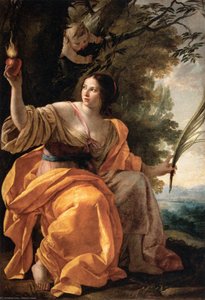
Simon Vouet's "The Fortune Teller," painted in 1617, isn’t merely a portrait; it’s a carefully constructed tableau brimming with intrigue and a palpable sense of the mystical. Housed within the venerable Galleria Nazionale d’Arte Antica in Rome, this oil on canvas invites viewers into a dimly lit chamber where the boundaries between reality and prophecy blur. Vouet, a pivotal figure bridging the Mannerist and Baroque eras, masterfully employs chiaroscuro – the dramatic interplay of light and shadow – to draw our attention to the central figures and imbue the scene with an almost theatrical intensity.
The composition itself is deliberately layered. At its heart sits a man, his features obscured by a wide-brimmed hat and a flowing beard, engaged in a hushed conversation. He holds an open book, seemingly offering guidance or revealing secrets. Flanking him are two women, their attire – one clad in vibrant red, the other in deep blue – adding splashes of color to the predominantly dark palette. Their attentive gazes suggest they are both recipients and observers of this unfolding drama. The background, rendered in muted tones, serves primarily as a backdrop, emphasizing the figures and creating an atmosphere of hushed anticipation.
A Masterclass in Baroque Technique
Vouet’s technique is a fascinating blend of influences. He absorbed the dramatic lighting favored by Caravaggio, but tempered it with a more refined elegance characteristic of French portraiture. Notice how light pools around the faces and hands, highlighting their expressions and gestures while leaving much of the scene shrouded in shadow. This creates a sense of depth and mystery, inviting speculation about the events taking place within the room. The brushstrokes are smooth and blended, contributing to the painting’s overall polished appearance – a hallmark of Vouet's style.
The use of *sfumato*, another technique borrowed from Leonardo da Vinci, is subtly present, softening edges and creating an atmospheric haze that further enhances the sense of depth. Vouet wasn’t simply replicating Caravaggio; he was adapting his innovations to suit the evolving tastes of the French court, resulting in a uniquely sophisticated style.
Symbolism and Historical Context
"The Fortune Teller" is steeped in symbolism, reflecting the prevailing fascination with astrology, divination, and the occult during the early 17th century. The book held by the central figure likely represents knowledge, prophecy, or perhaps even fate itself. The women, often interpreted as representing fortune tellers or advisors, are positioned to receive this information. The red and blue garments could symbolize different types of wisdom or guidance – a common motif in Renaissance art.
Painted during a period of significant artistic transition in France, Vouet’s work exemplifies the shift from the rigid formality of Mannerism towards the more dynamic and emotionally expressive style of the Baroque. His patronage by influential figures like Cardinal Richelieu helped establish him as one of the leading artists of his time, shaping the course of French painting for decades to come.
A Timeless Appeal: Reproduction Possibilities
The enduring appeal of “The Fortune Teller” lies in its ability to evoke a sense of mystery and intrigue. It’s a scene ripe with narrative possibilities, prompting viewers to imagine the story behind the figures and their exchange. Today, high-quality reproductions of this captivating artwork are available through AllPaintingsStore.com, meticulously crafted using traditional oil painting techniques and premium materials, ensuring that the drama and emotional depth of Vouet's original masterpiece are faithfully preserved. These reproductions offer a beautiful way to bring this iconic work into your home or office – a testament to the enduring power of art.
For further exploration, consider visiting the Galleria Nazionale d’Arte Antica in Rome or delving into online resources like the Web Gallery of Art (The Fortune Teller by VOUET, Simon) and exploring Valentin de Boulogne's work for a deeper understanding of Caravaggio’s influence.
Otázky a odpovede
K ktorému umeleckému smeru patrí „The Fortune Teller“ od Simon Vouet?
„The Fortune Teller“ od Simon Vouet patrí do smeru French Baroque. Tento smer poskytuje štylistický kontext diela.
Kde môžem kúpiť print diela „The Fortune Teller“ od Simon Vouet?
Ak si chcete objednať print diela „The Fortune Teller“ od Simon Vouet, stačí si ho objednať priamo na jeho stránke Fine art tlač: umelecká tlač na bavlnenom plátne alebo archivnom plátnovom papieri.
Z akého materiálu je vyrobené dielo „The Fortune Teller“ a v akom je štýle?
V diele „The Fortune Teller“ sa spája technika Oil On Canvas s movementom French Baroque.
Podobné diela




Biografia umelca
Simon Vouet: Francúzsky Barokový Majster a Most medzi Itáliou a Francúzskom
Simon Vouet, narodený v Paríži 9. januára 1590 a zomretý 30. júna 1649 v tom istom meste, je dnes uznávaný ako kľúčová postava vo vývoji francúzskeho maliarstva. Jeho meno sa spája s prechodom od manierizmu k dynamickému a expresívnemu štýlu baroka, ktorý ovplyvnil celé generácie umelcov. Pochádzal z rodiny zasvätenej umeniu – jeho otec Laurent bol tiež maliarom a brat Aubin sa venoval podobnej umeleckej dráhe – čo mu umožnilo od útleho veku dychtiť po poznaní a rozvíjať svoj talent pod ich vedením. Neskôr, jeho vnuk Ludovico Dorigny pokračoval v rodinnej umeleckej tradícii, čím upevnili Vouetovo dedičstvo.
Cestovanie, Vzdelávanie a Formovanie Umelca
Vouetova kariéra začala s portrétmi, kde sa prejavil jeho raný talent. Už ako štrnásťročný podnikol cestu do Anglicka na základe objednávky, čo naznačovalo jeho rýchlo rastúcu povesť. Neskôr nasledovala cesta cez Osmanskú ríšu a až do Benátok v roku 1612, kde sa ponoril do bohatého kultúrneho prostredia. Najvýznamnejšou etapou jeho formovania však boli trinásť rokov strávené v Ríme (1614-1627). Tieto roky boli pre neho transformačné – stal sa súčasťou pulzujúcej umeleckej scény, ktorá bola srdcom rozvíjajúceho sa baroka. V Ríme sa učil od majstrov ako Caravaggio, s ktorého dramatickým svetlom si oboznámil svoje obrazy, a študoval diela talianskych manieristov. Dôkladne analyzoval farebné palety a techniku di sotto in su (perspektívu zdola nahor) od Paola Veroneseho. Inšpiráciu čerpal aj z tvorby Carracciho, Guercina, Lanfranca a Guido Reniho, pričom postupne syntetizoval tieto rôznorodé vplyvy do svojho vlastného, jedinečného umeleckého štýlu.
Vrchol Kariéry a Návrat do Francúzska
Vouetova rímska kariéra vyvrcholila jeho voľbou za prezidenta prestížnej Accademia di San Luca v roku 1624, čo potvrdzovalo jeho majstrovstvo a uznanie v talianskom umeleckom svete. Jeho štýl sa vyznačoval schopnosťou absorbovať a spracovať rôzne umielecké vplyvy, pričom ich integroval do koherentnej a výrazne talianskej barokovej estetiky. V roku 1627 ho francúzsky kráľ Ľudovít XIII. zavolal späť do Francúzska, kde sa stal Premier peintre du Roi (Prvým maliarom kráľa) – pozíciou s obrovskou prestížou a vplyvom. V Paríži sa rýchlo etabloval ako dominantná sila, vytvárajúc oltárne obrazy a alegorické výzdoby pre súkromných mecenášov.
Dedičstvo a Vplyv na Francúzske Umenie
Vouetova dielňa bola živnou pôdou pre celú školu francúzskych maliarov nasledujúcej generácie. Medzi jeho najvýznamnejších učeníkov patril Charles Le Brun, ktorý neskôr vytvoril všetky interiérové dekoratívne maľby vo Versailles a definoval oficiálny umelecký štýl na dvore Ľudovíta XIV., hoci v žiarosti nechal Voueta vyradiť z Kráľovskej akadémie v roku 1648. Okrem Le Bruna boli jeho učeníci Valentin de Boulogne, jeden z hlavných francúzskych „caravaggistov“, Pierre Mignard, Eustache Le Sueur, Nicolas Chaperon a flámsky umelec Abraham Willaerts. Vouetov vplyv presahoval rámec jeho vlastných prác; jeho študenti šírili jeho štýl a techniky po celej Francúzsku, čím položili základy charakteristickej barokovej školy maliarstva. Jeho odkaz je obzvlášť zreteľný vo veľkých dekoratívnych schémach objednaných Ľudvíkom XIV., kde sa jeho vplyv prejavuje v monumentálnosti a dynamike kompozícií.
Simon Vouet zostáva v dejinách umenia ako most medzi talianskym a francúzskym barokom. Úspešne preniesol dynamiku a grandióznu krásu talianskeho baroka do Francúzska, čím výrazne ovplyvnil umeleckú krajinu krajiny a zanechal trvalý odkaz na generácie umelcov.

Simon Vouet
1590 - 1649 , Francúzsko
Základné informácie
- Artistic Movement Or Style: Baroková maľba
- Artists Or Movements Influenced By This Artist:
- Charles Le Brun
- Valentin de Boulogne
- Francúzska baroková maľba
- Artists Who Influenced This Artist:
- Caravaggio
- Paolo Veronese
- Carracci
- Guercino
- Lanfranco
- Guido Reni
- Date Of Birth: 9. január 1590
- Date Of Death: 30. jún 1649
- Full Name: Simon Vouet
- Nationality: Francúzsky
- Notable Artworks:
- Crucifixion (1622)
- Allégorie de la richesse
- Vénus Endormie (1630/40)
- Place Of Birth: Paríž, Francúzsko
Súvisiace články

The Dramatic Flourish: Exploring the Baroque Movement's Enduring Legacy in Art History
Explore the dramatic world of Baroque art! Discover iconic artists like Caravaggio & Rubens, defining techniques, and its lasting impact on art history. Expert insights for collectors & enthusiasts at AllPaintingsStore.

Baroková Dráma: Umenie, ktoré prináša nádheru do domova
Objavte nádheru barokového štýlu! Spoznajte jeho históriu, kľúčové prvky a inšpirujte sa tipmi pre váš domov. Kvalitné reprodukcie diel od .

The Enduring Legacy of Oil on Canvas: Technique, History & Aesthetic Impact
Explore the rich history & techniques of oil painting – from Renaissance masters to Impressionism. Discover pigments, layering methods, and why this timeless medium endures. Expert insights for artists & art enthusiasts.

The Enduring Power of Painting: A Historical & Contemporary Exploration of Form and Emotion
Explore the rich history & enduring techniques of oil painting with AllPaintingsStore. Discover masterpieces, learn about art collecting, and find authentic handmade reproductions crafted by skilled artists.

Simon Vouet: A Baroque Master's Journey from Italian Influence to French Classicism
Explore the life & art of Simon Vouet, a pivotal French Baroque painter who introduced Italian styles to France. Discover his masterpieces and lasting influence on 17th-century art.


