


 Náhľad v interiéri

 Odoslať ako digitálnu kartu
 Zdieľať
 Podrobnosti o dielo
 Informačný list pre študentov


 Stiahnuť obraz
 Podobné položky
 RTG skúška
 Prehliadanie diapozoje
 Otázky a odpovede

 Štatistiky
Joshua Brookes


 Zobraziť viac
Získajte súbor pripravený na tlač, ktorý ponúka oveľa vyššiu kvalitu než online náhľad. Každý predávaný digitálny obraz pochádza z vysokorozlíseného originálu v našej databáze – zvyčajne s šírkou 5 000 až 15 000 pixelov – takže môžete s istotou tlačiť vo veľkom formáte, vytvárať detailné výrezy alebo reprodukovať jemné detaily.
Žiadny súbor neopustí naše štúdio bez úprav. Digitálny expert kontroluje farby v porovnaní s originálnym obrazom a v prípade potreby ich opraví, následne nástrojmi na profesionálnu retuš zvyšuje mieru ostrosti a detailov — pričom vždy zostáva verný umeleckému ťahu štetca a štýlu autora. Výsledkom je obraz, ktorý pôsobí ako samotné dielo, nie ako naskenovaný snímok s filtrom.
Schvaľujete ešte pred dokončením: náš expert vám obrazový súbor do 72 hodín pošle e-mailom na kontrolu. Nie ste spokojní? Požiadajte o vylepšenia alebo opravy, prípadne si môžete vyžiadať vrátenie platby, ak kvalita nedosahuje očakávanú úroveň.
Táto kvalita je základom dôvery vydavateľov, dizajnových štúdií, galérií a tlačovníkov.
Digitálny obraz
Stiahnite si vysokorozlíšený súbor na osobné zobrazovanie, tlačenie a kreatívne projekty. ( Tlač z galérie Olejový obraz
)
Súčasťou každej objednávky digitálneho obrazu
Garantovaná expertná digitálna distribúcia
Keď si vyberiete AllPaintingsStore.com, nezískate len obyčajný obrázok – získate profesionálne upravené digitálne umenie, vytvorené s maximálnou precíznosťou a podložené zárukou vašej spokojnosti. Tu je všetko, čo je súčasťou vašej objednávky automaticky:

Rýchle doručenie e-mailom
Vaša vysokorozlíšená digitálna súprava obrázkov vám bude zaslaná e-mailom do 72 hodín od objednávky – pripravená na okamžité použitie.

Digitálny súbor s vylepšením AI
Vaše dielo je profesionálne optimalizované pomocou pokročilých nástrojov umelej inteligencie a manuálnej úpravy, čo zaručuje maximálnu mieru detailov, čistotu a presnosť farieb.

Bezplatné celoživotné opätovné doručenie
Súbor ste náhodou zmazali alebo ste ho stratili? Žiadne starosti – kedykoľvek vám ho môžeme poslať znova, úplne bez poplatkov.

Bez poplatkov za dovoz – navždy
Užite si svoje umenie okamžite bez colných poplatkov, daní alebo nákladov na dopravu – digitálne stiahnutia sú vždy oslobodené od dane.

Garantovaná presnosť farieb
Pomocou profesionálnych nástrojov a farebného manažmentu zabezpečujeme, aby vaša digitálna fotografia čo najpresnejšie odrážala pôvodné farby.

Záruka spokojnosti 100 dní
Ak nebudete spokojní so svojím digitálnym obrázkom, upravíme ho alebo vám v priebehu 100 dní vrátime 100% – bez zbytočných otázok.

100% Záruka vrátenia peňazí
Nie ste spokojní? Získajte plnú náhradu platby do 100 dní od prijatia digitálneho súboru – bez zbytočných otázok.

Zľavy pri veľkom odbere
Pri kúpe 3 obrázkov získate zľavu 10% - Pri kúpe 5 obrázkov získate zľavu 15% - Pri kúpe 10+ obrázkov získate zľavu 20%. Ideálne pre kreatívne projekty, galérie a agentúry.
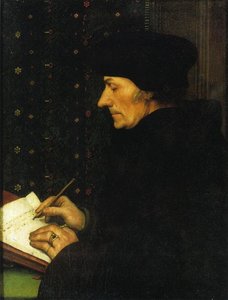
The Portrait of Joshua Brookes by Thomas Phillips
The portrait of Joshua Brookes by Thomas Phillips depicts the English anatomist and naturalist in a moment of quiet study. Painted in 1815, the work was created at the request of the students who studied under Brookes. The subject is shown seated at a desk within a dark interior, where a single light source casts shadows against the wall behind him. He is dressed in a dark coat with a high collar, consistent with the formal attire of the early nineteenth century. His white hair and serious expression are rendered with a focus on physical likeness and the specific textures of his clothing.
Thomas Phillips utilized a realistic style to capture the sitter's features and the immediate environment. The composition places the man in a state of concentration, with an open book and a quill pen positioned on the desk before him. The lighting is directed to emphasize the man's face and hands, leaving the periphery of the room in relative darkness. On the wall in the background, two framed items are visible, though they remain indistinct due to the angle of the light and the surrounding shadows. The palette relies on deep tones and controlled light to define the space.
Composition and Visual Details of the Work
The composition is centered on a man seated at a desk within a dark room. A single light source originates from the side, casting dramatic shadows across the wall behind the figure. This lighting creates a high-contrast environment, leaving much of the surrounding space in relative darkness. The subject is depicted with white hair and a serious expression, his gaze directed off to the side rather than toward the viewer. He wears a dark coat characterized by a high collar, consistent with formal attire from the late 18th or early 19th century.
On the desk before the man lies an open book and a quill pen. The painting style is realistic, emphasizing fine details in the subject's facial features and the texture of his clothing. The use of color and shadow establishes a sense of depth within the interior setting. Two framed items are visible on the wall in the background, though they remain indistinct due to the angle of the light and the heavy shadows present in the room.
The Subject and His Scientific Legacy
Joshua Brookes was an English anatomist, surgeon, and naturalist who operated within the scientific circles of London. He functioned as a teacher of anatomy, providing instruction to various students in the city. His professional focus included comparative osteology and the development of methods for preserving anatomical subjects for use in lectures and class dissections. In 1819, he was elected a Fellow of the Royal Society.
A significant part of his career involved the development of the Brookesian Museum. This institution housed a major private collection consisting of anatomical and zoological specimens. The collection was noted for its scale, being regarded as second only to the collection of John Hunter. His work in this field involved the study of various species, including the use of the name Megalocerus for certain giant deer specimens.
Brookes died suddenly on 10 January 1833 in London. Following his death, his anatomical school in Blenheim Street reopened on 1 October 1833. His scientific legacy is also linked to the genus Brookesia, which was named in his honor by John Edward Gray in 1864.
The Artistic Career of Thomas Phillips
Born in Dudley, Worcestershire, in 1770, Thomas Phillips began his professional development through the craft of glass-painting. This early training under Francis Eginton in Birmingham established a foundation in the precise application of color and light. After moving to London in 1790, he received guidance from Benjamin West and secured work on the painted-glass windows of St George's Chapel at Windsor Castle. He formally enrolled as a student at the Royal Academy in 1791, eventually specializing in portrait painting.
His ascent within the British art establishment was marked by several formal recognitions. In 1804, he was elected an associate of the Royal Academy. He achieved full academician status in 1808. His professional standing continued to grow as he attracted a diverse clientele, including members of the royal family and the aristocracy. In 1825, he was appointed Professor of Painting at the Royal Academy, a position he held until 1832.
Phillips maintained a studio at 8 George Street, Hanover Square, London, for four decades. He remained active in the art community, contributing to the development of British portraiture through his technical skill and his 1833 publication, Lectures on the History and Principles of Painting. He died in 1845 at his residence in London.
Otázky a odpovede
Do ktorej obdobia tvorby Thomas Phillips spadá dielo "Joshua Brookes"?
Dielo „Joshua Brookes“ pochádza z obdobia Mature Period v tvorbe umelca Thomas Phillips. Táto klasifikácia spája toto dielo s vývojom umeleckej dráhy autora.
Je „Joshua Brookes“ od Thomas Phillips obrazom, kresbou alebo grafikou?
„Joshua Brookes“ je WallArt dielo.
Môžem si pred objednávkou pozrieť náhľad diela „Joshua Brookes“ od Thomas Phillips?
Náhľad diela „Joshua Brookes“ od Thomas Phillips si môžete pozrieť na jeho stránke Náhľad diela.
Podobné diela


Biografia umelca
Thomas Phillips: A Master of Light and Character in 19th-Century British Portraiture
Thomas Phillips, born in Dudley, Worcestershire, in 1770, represents a fascinating confluence of artistic disciplines – initially trained as a glass painter, he ultimately ascended to become one of the most celebrated portraitists of his era. His journey from the meticulous craft of decorative glass to the grand halls of London’s Royal Academy is a testament to his innate talent and unwavering dedication. Phillips's work isn’t merely about capturing likeness; it’s an exploration of character, imbued with a remarkable sensitivity to light, color, and the subtle nuances of human expression.
His early years were shaped by his apprenticeship under Francis Eginton in Birmingham, where he honed his skills in glass-painting. This foundational experience instilled within him a profound appreciation for detail – a meticulousness that would later become a hallmark of his portraiture. The intricate patterns and vibrant hues of stained glass demanded an acute eye for color mixing and composition, providing a crucial training ground for the artist’s future endeavors. It was in 1790 that Phillips embarked on a pivotal journey to London, armed with a letter of introduction to Benjamin West, a leading figure at the Royal Academy. West's mentorship proved transformative, opening doors to employment on the painted-glass windows of St George’s Chapel at Windsor Castle – a demanding but invaluable opportunity to refine his artistic abilities within a grand architectural setting.
The Rise of a Portraitist: Style and Subject Matter
Phillips’s transition into portraiture was gradual yet deliberate. While initially undertaking landscape and historical scenes, he quickly recognized the burgeoning demand for individual portraits amongst London's elite. His style evolved rapidly, drawing upon both his glass-painting training – particularly his understanding of light and shadow – and the prevailing artistic trends of the late 18th and early 19th centuries. He possessed a rare ability to capture not just physical likeness but also something of the sitter’s inner life—their character, intellect, and even their mood. This wasn't simply replication; it was an attempt to reveal the soul behind the surface.
His early subjects were largely unknown individuals – tradesmen, servants, and members of the lower classes. However, through perseverance and a growing reputation for skill, Phillips steadily ascended the social ladder, attracting increasingly prominent figures to his studio. The portraits he produced during this period—often unsigned in the catalogues—were characterized by their understated elegance and remarkable realism. He skillfully employed subtle gradations of tone and color to create a sense of depth and atmosphere, capturing not just the appearance but also the essence of his subjects.
Royal Patronage and Academic Recognition
The year 1804 marked a turning point in Phillips’s career with his election as an associate of the Royal Academy. This prestigious recognition solidified his position within the established art world, alongside luminaries such as Thomas Lawrence and John Hoppner. Shortly thereafter, he relocated to 8 George Street, Hanover Square – a prestigious address that would serve as his home and studio for the remainder of his life. His clientele expanded dramatically during this period, encompassing members of the royal family, including the Prince of Wales (later George IV), as well as prominent figures from the aristocracy, literary circles, and scientific communities.
Amongst his most celebrated portraits are those of William Blake, a visionary poet and artist; Lord Byron, the flamboyant Romantic hero; and Sir Joseph Banks, the renowned botanist. The portrait of William Blake, now housed in the National Portrait Gallery, is particularly noteworthy for its evocative depiction of the poet’s intense gaze and spiritual depth. Phillips's ability to capture the essence of these extraordinary individuals cemented his reputation as one of the foremost portraitists of his time.
Later Years: Professorship and Legacy
In 1825, Thomas Phillips was appointed Professor of Painting at the Royal Academy, a position he held until 1832. This role afforded him the opportunity to share his artistic knowledge and techniques with aspiring artists, shaping the future of British painting. He published *Lectures on the History and Principles of Painting* in 1833, offering insights into his artistic philosophy and pedagogical approach – a testament to his enduring influence on the art world.
Phillips’s legacy extends beyond his individual works. His meticulous attention to detail, combined with his profound understanding of human psychology, established him as a master of portraiture. His paintings offer a captivating glimpse into the lives and personalities of some of Britain's most influential figures—a testament to his skill, sensitivity, and enduring artistic vision. The portraits he created continue to be admired for their beauty, realism, and the profound sense of character they convey.

Thomas Phillips
1770 - 1845 , Spojené kráľovstvo
Rýchly prehľad
- Artistic Movement Or Style: Romantizmus
- Artists Or Movements Influenced By This Artist: ['Benjamin West']
- Artists Who Influenced This Artist: ['Benjamin West']
- Date Of Birth: 1770
- Date Of Death: 1845
- Full Name: Thomas Phillips
- Nationality: Britský
- Notable Artworks:
- Venüs a Adonísa
- Lord Byron
- Place Of Birth: Dudley, UK