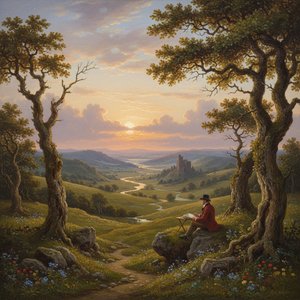
1808. Watercolor.

§ 1Catalogue data


§ 2Abstract
Popis zberateľského predmetu
The Last Judgement by William Blake depicts a dramatic scene of divine judgment with intricate figures and vibrant colors, capturing the essence of Romantic art.
 Zobraziť viac
Biografia umelca
Výnimočná vodfarbá obrazová dielka od Williama Blakea zobrazujúca kozmický boj dobra proti zlu – Veľký Červený Drak a Žena oblečená na Slnko, ikonická reprezentácia romantického umenia.
§ 3Commentary
A Visionary Encounter with Divine Justice
In the profound depths of William Blake’s Last Judgement, viewers are not merely observing a biblical scene but are instead thrust into a visceral, spiritual confrontation. Executed in 1808, this monumental work serves as a breathtaking testament to the Romantic artist's visionary intellect. The canvas captures the terrifying yet sublime moment of divine reckoning, where the boundaries between the earthly and the eternal dissolve. Blake does not seek to provide a polite illustration of scripture; rather, he strives to translate the very essence of spiritual truth into a visual language that resonates with the soul. Through his eyes, we witness a swirling vortex of humanity—a complex tapestry of souls ascending toward heavenly light or descending into the shadows of retribution.
The composition is an intricate dance of movement and emotion, where every figure tells a story of sin, redemption, or eternal struggle. Some figures appear as ethereal, angelic beings, radiating a celestial glow that pier/s the darkness, while others represent the weight of human frailty, caught in the turbulent currents of judgment. This duality creates a dramatic tension that is both unsettling and undeniably beautiful, making it an ideal centerpiece for those who appreciate art that provokes deep thought and emotional resonance.
The Mastery of Neo-Romantic Symbolism
Blake’s technique is a departure from the polished, idealized aesthetics of his contemporaries. Rooted firmly in Neo-Romanticism, his approach prioritizes the raw power of imagination and the intensity of supernatural phenomena over the rigid empirical observations of the Enlightenment. He utilized a sophisticated layering of textures, often blending the precision of etching and engraving with the fluid, expressive qualities of watercolor. This method allows for a rich, vibrant color palette that breathes life into the dramatic atmosphere of the scene.
The painting is deliberately unpolished in certain aspects, possessing a "scarred" quality that reflects Blake’s belief that true beauty is found in acknowledging imperfection and confronting the darkness within the human condition. For collectors and interior designers, this technique offers a unique tactile depth; the interplay of light and shadow creates a sense of movement that changes depending on the viewer's perspective, ensuring that the artwork remains a captivating focal point in any sophisticated gallery or private collection.
Historical Resonance and Emotional Depth
To understand the Last Judgement is to understand the intellectual ferment of early 19th-century England. Created during a period of profound religious and scientific upheaval, Blake’s work challenged the strict moral codes of the era. While much of Victorian society sought comfort in rigid piety, Blake explored the more turbulent, alternative spiritual landscapes. His depiction of the swirling chaos of the damned was a bold interrogation of established doctrines, inviting the viewer to look beyond outward propriety and into the inner landscape of faith.
For the discerning art lover, this piece offers more than just aesthetic pleasure; it provides an emotional journey. It is a work that speaks to the universal human experience of accountability, hope, and the search for meaning amidst chaos. Whether displayed in a grand hall or a quiet study, a high-quality reproduction of this masterpiece brings with it an aura of historical significance and a profound, contemplative energy that can transform the atmosphere of any space.
Otázky a odpovede
Existuje sprievodca k dielu „Last Judgement“ od William Blake?
Pre dielo „Last Judgement“ od William Blake je k dispozícii stránka Sprievodca študentom: tlačiteľný informačný list o umedení, navrhnutý pre študentov a využitie v triedach.
Do ktorého umeleckého smeru a do ktorej éry spadá dielo „Last Judgement“ od William Blake?
Dielo „Last Judgement“ patrí do smeru Romantic Age Romantic Age a jeho autor tvoril v období Raná modernosť.
Aký je kontrast v díle „Last Judgement“ od William Blake?
Svetlo-tmavý kontrast diela „Last Judgement“ je zaznamenaný ako Gentle. Kontrast popisuje, ako výrazne sa líšia svetlé a tmavé oblasti.


 Prepnúť na tlač


 V prípade umeleckých diel alebo reprodukcií, ktorých ktorákoľvek strana je väčšia ako 105 cm (cca 41 palcov), sa rám dodáva v rozloženom stave ako sada. Táto metóda zabezpečuje bezpečnú доставu a chráni pred poškodením počas prepravy.