


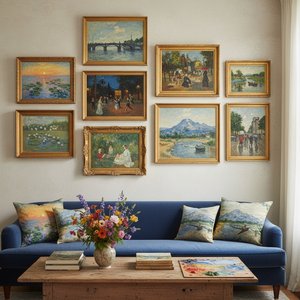
 Zobraziť v interiéri
 Odoslať
 Zdieľať
 Podrobnosti
 Príručka

 Stiahnuť
 Podobné položky
 RTG skúška
 Prehliadanie diapo\]
 Štatistiky
Landscape
 Impressionism
 1887
1887 53.0 x 29.0 cm
 Prečítať si viac
Umelecké dielo zobrazené na tejto stránke je chránené autorským zákonom, čo znamená, že nemôžeme legálne vytvárať ani predávať jeho identickú reprodukciu. Táto ochrana je vymáhaná na základe medzinárodných dohôd, ako napríklad Bernská konvencia a národnými zákonmi, vrátane tých, ktoré sú stanovené v Autorské právo USA – Title 17. Všetky práva vyhradené.
Táto metóda plne dodržiava autorské práva, pretože nezahŕňa kopírovanie ani duplikovanie chráneného diela. Ide skôr o kreatívnu reinterpretáciu – nový obraz, ktorý je ovplybnený originálom, no nie je s ním identický.
Giclée / Umenotlač
Giclée tlač alebo plátno múzeálnej kvality s rýchlou výrobou a rôznymi možnosťami povrchovej úpravy. ( Objednať ručne maľovanú reprodukciu Prepnúť na digitálnu verziu obrazu)




































Vyberte si z našich preddefinovaných rozmerov, ktoré zodpovedajú pôvodným pomeroḿ diela.

Zadajte šírku a výšku, ktoré potrebujete, aby sa reprodukcia hodila k vášmu rámu alebo stene. Print možno len orezávať, nikdy však nemennú veľkosť zvětšiť oproti pôvodnému obrázku, preto pri inom formáte stráca časť obrazu. Pred samotným vytlačiacím procesom vám pošleme digitálny náhľad na schválenie. Obrázok zobrazený na tejto stránke nezobrazuje reálny rez — len digitálny náhľad ukazuje presný výsledok.
Celosvetová doprava () do 2 týždňov namiesto štandardných 4 až 5 týždňov. (24 október)

Bezplatná expresná doprava po celom svete

Vysokokvalitné lnianske plátno

Úplné poistenie prepravy

Záruka vrátenia colného poplatku

Záruka presného farebného zhodnutia

100-dená politika vrátenia tovaru (iba pri vadách)

100% záruka vrátenia peňazí

Ponuka množstevnej zľavy
 Možnosť skla je dostupná len pri rozmeroch pod 110 cm

Landscape
Giclée / Umenotlač
Veľkosť reprodukcie
-


Celková cena
€ 56
Súvisiace diela


Biografia umelca
The Dual Vision of William H. Snape: Where Science Meets the Canvas
In the annals of late nineteenth-century art, few figures possess a legacy as intellectually layered as William H. Snape. Born in 1860 in the historic surroundings of Oxford, Oxfordshire, Snape lived a life that functioned as a profound dialogue between the analytical rigor of the laboratory and the emotive freedom of the easel. While many of his contemporaries were content to explore the world through a single lens, Snape’s existence was defined by a unique duality. He was simultaneously a man of scientific precision—a physician dedicated to the complexities of pathology and immunology—and a painter possessed by an enduring passion for the ephemeral beauty of the English landscape.
His journey toward this synthesis of disciplines began at the Magdalen College School in Oxford, where his early brilliance in mathematics and science first emerged. This academic foundation led him to the prestigious Somerville College, Cambridge, an institution that would further refine his disciplined approach to observation. Graduating summa cum cum laude with honors in Natural Sciences, Snape embarked upon a medical career that would leave a permanent mark on the scientific community. His research into the pathogenesis of tuberculosis and his instrumental role in establishing The Sir William Dunn School of Pathology at Oxford University cemented his reputation as a pioneer in biomedical science. Yet, even amidst the microscopic scrutiny of disease mechanisms, the macroscopic beauty of the natural world remained ever-present in his mind.
A Mastery of Light and Atmosphere
Snape’s artistic development was deeply informed by his scientific training; the same meticulous eye required to identify cellular changes in pathology allowed him to capture the subtle gradations of light and shadow in the natural world. He found particular inspiration in the Cotswolds region, translating the rolling hills and seasonal shifts of the English countryside into evocative oil paintings. Heavily influenced by the Impressionist movement—and specifically the luminous explorations of Claude Monet—Snapec mastered the art of atmospheric perspective. His work often sought to capture not just a static scene, but the very feeling of the air, the moisture in a morning mist, or the warmth of an autumnal afternoon.
His repertoire was remarkably diverse, ranging from serene landscapes to intimate portraits and maritime scenes. In his landscapes, one can observe a sophisticated use of tonal gradations that suggest depth and movement, while his more structured works, such as Portrait of a Child Selling Flowers or his various still lifes, reveal a command over composition and form. Whether depicting the frozen stillness of a harbour scene or the rugged textures of a gamekeeper’s grounds, Snape utilized a palette that breathed with life, often employing warm, nostalgic tones that evoke a sense of timelessness.
Legacy of an Observational Life
The historical significance of William H. Snape lies in his ability to bridge two seemingly disparate worlds. He did not view science and art as conflicting forces, but rather as complementary methods of understanding existence. To Snape, the study of a biological process and the painting of a sunset were both acts of profound observation—both required an intimate engagement with the truth of what is seen. This commitment to seeing clearly allowed him to contribute significantly to both the medical advancements of his era and the aesthetic richness of British landscape art.
Though his life was relatively short, spanning from 1860 to the early twentieth century, the impact of his dual vocation remains palpable in the works that survive. His paintings serve as a testament to a period when the boundaries between disciplines were fluid, and where the pursuit of knowledge was as much about the heart as it was about the intellect. Today, collectors and historians alike look to Snape not merely as a painter of beautiful scenes, but as an artist whose very soul was shaped by the intricate dance of life and the enduring majesty of the earth.

Rýchle fakty
- Full Name: William H Snape
- Nationality: British
- Place Of Birth: Oxford, United Kingdom
- Notable Artworks: ['Landscape']
- Artistic Movement Or Style: Impressionism
- Artists Who Influenced This Artist: ['Claude Monet']
- Artists Or Movements Influenced By This Artist: ['Post-Impressionism']
Súvisiace články

Golden Fields & Sun-Drenched Meadows: Capturing the Soul of Impressionist Landscapes
Immerse yourself in the luminous world of Impressionist landscapes. Discover how masters like Monet and Gauguin captured ephemeral light through plein air painting, and learn to bring the soul of sun-drenched meadows into your home with exquisite, hand-painted oil reproductions.

Beyond the Light: Capturing Raw Emotion and Subjective Vision in Post-Impressionist Landscapes
Explore the profound emotional depth of Post-Impressionist landscapes. Discover how masters like Van Gogh moved beyond light to capture raw human feeling through vibrant color and expressive texture in this expert art history retrospective.
Top 10 impresionistických krajín: Majstrovské diela, ktoré zmenili umenie
Ponorte sa do sveta impresionizmu! Objavte top 10 majstrovských diel krajinárskej maľby od Monet, Renoir a ďalších. Inšpirujte sa farebnými plátnami a prineste si kúsok francúzskeho umenia do vášho interiéru s AllPaintingsStore.com. Preskúmajte rozsiahlu kolekciu online!

Top 10 impresionistických krajín: Majstrovské diela, ktoré zmenili umenie a dekoráciu interiéru
Ponorte sa do sveta impresionizmu! Objavte top 10 majstrovských diel krajinárstva od Monet, Renoir a ďalších. Inšpirujte sa farebnými plátnami a dekorujte svoj dom s AllPaintingsStore.com – múzejnou kvalitou pre váš interiér. Preskúmajte kolekciu online!

Capturing the Soul: The Most Emotionally Moving Impressionist and Post-Impressionist Masterpieces
Discover the profound emotional depth of Impressionist and Post-Impressionist masterpieces. Explore how legends like Monet, Van Gogh, and Gauguin captured light and soul through evocative landscapes and vibrant brushwork for a timeless connection to art history.

