Záruka vrátenia peňazí · 100 dní Bezplatné celosvetové doručenie
449 587artworks 30 613umelci 4 660múzeá 32jazyky
Mena
    Jazyk
      Ateliér · Založené 2015 · Paríž, Francúzsko
      AllPaintingsStore
      allpaintingsstore.com
      Catalogue entry

      Eastern Point Light

      1880. Watercolor.

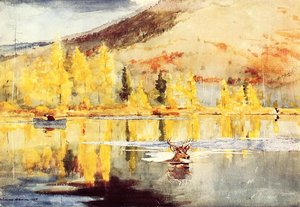
      Fig. 1. Winslow Homer, Eastern Point Light, 1880. Shown as the reproduction you are specifying: , .

      § 1Catalogue data

      § 2Abstract

      Popis zberateľského predmetu

      Experience Winslow Homer’s ‘Eastern Point Light,’ a breathtaking nocturne capturing resilience and solitude. This 1880 watercolor depicts sailboats under the moonlight, showcasing Homer's mastery of atmospheric perspective.

      Biografia umelca

      Shall I Tell Your Fortune - Výstavný obraz Winslow Homera zobrazuje pokojné mesto a pozorovateľstvo prírody. Pozrite si nádhernú reprodukciu tejto klasiky amerického impresionizmu!

      § 3Commentary

      A Nocturne of Resilience: The Luminous Soul of Eastern Point Light

      In the quietude of the night, where the boundary between sea and sky dissolves into a singular, breathing entity, Winslow Homer’s 1880 watercolor masterpiece, Eastern Point Light, finds its voice. This is not merely a maritime scene; it is a profound meditation on the interplay between vulnerability and strength. As the viewer gazes upon the dark, undulating waters of Gloucester Harbor, they are immediately drawn into a world governed by the rhythmic pulse of the tides and the watchful eye of the lighthouse beacon. Homer, a titan of American realism, transcends simple documentation to capture a moment of deep, atmospheric tension, inviting us to witness the silent dialogue between human endeavor and the vast, untamable forces of nature.

      The composition is a masterclass in balanced movement and stillness. Three sailboats, positioned with a deliberate diagonal grace across the canvas, appear to navigate the obsidian depths, their forms suggesting a slow, rhythmic progression toward one another. This sense of motion is anchored by the celestial presence of the moon, perched high in the heavens, casting a silvery sheen that illuminates the clouds and provides a ghostly guide for the vessels below. Through his expert use of atmospheric perspective, Homer skillfully blurs the distant horizon, creating an immersive depth that pulls the observer into the cool, salt-misted air of a New England night. The watercolor medium itself plays a vital role, allowing for soft, bleeding edges and translucent washes that evoke the ethereal quality of moonlight reflecting off damp surfaces.

      Technique and the Art of Light

      Homer’s approach to this work reflects his unique position in American art history—a bridge between the meticulous detail of his early days as a commercial illustrator and the expressive, almost Impressionistic freedom of his mature period. In Eastern Point Light, he eschews the vibrant, saturated palettes of his contemporaries in favor of a more nuanced, muted spectrum. He utilizes subtle shifts in tone—deep indigos, charcoal greys, and soft creams—to build a sense of weight and volume within the darkness. The luminous glow emanating from the lighthouse is not merely a point of light; it is a focal point of hope, rendered with such precision that one can almost feel its warmth cutting through the nocturnal chill.

      For the discerning collector or interior designer, this piece offers an unparalleled emotional resonance. It possesses a quiet dignity that makes it a sophisticated centerpiece for any curated space, particularly those seeking to introduce themes of stability, guidance, and peace. The painting’s ability to evoke the "sublime"—that specific mixture of awe and trepidation in the face of nature's grandeur—makes it more than just decor; it is an invitation to reflection. Whether placed in a sunlit study or a moody, contemporary gallery setting, a high-quality reproduction of this watercolor brings with it the enduring spirit of the American coast and the timeless, steadfast light of Homer’s vision.

      Otázky a odpovede

      Kedy a z akých materiálov bolo vytvorené dielo „Eastern Point Light“?

      Technikou diela „Eastern Point Light“ od Winslow Homer je Watercolor a vzniklo v roku 1880.

      Akú náladu a emóciu vyjadruje „Eastern Point Light“ od Winslow Homer?

      V diele „Eastern Point Light“ sprevádza Calm nálada Tranquil emóciu.

      Ako sa téma diela „Eastern Point Light“ vzťahuje k bežným témam umelca Winslow Homer?

      Medzi zaznamenané témy umelca Winslow Homer – marine impressionism, american landscape tradition, romantic symbolism, coastal observation, homeward bound imagery – prináša dielo „Eastern Point Light“ vlastný dôraz na sailboats, nightscape, moonlight, coastal scene, maritime art, american painter, watercolor technique.
      § 4The artist

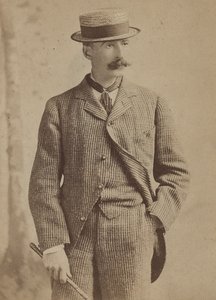
      Winslow Homer

      Winslow Homer

      1836 - 1910, USA

      Quick facts about Winslow Homer

      • Artistic Movement Or Style: Americký realizmus
      • Artists Or Movements Influenced By This Artist: ['Americké maľby']
      • Artists Who Influenced This Artist:
        • Barbizonská škola
        • Courbet
        • Millet
      • Date Of Birth: 24. februára 1836
      • Date Of Death: 29. septembra 1910
      • Full Name: Winslow Homer
      • Nationality: Američan
      • Notable Artworks:
        • Breezing Up
        • Gulfský prúd
        • Nezinanie
      • Place Of Birth: Boston, USA

      Biografia umelca

      A Brush with the American Spirit: The Life and Art of Winslow Homer

      Winslow Homer, born in Boston in 1836, wasn’t sculpted by the traditional European art academies that shaped so many of his contemporaries. Instead, he emerged from a distinctly American experience, one rooted in practicality and observation. His journey began not with grand historical canvases, but as a commercial illustrator at the tender age of twelve for Harper's Weekly. This early apprenticeship was formative, honing an exceptional ability to capture scenes with clarity and detail – skills that would become hallmarks of his mature work. He wasn’t learning perspective in Paris; he was learning to *see* America, its people, and its unfolding story. The bustling streets of Boston, the quiet dignity of rural New England life, these were his first subjects, rendered with a precision born of necessity for the demands of print media. This foundation allowed him to transition into painting, initially in watercolor, before fully embracing the expressive potential of oil paints.

      From Pastoral Scenes to the Raw Power of Nature

      Homer’s early paintings often depicted idyllic scenes – children playing, farmers tending their fields, quiet moments of domesticity. These works, while charming, hinted at a deeper artistic sensibility waiting to be unleashed. The catalyst for this transformation was undoubtedly the Civil War. As a war correspondent for Harper's Weekly, Homer witnessed firsthand the brutal realities of conflict. He didn’t focus on heroic battles or grand strategies; instead, he documented the everyday lives of soldiers and civilians, the quiet moments of grief and resilience amidst chaos. This experience profoundly altered his artistic vision. The pastoral scenes gave way to more challenging subjects: veterans grappling with trauma, freed slaves navigating a new world, and the stark beauty of landscapes touched by hardship. He began to explore themes of struggle, isolation, and humanity’s precar He wasn't interested in imitating European styles; he wanted to create an art that was uniquely American, reflecting its landscapes, its people, and its challenges. His style also evolved, becoming bolder and more direct, reflecting the raw emotional impact of what he had witnessed. Breezing Up (A Fair Wind), painted in 1876, exemplifies this skill – a quintessential depiction of American maritime life, brimming with energy and movement. The Gulf Stream, created decades later, is perhaps his most iconic work, a powerful and symbolic portrayal of a lone man battling the forces of nature, a metaphor for human struggle against overwhelming odds. He wasn’t simply painting what he saw; he was conveying a feeling, an emotional truth about the human condition.

      Mastering Light, Texture, and the American Landscape

      Winslow Homer's artistic technique is immediately recognizable for its solidity and texture. He wasn’t interested in fleeting impressions; he wanted to build up a sense of tangible reality on the canvas. His oil paintings are characterized by a direct painting approach – layers of paint applied with confidence, creating depth and luminosity. He possessed an extraordinary ability to capture light, whether it was the dazzling glare of the sun on the ocean or the soft glow of twilight over a rural landscape. This mastery extended to his watercolors, where he achieved remarkable atmospheric effects through vibrant colors and delicate washes. He admired European artists like those of the Barbizon school – known for their realistic depictions of rural life – and acknowledged influences from Courbet and Millet, but he ultimately forged his own distinctly American path.

      A Legacy Forged in American Realism

      Winslow Homer's art offers a profound window into 19th-century America, providing invaluable insights into the social, political, and cultural landscape of his time. His paintings are not merely beautiful representations; they are powerful statements about human resilience, the beauty and power of nature, and the complexities of the American experience. He died in 1910, leaving behind a prolific body of work that continues to resonate with audiences today. His ability to depict America with honesty and authenticity, without romanticizing or idealizing it. His influence can be seen in the work of later American painters who sought to depict their own country with similar directness and emotional depth.
      • His work continues to inspire contemporary artists.
      • Homer remains a pivotal figure in the development of American Realism.

      § 5Comparanda

      § 6Questions

      Základné informácie

      • Movement: American Realism
      • Title: Eastern Point Light
      • Notable elements or techniques: Visible clouds, Moon illumination
      • Medium: Watercolor over graphite
      • Artist: Winslow Homer

      Kvíz o umení

      Pri každej otázke je iba jedna správna odpoveď.

      Otázka 1:
      What is the primary medium used in Winslow Homer's 'Eastern Point Light'?
      Otázka 2:
      In which year was 'Eastern Point Light' created?
      Otázka 3:
      Where is the setting of this maritime scene located?
      Otázka 4:
      How many sailboats are positioned in the composition of the painting?
      Otázka 5:
      Which celestial body provides a silvery sheen to the clouds and water in the artwork?

      § 7Cite this entry

      AllPaintingsStore.com, “Winslow Homer, Eastern Point Light (1880)”, https://allpaintingsstore.com/sk/art/winslow-homer-eastern-point-light-8BX2JA-en/ArtistReproduction/ (accessed 3 október 2026).

      § 8The reproduction

      Ručne maľovaná olejová reprodukcia

      Ručne maľovaný olej na plátne vo vašej zvolenej veľkosti a v ráme, vyrobený na mieru našimi umelcami. ( Prepnúť na tlač Prepnúť na digitálny obraz)

      It is specified on the order sheet in the margin; the present state of that sheet reads as follows.

      Eastern Point Light

      Technika reprodukcie

      Veľkosť reprodukcie

      -

      Výborne skúsený umelec

      Viac detailov, jemnosti a dodatočného času na výrobu

      -

      Rámovanie reprodukcie

      -

      -

      V prípade umeleckých diel alebo reprodukcií, ktorých ktorákoľvek strana je väčšia ako 105 cm (cca 41 palcov), sa rám dodáva v rozloženom stave ako sada. Táto metóda zabezpečuje bezpečnú доставu a chráni pred poškodením počas prepravy.

      Vyžaduje sa odborná montáž – toto nie je produkt na vlastnú prípravu (DIY).
      Sada musí byť zmontovaná a plátno napnuté skúseným profesionálnym rámovaníkom, s použitím drevárneho lepidla (nie je súčasťou sady), klieš na napínanie plátna a svoriek na udržanie prav角的 rámov počas schnutia lepidla. Nesprávna montáž alebo nerovnomerné napnutie plátna môže trvalo poškodiť umelecké dielo, čo nie je kryté našou zárukou.

      • Všetky lišty z masívneho dreva sú súčasťou balenia, presne narezané na mieru.

      • Montuje sa pomocou súčasťou balenia dodaných skrutiek, plus drevolepu na spoje v rohoch, ktorý nie je súčasťou balenia a musí si ho zabezpečiť váš montážnik.

      • Vyžadujú sa profesionálne nástroje, ktoré nie sú súčasťou sady: kliešte na napínanie plátna (napínací nástroj) a svorky na udržanie pravých uhlov rámov počas schnutia lepidla.

      Dôležité:
      Spoje v rohoch si vyžadujú lepidlo na drevo, tyče je potrebné upevniť pomocou svoriek, kým lepidlo úplne newyschne, a napnutie plátna na zostavený rám si vyžaduje klieže na napínanie plátna. Žiadna z týchto pomôcok nie je súčasťou sady. Pred objednaním tejto veľkosti si, prosím, zabezpečte skúseného odborníka na zakladanie rámov.

      Popisné označenie

      -

      -

      Ochranný lak

      Lesklý lak (zvýrazňuje farby, chráni pred svetlom a vlhkosťou)

      -

      Prispôsobiť moje dielo

      Príklady možností úprav: nahradenie tváre vlastnou fotografiou; pridanie domáceho zvieraťa (napr. nahradenie mačky psom); vloženie skrytého odkazu do pozadia; zmena krajiny alebo prvkov v pozadí.

      -

      Prioritné doručenie

      Celosvetová doprava () za 3 až 4 týždne namiesto štandardných 5 týždňov. (31 október). Bez kompromisov v kvalite.

      -

      Rýchle doručenie

      Celosvetová doprava do za 5 týždňov. (7 november).

      V cene

      Celková cena

      € 229

      Included with every order

      • Bezplatná expresná doprava po celom svete
      • Vysokokvalitné lnianske plátno
      • Kompletné poistenie prepravy
      • Záruka vrátenia colného poplatku
      • Záruka presného farebného zhodnutia
      • 100-dená politika vrátenia tovaru (iba pri vadách)
      • 100% záruka vrátenia peňazí
      • Zľava pri väčšom množstve
      Order sheet