A Legacy Carved in Wood
In the vibrant heart of Antwerp, Belgium, the early sixteenth century witnessed the quiet brilliance of Jacob Van Cothem, a sculptor whose name remains etched in the annals of the Northern Renaissance. While much of history is written through the grand gestures of painters, the tactile, spiritual depth of Van Cothem’s work offers a different window into the devotion of his era. His life and craft were deeply rooted in the bustling streets of Antwerp, specifically within the Kammenstraat, where the rhythmic sounds of artisans at work formed the backdrop of his existence.
The historical record provides us with a rare, intimate glimpse into his professional life through a moment of financial transaction. On a December day in 1514, Van Cothem received payment for a retable intended for the Abbey of Averbode. This single event serves as a testament to his standing within the local guild and his ability to secure commissions that would serve the most sacred of institutions. Though some debate remains as to whether he was primarily a maker of these intricate structures or a trader of them, his connection to the creation of religious relief work is undeniable.
The Masterpiece of Averbode
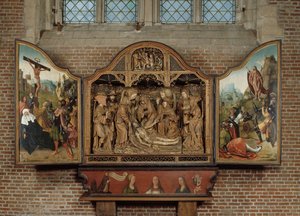
The crowning achievement associated with Van Cothem is undoubtedly the Altarpiece from Averbode Abbey. This magnificent work, completed around 1514, stands as a pinnacle of Northern Renaissance sculpture. Crafted from wood and adorned with paint, the piece is a masterclass in relief technique, where the artist transformed flat surfaces into captivating religious scenes through intricate detail and profound emotional resonance.
The creation of such a monumental work was not merely an individual feat but a communal one, reflecting the interconnectedness of the Antwerp artisan class. Records suggest that Nicolaas Huybs, a fellow citizen and beekeeper, played a vital role in financing the purchase of materials or the project itself through his proceeds. This collaboration highlights the unique social fabric of the time, where commerce and sacred art were inextricably linked.
Historical Significance and Preservation
The journey of Van Cothem’s work from the Abbey of Averbode to the modern era is a story of preservation and rediscovery. The altarpiece, which once stood as a focal point for prayer in the church of the Abbey of Averbode—specifically situated on the altar of HH Confessors—eventually found its way into the hands of collectors and museums. In 1873, the masterly work was purchased by the Museum for Antiquities, then located in the Steen.
Today, the legacy of Jacob Van Cothem survives through the careful stewardship of the MAS Collection – Vleeshuis. His ability to manipulate wood and pigment to evoke the divine continues to inspire those who study the Northern Renaissance. Through his relief work, he captured a fleeting moment in history, ensuring that the spiritual fervor and technical mastery of 16th-century Belgium would never be forgotten.
Otázky a odpovede
Môžem si zoradiť diela umelca Jacob Van Cothem (Sculptor) podľa farby?
Stránka Spektrálny index organizuje diela umelca Jacob Van Cothem (Sculptor) podľa farieb.
Kde si môžem pozrieť všetky diela umelca Jacob Van Cothem (Sculptor)?
Každé dielo umelca Jacob Van Cothem (Sculptor) na táto webstránka si môžete prehliadnuť na jeho stránke Všetky diela.
Môžem navštíviť virtuálne múzeum diel umelca Jacob Van Cothem (Sculptor)?
Diela umelca Jacob Van Cothem (Sculptor) si môžete pozrieť v 3D galérii na jeho stránke 3D múzeum.