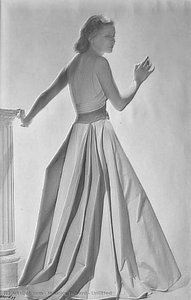
A Pioneer of Surrealist Vision: The Life and Art of Maurice Tabard
Maurice Tabard, born in Lyon, France on July 12, 1897, emerged as a significant figure within the burgeoning Surrealist movement, though his path to artistic recognition was uniquely shaped by a blend of familial influence and transatlantic experience. Initially destined for a musical career – his mother an amateur musician – Tabard’s early creative inclinations found expression in the intricate patterns of silk design at his father's factory. This foundational exposure to form and texture would subtly inform his later photographic explorations. A pivotal moment arrived in 1914 when his father’s business necessitated a relocation to New York City, an event that irrevocably altered Tabard’s artistic trajectory. He enrolled at the New York Institute of Photography, immersing himself in the technical aspects of the medium and laying the groundwork for a future defined by innovative visual language. This period wasn't merely about acquiring skills; it was a crucial immersion into a different aesthetic sensibility, one that would later fuse with his European roots.From Portraiture to Poetic Experimentation
Upon returning to France in 1928, Tabard initially established himself as a fashion photographer, contributing to various magazines and fulfilling commercial commissions. However, this pragmatic pursuit soon gave way to a deeper artistic inquiry. He began dissecting the very elements of photography – objects, their shapes, materials, lighting, and formal relationships – prioritizing these over mere representational accuracy. This shift marked a turning point, leading him towards a more conceptual approach. A key encounter with Surrealist writer Philippe Soupault proved instrumental, introducing Tabard to influential editors like Lucien Vogel and Alexey Brodovitch, and ultimately connecting him with the core figures of the Surrealist movement: Man Ray and René Magritte. The influence of these artists ignited a passion for exploring the subconscious, dreams, and the irrational through photographic means. He moved away from straightforward documentation, embracing techniques such as solarization – a process that partially reverses tones to create an ethereal, dreamlike quality – superimposition, and photomontage.The Language of Dreams: Technique and Themes
Tabard’s work is immediately recognizable for its distinctive aesthetic—a delicate balance between precision and ambiguity. Solarization became his signature technique, lending a haunting, otherworldly quality to his images. He wasn't simply applying a stylistic effect; he was actively seeking to disrupt conventional perception, revealing hidden layers of reality and evoking a sense of unease or wonder. Superimposition allowed him to layer multiple realities within a single frame, creating complex visual narratives that challenged the viewer’s understanding of space and time. Photomontage further expanded his expressive possibilities, enabling him to construct entirely new worlds from fragmented elements. His subject matter ranged from still lifes imbued with symbolic resonance to portraits that captured not just physical likeness but also psychological states. He often depicted everyday objects—guitars, musical instruments, furniture—transforming them into enigmatic symbols within a surreal landscape.A Legacy of Innovation and Influence
While Tabard’s career wasn't solely defined by Surrealism – he also worked as a set photographer and documentary filmmaker in the 1940s, and spent time teaching in the United States – his contributions to the movement remain significant. He exhibited alongside prominent Surrealists and published his work in influential journals like *Bifur* and *Vu*. His photographs weren’t merely aesthetically striking; they were intellectual explorations of perception, memory, and the subconscious mind. In 1951 Francis Quirk curated an exhibit of his work at Lehigh University along with photographs by Ansel Adams, demonstrating a recognition of Tabard's place within a broader artistic context. Though perhaps less widely celebrated than some of his contemporaries, Maurice Tabard’s pioneering use of photographic techniques and his commitment to exploring the boundaries of reality have cemented his position as an important figure in 20th-century art history. His work continues to inspire artists and photographers today, serving as a testament to the power of visual experimentation and the enduring allure of the surreal.Historical Significance and Continued Relevance
Maurice Tabard’s legacy extends beyond his technical innovations; he represents a crucial bridge between early modernist photography and the full flowering of Surrealism. He demonstrated how seemingly mundane subjects could be transformed into potent symbols through manipulation and artistic vision. His exploration of solarization, in particular, anticipated later experiments with alternative photographic processes and digital image-making. Tabard’s work challenges us to question the nature of representation itself, reminding us that photography is not simply a mirror reflecting reality but an active process of interpretation and construction. His images resonate today because they tap into universal themes of memory, desire, and the elusive nature of truth. As contemporary artists continue to explore the boundaries of image-making, Tabard’s pioneering spirit serves as a powerful reminder of the medium's boundless potential for poetic expression and intellectual inquiry.Otázky a odpovede
Ako sa tvorba umelca Maurice Tabard časom vyvíjala?
Kariéra umelca Maurice Tabard sa na jeho stránke Chronológia odvíja obdobie po období v podobe horizontálnej časovej osi diel, ktoré sú rozdelené do kapitol podľa jednotlivých období jeho tvorby.
Ako si môžem pozrieť všetky diela umelca Maurice Tabard?
Všetky diela umelca Maurice Tabard na táto webstránka si môžete pozrieť na jeho stránke Všetky diela umelcov.
Existuje 3D virtuálna prehliadka diel umelca Maurice Tabard?
Možná je aj virtuálna návšteva: stránka 3D galéria umelca Maurice Tabard predstavuje jeho diela v trojrozmernej galérii.