


 Preverite v realnem okolju
 Pošlji kot čestitko
 Deli
Deli
 Podrobnosti
 Priročnik

 Prenesi
 Podobni artefakti
 Rentgenski posnetek
 Predvajaj diaporama
 Statistika
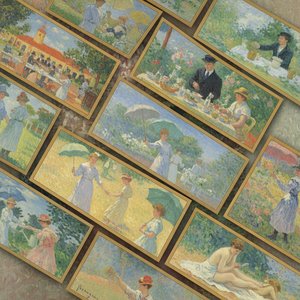
Na Sofi
 Akril na platnu
- Stenska umetnost
- Impressionistic Style
 1948
1948 39.0 x 38.0 cm
 Bristol Museum - Art Gallery
 Preberi več
Umetniška dela, prikazana na tej strani, so zaščitena z avtorskimi pravicami, kar pomeni, da po zakonu ne moremo ustvarjati ali prodajati identičnih reprodukcij. Ta zaščita se izvaja v skladu z mednarodnimi sporazumi, kot so Bernska konvencija in po nacionalnih zakonih, vključno s tistimi, ki jih določa Zakon o avtorskih pravicah ZDA – naslov 17.
Ta način v celoti upošteva zakonodajo o avtorskih pravicah, saj ne vključuje kopiranja ali podvajanja zaščitena umetniškega dela. Namesto tega gre za kreativno preinterpretacijo – novo sliko, ki je navdihnjen rezultat originala, vendar ni z njim identična.
Giclée tisk / Umetniški tisk
Giclée ali platnati odtis muzejske kakovosti z hitro proizvodnjo in prilagodljivimi možnostmi končne obdelave. ( Naročite ročno slikano reprodukcijo Preklop na digitalno sliko)




P118B €10

P118H €10

P118W €10

P438Z €10

P508JH €12

P508YH €12

P805H €10

P805Z €10

P919BZ €10

P919G €10

P919XJ €10

P959ZH €10

P968JZ €12

W106C €8

W218G €10

W218JH €8

W218Y €10

W307PJ €10

W316G €10

W316PJ €8

W316Y €10

W398PJ €8

W4111J €10

W500HY €15

W500JH €15

W692G €12

W849H €8

W940BG €15

W953PJ €8




Izberite eno od naših vnaprej določenih velikosti, ki ustrezajo prvotnim proporcijam umetničkega dela.

Vnesite širino in višino, ki jih potrebujete za svoj okvir ali steno. Tiskanje se lahko le odreže, vendar ga ni mogoče narediti večjega od slike, zato format z drugačno obliko pomeni izgubo dela slike. Pred tiskanjem vam pošljemo digitalni predogled za potrditev. Slika, prikazana na tej strani, ne prikazuje dejanskega izrezkov — le predogled to omogoča.
Globalna dostava () v 2 tednih namesto standardnih 4/5 tednov. (23 oktober)

Brezplačna ekspresna dostava po vsem svetu

Visokokakovostno laneno platno

Popolno zavarovanje pošiljke

Garancija povračila carine in uvoznih davkov

Garancija popolnega barvnega ujemanja

Politika vračila v 100 dneh (le v primeru okvar)

Garancija 100% povračila denarja

Popust pri večjem naročilu
 Možnost stekla je na voljo le za velikosti pod 110 cm

Na Sofi
Giclée tisk / Umetniški tisk
Velikost reprodukcije
-


Skupna cena
€ 56
On the Sofa – A Study in Quietude and Impressionistic Detail
Bernard Dunstan’s “On the Sofa” (1948) is more than just a depiction of a domestic interior; it's a masterful distillation of Impressionist principles, capturing a fleeting moment of stillness within a richly textured environment. Painted by the esteemed Royal Academician, Dunstan meticulously observes and translates light onto canvas, reflecting his profound influence from artists like Renoir, Bonnard, and Vuillard – masters who similarly prioritized atmosphere and subtle tonal shifts to convey emotion. The artwork centers around a nude woman seated comfortably on a sofa adorned with delicate floral patterns. Her hands rest gently upon her breasts, conveying an understated elegance and vulnerability. Dunstan’s skillful brushwork creates a palpable sense of warmth and softness, mirroring the comfort implied by the pose itself. The inclusion of a necklace adds a touch of personal adornment, hinting at narrative depth beyond mere visual representation. Behind the sofa stands another chair, subtly framing the scene and contributing to the overall composition's balance. Notably, a horse is positioned on the left side of the canvas—a deliberate element that introduces an unexpected contrast, perhaps symbolizing strength or connection to the natural world, aligning with Dunstan’s broader artistic interests in landscapes. Dunstan’s technique exemplifies Impressionism’s commitment to capturing immediate sensory experience. He employs loose brushstrokes and blended pigments to achieve luminous color palettes and a hazy effect—characteristic of the period—effectively conveying the diffused light filtering through the room. The floral upholstery serves as an important visual element, reinforcing the theme of tranquility and beauty. Furthermore, Dunstan's meticulous attention to detail ensures that every nuance of texture and hue contributes to the artwork’s emotive resonance. The painting emerged during a pivotal moment in British art history—the post-war era—where artists sought solace and inspiration amidst rebuilding efforts. Dunstan’s work embodies this spirit of reflection and observation, inviting viewers to contemplate beauty within everyday life. “On the Sofa” remains an enduring testament to Dunstan's artistic vision and his unwavering dedication to capturing the essence of Impressionistic art. It is a piece that speaks volumes about stillness, grace, and the transformative power of light—qualities valued by interior designers and collectors alike who appreciate sophisticated artwork with lasting emotional impact.Vprašanja in odgovori
V katero obdobje Bernard Dunstanove kariere spada "Na Sofi", glede na datum njegove powstale?
Datum 1948 situira "Na Sofi" v Mature Period razvoja umetnika Bernard Dunstan.
Ali je "Na Sofi" avtorja Bernard Dunstan znano umetniško delo?
"Na Sofi" je razvrščeno kot Prepoznan.
Kako se tema dela "Na Sofi" povezuje s tipičnimi temami umetnika Bernard Dunstan?
Bernard Dunstanove ponavljajoče se teme vključujejo renoir, bonnard, vuillard inspirations, domestic tranquility, reflection, royal academic recognition, interior landscapes studies; "Na Sofi" se osredotoča na interior scene, female figure, floral pattern, furniture design, nude art, british painting, quiet composition.
Sorodna umetniška dela


Biografija umetnika
A Life Dedicated to Observation: The World of Bernard Dunstan
Bernard Dunstan, Royal Academician (1920-2017), stands as a quietly compelling figure in 20th and 21st century British art. Though perhaps not a household name, his long career – he was the longest serving Royal Academician at the time of his death – was marked by a steadfast dedication to painting figures within interiors and evocative landscapes, rendered with a sensitivity that speaks to both Impressionistic roots and a uniquely personal vision. Born in Teddington, Middlesex, Dunstan’s artistic journey began in 1939 with studies at the Byam Shaw School of Art, quickly followed by formal training at the prestigious Slade School of Fine Art in London until 1941. These formative years instilled in him a rigorous approach to technique and observation that would define his oeuvre. The interruption of war undoubtedly shaped a generation of artists, but Dunstan’s commitment remained unbroken; he continued to develop his style, focusing on capturing the subtleties of light and atmosphere.The Development of a Distinctive Style
Dunstan's artistic development wasn’t one of radical shifts, but rather a gradual refinement of focus and technique. Early works demonstrate an engagement with realism, yet even then, a concern for tonal qualities and the interplay of light hinted at his future direction. He became a member of the New English Art Club in 1947, a group that championed representational painting during a period dominated by abstraction. This affiliation provided a supportive environment for Dunstan to explore his growing interest in capturing fleeting moments and subjective experiences. His palette evolved towards a softer, more luminous quality, influenced by artists he deeply admired – Renoir, Bonnard, and Vuillard. However, Dunstan wasn’t simply imitating these masters; he synthesized their lessons with the distinctly British sensibilities of Walter Sickert and Philip Wilson Steer, creating a style that was both intimate and sophisticated. His interiors are not grand statements but rather quiet observations of domestic life, often featuring figures absorbed in everyday activities, bathed in gentle light. Landscapes similarly eschew dramatic vistas for more subtle depictions of the English countryside, emphasizing mood and atmosphere over topographical accuracy.A Teacher and a Scholar
Beyond his own painting practice, Bernard Dunstan was a dedicated educator, profoundly influencing generations of artists. He held teaching positions at numerous prestigious institutions including the Royal West of England Academy in Bristol (1946-1949), Camberwell School of Art (1950-1964), Byam Shaw School (1953-1974), Ravensbourne Art College (1959-1964) and the City and Guilds of London Art School (1964-1969). This commitment to teaching wasn’t merely a means of livelihood; it reflected his belief in the importance of passing on knowledge and fostering artistic talent. His pedagogical approach likely emphasized direct observation, careful study of light and colour, and an understanding of art history – principles evident in his own work. Furthermore, Dunstan was a prolific writer on painting, sharing his insights with a wider audience through books such as Painting Methods of the Impressionists (1976). This demonstrated not only technical mastery but also a deep intellectual engagement with the artistic process.Recognition and Legacy
Dunstan’s dedication to his craft was recognized throughout his career, culminating in his election as a full member of the Royal Academy in 1968. He served as President of the Royal West of England Academy from 1979 to 1984, further solidifying his position within the British art establishment. His works are now held in significant public collections including the National Portrait Gallery, the Royal Collection at Windsor Castle, and the Museum of London – a testament to their enduring quality and historical importance. While he may not have sought fame or notoriety, Bernard Dunstan’s quiet persistence and unwavering commitment to observation left an indelible mark on British painting. His ability to capture the beauty in everyday moments, combined with his technical skill and intellectual depth, continues to resonate with viewers today. He was married to fellow Royal Academician Diana Armfield, and is also the father of Professor David Dunstan, a physicist – demonstrating a family legacy that extends beyond the realm of art. His passing in 2017 at the age of 97 marked the end of an era, but his paintings remain as enduring reminders of a life dedicated to the pursuit of artistic truth and beauty.
Bernard Dunstan
1920 - 2017 , United Kingdom
Ključne informacije
- Date Of Birth: 1920
- Date Of Death: 2017
- Place Of Birth: Teddington, United Kingdom
- Artistic Movement Or Style: 1920s Art Deco
- Artists Who Influenced This Artist: ['Marcel Duchamp']
- Artists Or Movements Influenced By This Artist:
- Dada
- Surrealism
Sorodni članki

Capturing Light & Emotion: A Guide to Impressionistic Portraiture for Your Home
Discover how Impressionistic portraiture can elevate your home. Learn to use light, color, and texture to create an emotive interior with expert guidance on selecting and customizing museum-quality oil reproductions that transform modern spaces into timeless sanctuaries.
Pierre-Auguste Renoir: 25 Mojstrovskih Del Impresionizma za Vaš Dom | AllPaintingsStore
Odkrijte 25 čudovitih del Pierre-Augusta Renoira – mojstrovine impresionizma, polne svetlobe in življenja. Preberite zgodbe za slikami, tehnike ter navdih za dekoracijo doma. Kvalitetne reprodukcije na AllPaintingsStore.com!

Presečišče Časa: Kultiviranje Večne Estetike Interierja Skozi Renesančni Duh, Impresionistično Svetlobo in Pop Art Živahnost
Odkrijte večno estetiko interierja! Renesančni duh, impresionistična svetloba in pop art živahnost – strokovni nasveti za luksuzno dekoracijo doma. AllPaintingsStore vam pomaga ustvariti unikaten prostor.

25 Mojstrovin Britanskega Muzeja: Umetniški Zakladi za Vaš Dom | AllPaintingsStore
Odkrijte 25 mojstrovin Britanskega muzeja! Preberite zgodbe o slikarjih, tehnikah in nesmrtnih umetninah. Reprodukcije slik, dekoracija doma & navdih za vaš interier na AllPaintingsStore.com. Raziščite celotno zbirko online!

The Enduring Allure of the Nude: A Historical & Artistic Exploration of the Human Form
Explore the captivating history of nude art! Discover iconic paintings & artists from classical to modern eras. Uncover symbolism, techniques & find museum-quality reproductions at AllPaintingsStore.

