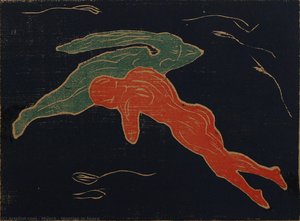
1915. Acrylic On Canvas.

§ 1Catalogue data


§ 2Abstract
Opis zbirateljskega predmeta
 Preberi več
Biografija umetnika
Edvard Munch (1863-1944): norveški slikar, pionir ekspresionizma! Odkrijte 'Krik' in umetnost, ki raziskuje tesnobo, smrt, ljubezen ter psihološke teme. Njegova dela so ikonična izpoved o človeških čustvih.
§ 3Commentary
Anxiety: A Descent into Psychological Landscape
Edvard Munch’s “Anxiety,” painted in 1915, stands as a haunting emblem of the anxieties that gripped Europe during its tumultuous early twentieth century. More than just a depiction of fear; it's an immersive experience into the artist’s tormented psyche—a testament to Munch’s profound understanding of human emotion and his pioneering role in Expressionism.
- Subject Matter & Symbolism: The artwork centers around three figures huddled within a claustrophobic interior space, conveying a palpable sense of isolation and despair. Munch deliberately eschewed realistic representation, prioritizing instead the conveyance of psychological states—specifically anxiety—through distorted forms and unsettling color palettes. The slumped posture of the central figure embodies vulnerability and hopelessness, while the observing individuals represent judgment or perhaps simply an inability to comprehend the protagonist’s inner turmoil.
- Style & Technique: Munch's artistic vision firmly rooted in Expressionism demanded a radical departure from academic conventions. He employed rapid, gestural brushstrokes—often achieved with charcoal—to capture fleeting emotions and impressions rather than meticulously recreating visual reality. The simplified shapes contribute to the artwork’s emotional intensity, mirroring the fragmented nature of anxiety itself.
- Color Palette & Use of Lines: Munch utilized a monochrome grayscale scheme, skillfully manipulating tonal variations to sculpt form and shadow. Thick, expressive lines dominate the composition, radiating outwards from the central figure and emphasizing movement—though it's an unsettling dynamism that underscores the pervasive feeling of unease. These lines aren’t merely delineating shapes; they embody emotion and psychological pressure.
- Composition & Perspective: The cramped room serves as a powerful visual metaphor for entrapment, mirroring the suffocating grip of anxiety. Munch flattened perspective, minimizing depth to heighten the sense of confinement and amplifying the emotional impact of the scene. This deliberate simplification reinforces the artwork’s core message—a confrontation with inner demons.
- Historical Context: Created during a period marked by societal upheaval and intellectual ferment—the dawn of the Great War— “Anxiety” reflects the anxieties prevalent in European culture at the time. Munch's work anticipates the psychological explorations championed by Surrealists decades later, establishing him as a forerunner of modern art’s preoccupation with subjective experience. Explore this evocative masterpiece and discover its enduring relevance to our understanding of human emotion.
Vprašanja in odgovori
Ali je delo "Anxiety" avtorja Edvard Munch v javni lastini?
Status avtorskih pravic za "Anxiety" avtorja Edvard Munch: del je v javni domeni – avtorska pravica je zastarela. To določa, ali se lahko reprodukcije slike izdelujejo prosto.
Z kakšno tehniko je izdelano "Anxiety"?
Tehnika za delo "Anxiety" avtorja Edvard Munch je Acrylic On Canvas. Različice imajo za namen natančno prikazati videz te tehnike.
Ali je "Anxiety" avtorja Edvard Munch svetlo ali temno umetniško delo?
"Anxiety" avtorja Edvard Munch je zabeležen z jasnostjo brilliant in luminanco Gentle Luminance.


 Preklop na tiskanine


 Za umetniška dela ali reprodukcije, ki so po katerikoli strani širše od 105 cm (približno 41 palč), bo okvir poslan v razstavljeni obliki kot komplet. Ta metoda zagotavlja varno dostavo in preprečuje poškodbe med transportom.