

untitled (6645)
Painting.

§ 1Catalogue data


§ 2Abstract
Opis zbirateljskega predmeta
A haunting black and white exploration of human connection and existential dread, this Expressionist masterpiece by Egon Schiele captures raw vulnerability and invites you to experience his profound artistic vision.
 Preberi več
Biografija umetnika
Raziskujte intenzivne ekspresionistične umetnosti Egon Schieleja (1890-1918): izrazite portrete, psihološke teme in edinstvene črte. Odkrijte reprodukcije že danes!
§ 3Commentary
A Haunting Encounter with Expressionist Rawness
To stand before Egon Schiele’s untitled (6645) is to enter a realm where the boundaries between the physical body and the psychological soul dissolve into a singular, breathless moment. This striking black and white composition serves as a profound testament to the anxieties of the early 20th century, capturing a scene that feels less like a captured moment and more like an unearthed memory. At its heart, the painting presents two figures seated upon the earth, locked in an embrace that is simultaneously intimate and fraught with an unspoken tension. Schiele, a master of the Austrian Expressionist movement, eschews the comfort of traditional beauty to instead offer a visual distillation of existential dread and human vulnerability.
The composition is masterfully orchestrated to direct the viewer’s gaze through a landscape of stark contrasts. While the central figures command our attention with their raw, naked presence, Schiele subtly anchors the scene with a solitary chair positioned in the upper left corner. This element introduces a sense of domesticity that feels strangely displaced, heightening the feeling of isolation within a minimal, almost void-like environment. The presence of other figures, partially obscured or receding into the background, adds layers of complexity to the narrative, suggesting a world that is watching, yet remains fundamentally disconnected from the central intimacy.
The Language of Line and Distorted Form
Schiele’s technique is nothing short of revolutionary, characterized by an expressive line that seems to vibrate with nervous energy. Eschewing the soft, blended transitions of his contemporaries, he utilizes bold, jagged contours to define the anatomy of his subjects. The bodies are often rendered with a deliberate distortion—elongated limbs and exaggerated musculature that amplify the emotional weight of the piece. This is not mere anatomical inaccuracy; it is a purposeful use of form to convey internal psychological states. The skin tones, even when interpreted through the monochrome lens, suggest a sickly pallor, hinting at the fragility of life and the pervasive presence of mortality that haunted Schoup’s personal history.
For the discerning collector or interior designer, this piece offers a sophisticated interplay of light and shadow. The absence of color forces the eye to focus on the structural integrity of the drawing and the dramatic tension created by the heavy blacks against the stark whites. This monochromatic palette lends the work a timeless, archival quality, making it an ideal centerpiece for spaces that value intellectual depth and avant-garde elegance. It is a work that does not merely decorate a wall; it commands the atmosphere of a room, inviting contemplation and deep emotional resonance.
Symbolism in an Age of Uncertainty
Created during the turbulent years surrounding 1916-1918, this work is deeply embedded in the historical zeitgeist of World War I. The pervasive sense of instability and the looming shadow of death are woven into the very fabric of the painting. Schiele’s obsession with the intersection of Eros and Thanatos—sexuality and death—finds its most potent expression here. The nakedness of the figures represents a total lack of defense, a stripping away of societal pretenses to reveal the primal truth of human existence. In an era defined by the collapse of old empires and the rise of psychoanalysis, Schiele’s work mirrors the collective psyche of a generation grappling with loss and the fragmentation of identity.
Investing in a high-quality reproduction of this masterpiece allows one to bring this profound dialogue between beauty and anguish into a modern setting. Whether placed in a curated gallery-style living room or a quiet study, untitled (6645) serves as a window into the turbulent heart of Modernism. It remains an enduring icon for those who find inspiration in the raw, unvarnished truth of the human condition and seek art that challenges, moves, and lingers in the mind long after the first encounter.
Vprašanja in odgovori
Ali lahko vidim rentgenski pregled dela "untitled (6645)" avtorja Egon Ščile?
Delo "untitled (6645)" lahko raziščete plast za plast na strani Rentgenski pregled, ki vključuje preglednik navdihnjen s svetilno mizo konservatorja z enajstimi optičnimi odtisi slike.
Ali obstaja informativni list o delu "untitled (6645)" avtorja Egon Ščile za študente?
Vodnik za "untitled (6645)" je stran Informacije za učence umetninine – natisljiv informativni list, ki prikazuje umetnino z njenim naslovom, izvorom in identifikacijsko tabelo (umetnik, datumi, tehnika, prvotna velikost, kolekcija).
Kakšna barvna paleta je uporabljena v delu "untitled (6645)" avtorja Egon Ščile?
Barve dela "untitled (6645)" tvorijo Dark paleto. Ta klasifikacija opisuje prevladujoče barvne družine.
§ 4The artist
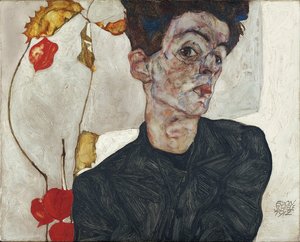
Egon Ščile
1890 - 1918, Avstrija
Hitri podatki
- Artistic Movement Or Style: Expresionismo
- Artists Who Influenced This Artist: ['Gustav Klimt']
- Date Of Birth: 12 giugno 1890
- Date Of Death: 31 octubre 1918
- Full Name: Egon Schiele
- Nationality: Austriaco
- Notable Artworks:
- Autoritratto con Physalis
- Giovane coppia
- Paesaggio campo (Kreuzberg)
- Place Of Birth: Tulln an der Donau, Austria
Biografija umetnika
Egon Schiele: Austrian Expressionist Painter
Austrian art has since acquired legendary status in interdisciplinary cultural studies. Histories of modern Austrian art generally begin with the architectural boom that swept Vienna in the second half of the nineteenth century. During this period of strong economic growth, the Emperor Franz Josef constructed a necklace of public edifices along the broad Ringstrasse that encircles Vienna’s inner city, prompting artists to flock to the capital from all over to compete for decorative mural commissions. The most renowned painter of the era was Hans Makart, but the young Gustav Klimt also earned his reputation executing commissions on the interior walls of structures such as theaters and museums. The favored style combined a sort of blowsy eroticism with a firm grip on classical and historical allegory. Starting from his masterpiece *The Kiss*, Klimt gradually moved away from the accepted formula, however, evolving a personal symbolism that was less conventionally readable as well as more overtly sexual. This combination proved devastating so far as the tasted of staid Vienna were concerned: Klimt was banished from the ranks of public muralists, and henceforth had to seek support solely from well-heeled private patrons.
Early Life & Influences
Egon Schiele was born in Tulln an der Donau – a picturesque region with vineyards, onion-domed towers and Baroque monasteries. Yet this idyllic setting is hardly reflected in his work.
Instead, many of his landscapes appear melancholic, sometimes sombre. Perhaps he was processing the early death of his father from syphilis and the subsequent loss of his sister Elvira.
Raised initially by his mother and then under the somewhat controlling guardianship of his uncle Leopold Czihaczek, Schiele’s childhood lacked conventional stability but fostered a fiercely independent spirit. Even as a boy, he displayed an intense fascination with trains—a motif that subtly reappeared in later paintings—and a burgeoning talent for drawing, though this was initially met with disapproval from his father who saw it as a distraction from more practical pursuits. The early death of his sister Elvira also cast a long shadow over the young artist’s psyche. These formative experiences instilled within him a sensitivity and an emotional rawness that would become hallmarks of his artistic expression, a constant grappling with themes of life, death, and the human condition.
Vienna Secession & Artistic Breakthrough
Schiele's formal artistic training began at the Kunstgewerbeschule (School of Arts and Crafts) in Vienna, but he quickly found itself stifled by its conservative approach. He transferred to the Akademie der bildenden Künste (Academy of Fine Arts), only to become further disillusioned with its rigid academic traditions. This dissatisfaction led him to abandon formal training altogether, choosing instead to forge his own path, a testament to his unwavering artistic conviction.
The influence of Gustav Klimt was pivotal during these early years; Schiele admired Klimt’s decorative style and exploration of symbolism, even receiving mentorship from the established artist.
He co-founded the Neues Wiener Kunstgruppe (New Viennese Art Group) in 1909, aligning himself with other progressive artists who challenged the prevailing artistic norms. His distinctive style features elongated figures, contorted poses, and expressive lines that convey a sense of unease and emotional intensity.
Style Characteristics & Recurring Themes
Schiele’s art is immediately recognizable for its raw honesty and psychological depth.
He fearlessly confronted themes often considered taboo – sexuality, death, anxiety, isolation – with an unflinching gaze.
His distinctive style features elongated figures, contorted poses, and expressive lines that convey a sense of unease and emotional intensity. The human form, particularly the nude, became his primary subject, not as an object of idealized beauty but as a vessel for exploring the complexities of human experience.
Schiele didn’t shy away from depicting himself in unflattering or vulnerable poses, revealing a profound level of self-awareness and introspection.
Legacy & Recognition
Despite facing censorship and legal challenges – including a brief imprisonment for allegedly corrupting minors with his art – Schiele gained recognition within Vienna’s avant-garde circles.
His work challenged the conventions of the time, provoking both admiration and outrage.
By the time of his untimely death during the Spanish flu pandemic in 1918 at the age of twenty-eight, he had established himself as a leading figure in Austrian Expressionism. Significant works such as *Self-Portrait with Physalis*, *Couple Embracing*, and *Field Landscape (Kreuzberg near Krumau)* stand as testaments to his artistic genius.
His influence on subsequent generations of artists is undeniable, particularly those interested in exploring psychological themes and challenging conventional artistic norms.
§ 5Comparanda
Sorodna umetniška dela


§ 6Questions
§ 7Further reading
Sorodni članki

Dark Masterpieces: 10 Iconic Paintings Dominated by Black Tones |
Explore 10 iconic paintings dominated by black tones, from Rembrandt’s chiaroscuro to Goya's dark expressions. Discover the stories behind these masterpieces & find museum-quality art reproductions for your home at .

The Enduring Allure of the Nude: A Historical & Artistic Exploration of the Human Form
Explore the captivating history of nude art! Discover iconic paintings & artists from classical to modern eras. Uncover symbolism, techniques & find museum-quality reproductions at AllPaintingsStore.

Kazimir Malevich: 25 Mojstrovin Suprematizma za Navdih v Vašem Domu | AllPaintingsStore
Odkrijte 25 mojstrovin Kazimirja Maleviča, pionirja suprematizma! Raziskajte zgodbe za črnim kvadratom in belo na belem. Umetniške reprodukcije vrhunske kakovosti za vaš dom – AllPaintingsStore.

White on Canvas: 10 Masterpieces & Timeless Elegance for Your Home Decor
Explore 10 iconic white paintings by Monet, Whistler & Rothko! Discover the stories behind these serene masterpieces and their impact on art history. Find museum-quality reproductions for your home decor at .
Paul Cézanne: 25 Mojstrovin, ki so spremenile svet umetnosti | AllPaintingsStore
Odkrijte 25 mojstrovin Paula Cézanna – od impresionističnih krajin do revolucionarnih tihožitij. Preberite zgodbe za vsako sliko, tehnike in navdih. Kvalitetne reprodukcije slik na AllPaintingsStore.com!
Cite this entry
AllPaintingsStore.com, “Egon Ščile, untitled (6645)”, https://allpaintingsstore.com/sl/art/egon-schiele-untitled-6645-9GEUDD-en/ArtistReproduction/ (accessed 1 oktober 2026).
§ 8The reproduction
Ročno izdelana oljna reprodukcija
Ročno slikano olje na platnu v vaši izbiri velikosti in okvirja, izdelano po naročilu naših umetnikov. ( Preklop na tiskanine Preklop na digitalno sliko)
It is specified on the order sheet in the margin; the present state of that sheet reads as follows.

untitled (6645)
Tehnik reprodukcije
Velikost reprodukcije
-

Izbor vrhunskih umetnikov
Več podrobnosti, dovršenosti in dodatnega časa za izdelavo
-

Okvir za reprodukcijo
-
-
Za umetniška dela ali reprodukcije, ki so po katerikoli strani širše od 105 cm (približno 41 palč), bo okvir poslan v razstavljeni obliki kot komplet. Ta metoda zagotavlja varno dostavo in preprečuje poškodbe med transportom.
Potrebna je profesionalna montaža – to ni izdelek za DIY izdelavo.
Komplet mora sestaviti in platno napeti izkušen profesionalni okvirjest, pri čemer bo uporabil lepil za les (ni vključeno), klešče za napetje platna in spone, da bi ohranil pravokotnost letev med sušenjem lepila. Nepravilna montaža ali neenakomerna napetost platna lahko trajno poškoduje umetniško del in
 Za umetniška dela ali reprodukcije, ki so po katerikoli strani širše od 105 cm (približno 41 palč), bo okvir poslan v razstavljeni obliki kot komplet. Ta metoda zagotavlja varno dostavo in preprečuje poškodbe med transportom.
Vključene so vse letve iz masivnega lesa, natančno izrezane po meri.
Montaža poteka s priloženimi vijaki, vendar je za kotiče potrebna lepil za les, ki ga ni v kompletu in ga mora zagotoviti vaš okvirnik.
Za uporabo so potrebna profesionalna orodja, ki niso vključena: klešče za napinjanje platna (napetnik) in sponke za ohranjanje pravokotnosti letev med sušenjem lepila.
Pomembno:
Za stike v kotih potrebujete lepil za les, nosilce je treba z

Značka z imenom
-
-

Zaščitni lak
Sijajni lak (poudarja barve ter zagotavlja zaščito pred svetlobo in vlago)
-

Prilagodi svoje umetniško delo
Primeri možnih prilagoditev: zamenjava obraza s fotografijo kupca; dodajanje hišnega ljubljenčka (npr. zamenjava mačke s psom); vključitev skritega sporočila v ozadje; sprememba krajšave ali elementov ozadja.
-

Hitra dostava
Mednarodna dostava () v 3/4 tednih namesto običajnih 5 tednov. (29 oktober). Brez kompromisov pri kakovosti.
-
Hitra dostava
Globalna dostava () v 5 tednih. (5 november).
Vključeno v ceno
Skupna cena
€ 227
Included with every order
- Brezplačna ekspresna dostava po vsem svetu
- Visokokakovostno laneno platno
- Popolno zavarovanje pošiljke
- Garancija povračila carine in uvoznih davkov
- Garancija popolnega barvnega ujemanja
- 100-dnevna politika vračil (le v primeru okvar)
- Garancija 100% povračila denarja
- Popust pri večjem naročilu


