Jamstvo za povračilo denarja · 100 dni Brezplačna svetovna dostava
449.564umetninine 30.613umetniki 4.660muzeji 32jeziki
Vpis v katalog

untitled (7336)

Acrylic On Canvas.

Slika 1. Egon Ščile, untitled (7336). Prikazano kot reprodukcija, ki jo izbirate: , .

§ 1Katalogovni podatki

§ 2Abstraktno

Opis zbirateljskega predmeta

Discover Egon Schiele’s haunting ‘Untitled (7336)’. This intimate portrait explores themes of mortality and the human condition, rendered with Schiele's signature expressive lines and a striking yellow background.

Biografija umetnika

Raziskujte intenzivne ekspresionistične umetnosti Egon Schieleja (1890-1918): izrazite portrete, psihološke teme in edinstvene črte. Odkrijte reprodukcije že danes!

§ 3Komentacija

A Glimpse into the Soul: Unpacking Egon Schiele's "Untitled (7336)"

Egon Schiele’s “Untitled (7336),” a deceptively simple portrait of a woman reclining against a vibrant yellow backdrop, is far more than just a depiction of repose. It’s a window into the artist’s profoundly personal and often turbulent world – a realm dominated by themes of mortality, vulnerability, and the raw intensity of human emotion. Painted during a period of immense upheaval in his life and the broader European landscape, this work embodies the core tenets of Schiele's Expressionist style: an unflinching honesty about the darker aspects of existence, coupled with a remarkable sensitivity to line and form.

The painting immediately draws the eye to the woman herself. Her posture suggests either sleep or deep contemplation, yet there’s an undeniable tension in her relaxed demeanor. The most striking element is undoubtedly her crimson nose – a detail that defies easy interpretation. Some scholars suggest it represents a deliberate challenge to conventional beauty standards, a rejection of idealized representations, and perhaps even a subtle nod to Schiele's own anxieties about his appearance and perceived flaws. It’s a bold, unsettling feature that forces the viewer to confront the subject on her own terms.

The Language of Line: Schiele’s Unique Technique

Schiele was renowned for his distinctive use of line – thick, gestural strokes that seem to vibrate with energy and emotion. In “Untitled (7336),” this is particularly evident in the rendering of the woman's body and the background. The yellow field isn’t a flat, uniform color; instead, it’s built up through layers of short, broken lines, creating a sense of movement and instability. This technique mirrors the emotional turbulence that characterized Schiele’s life and work. He often employed a technique he called “line-drawing,” where the line itself became the primary subject, conveying feeling rather than simply delineating form.

The composition is remarkably sparse, relying heavily on negative space to amplify the impact of the central figure. The simplicity of the setting – just the yellow background and the reclining woman – serves to heighten our focus on her expression and posture. Schiele’s mastery lies in his ability to communicate volumes with minimal means.

Echoes of Mortality: Schiele's Obsession

Born in Vienna in 1890, Egon Schiele’s life was tragically cut short at the age of 28 during World War I. His father’s death from syphilis when he was just fourteen profoundly shaped his artistic vision, instilling within him a deep preoccupation with illness, decay, and the inevitability of mortality. This obsession permeates much of his work, and “Untitled (7336)” is no exception. The woman's vulnerability, combined with the unsettling detail of her nose, evokes a sense of fragility and impending loss.

Interestingly, Schiele’s exploration of death and decay often intertwined with themes of eroticism and desire. As seen in works like “Death and the Maiden,” he frequently depicted figures caught in moments of intense emotional turmoil, blurring the boundaries between life and death, beauty and ugliness. This duality is powerfully present here, suggesting a complex relationship with mortality – one that acknowledges its inevitability while simultaneously celebrating the intensity of human experience.

A Reproduction for Your Space: Bringing Schiele’s Vision Home

AllPaintingsStore offers meticulously crafted hand-painted reproductions of Egon Schiele's “Untitled (7336),” allowing you to bring this emotionally resonant artwork into your home or office. Our skilled artists replicate Schiele’s distinctive line work and vibrant color palette with exceptional accuracy, ensuring that the essence of the original painting is faithfully preserved. Whether you are an art collector, a design enthusiast, or simply someone seeking a piece of art that speaks to the human condition, a AllPaintingsStore reproduction of “Untitled (7336)” offers a unique opportunity to connect with one of the 20th century’s most compelling and enigmatic artists.

Explore this artwork further on AllPaintingsStore.

Vprašanja in odgovori

Kdo je ustvaril "untitled (7336)"?

Delo "untitled (7336)" je ustvaril Egon Ščile. Informacije na tej strani opisujejo izvirno delo umetnika Egon Ščile.

Kateri umetnik in kateri slog stojita za "untitled (7336)"?

Za delom "untitled (7336)" sta Egon Ščile in umetnostna smer Expressionism.

Ali so barve dela "untitled (7336)" avtorja Egon Ščile nasičene ali utemeljene?

Zasičenost barvne palete dela "untitled (7336)" je Balanced Soft.
§ 4Umetnik

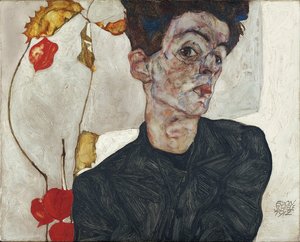
Egon Ščile

Egon Ščile

1890 - 1918, Avstrija

Kratek pregled o Egon Ščile

  • Artistic Movement Or Style: Expresionismo
  • Artists Who Influenced This Artist: ['Gustav Klimt']
  • Date Of Birth: 12 giugno 1890
  • Date Of Death: 31 octubre 1918
  • Full Name: Egon Schiele
  • Nationality: Austriaco
  • Notable Artworks:
    • Autoritratto con Physalis
    • Giovane coppia
    • Paesaggio campo (Kreuzberg)
  • Place Of Birth: Tulln an der Donau, Austria

Biografija umetnika

Egon Schiele: Austrian Expressionist Painter

Austrian art has since acquired legendary status in interdisciplinary cultural studies. Histories of modern Austrian art generally begin with the architectural boom that swept Vienna in the second half of the nineteenth century. During this period of strong economic growth, the Emperor Franz Josef constructed a necklace of public edifices along the broad Ringstrasse that encircles Vienna’s inner city, prompting artists to flock to the capital from all over to compete for decorative mural commissions. The most renowned painter of the era was Hans Makart, but the young Gustav Klimt also earned his reputation executing commissions on the interior walls of structures such as theaters and museums. The favored style combined a sort of blowsy eroticism with a firm grip on classical and historical allegory. Starting from his masterpiece *The Kiss*, Klimt gradually moved away from the accepted formula, however, evolving a personal symbolism that was less conventionally readable as well as more overtly sexual. This combination proved devastating so far as the tasted of staid Vienna were concerned: Klimt was banished from the ranks of public muralists, and henceforth had to seek support solely from well-heeled private patrons.

Early Life & Influences

Egon Schiele was born in Tulln an der Donau – a picturesque region with vineyards, onion-domed towers and Baroque monasteries. Yet this idyllic setting is hardly reflected in his work.
Instead, many of his landscapes appear melancholic, sometimes sombre. Perhaps he was processing the early death of his father from syphilis and the subsequent loss of his sister Elvira.
Raised initially by his mother and then under the somewhat controlling guardianship of his uncle Leopold Czihaczek, Schiele’s childhood lacked conventional stability but fostered a fiercely independent spirit. Even as a boy, he displayed an intense fascination with trains—a motif that subtly reappeared in later paintings—and a burgeoning talent for drawing, though this was initially met with disapproval from his father who saw it as a distraction from more practical pursuits. The early death of his sister Elvira also cast a long shadow over the young artist’s psyche. These formative experiences instilled within him a sensitivity and an emotional rawness that would become hallmarks of his artistic expression, a constant grappling with themes of life, death, and the human condition.

Vienna Secession & Artistic Breakthrough

Schiele's formal artistic training began at the Kunstgewerbeschule (School of Arts and Crafts) in Vienna, but he quickly found itself stifled by its conservative approach. He transferred to the Akademie der bildenden Künste (Academy of Fine Arts), only to become further disillusioned with its rigid academic traditions. This dissatisfaction led him to abandon formal training altogether, choosing instead to forge his own path, a testament to his unwavering artistic conviction.
The influence of Gustav Klimt was pivotal during these early years; Schiele admired Klimt’s decorative style and exploration of symbolism, even receiving mentorship from the established artist.
He co-founded the Neues Wiener Kunstgruppe (New Viennese Art Group) in 1909, aligning himself with other progressive artists who challenged the prevailing artistic norms. His distinctive style features elongated figures, contorted poses, and expressive lines that convey a sense of unease and emotional intensity.

Style Characteristics & Recurring Themes

Schiele’s art is immediately recognizable for its raw honesty and psychological depth.
He fearlessly confronted themes often considered taboo – sexuality, death, anxiety, isolation – with an unflinching gaze.
His distinctive style features elongated figures, contorted poses, and expressive lines that convey a sense of unease and emotional intensity. The human form, particularly the nude, became his primary subject, not as an object of idealized beauty but as a vessel for exploring the complexities of human experience.
Schiele didn’t shy away from depicting himself in unflattering or vulnerable poses, revealing a profound level of self-awareness and introspection.

Legacy & Recognition

Despite facing censorship and legal challenges – including a brief imprisonment for allegedly corrupting minors with his art – Schiele gained recognition within Vienna’s avant-garde circles.
His work challenged the conventions of the time, provoking both admiration and outrage.
By the time of his untimely death during the Spanish flu pandemic in 1918 at the age of twenty-eight, he had established himself as a leading figure in Austrian Expressionism. Significant works such as *Self-Portrait with Physalis*, *Couple Embracing*, and *Field Landscape (Kreuzberg near Krumau)* stand as testaments to his artistic genius.
His influence on subsequent generations of artists is undeniable, particularly those interested in exploring psychological themes and challenging conventional artistic norms.

§ 5Primerjavelna dela

§ 6Vprašanja

Ključni podatki

  • Title: untitled (7336)
  • Movement: Expressionism
  • Artistic style: Bold lines, psychological
  • Influences: Gustav Klimt

Umetniški kviz

Pri vsakem vprašanju je na voljo le eden pravilen odgovor.

Vprašanje 1:
Based on the image description, what is a notable detail of the woman in the painting?
Vprašanje 2:
Egon Schiele was primarily associated with which artistic movement?
Vprašanje 3:
The image description suggests the woman in the painting is likely in what state of repose?
Vprašanje 4:
Considering Egon Schiele's biography, what recurring theme significantly influenced his work?
Vprašanje 5:
Which of the following best describes Schiele's artistic style, as evidenced by his work?

§ 7Citiraj ta zapis

AllPaintingsStore.com, “Egon Ščile, untitled (7336)”, https://allpaintingsstore.com/sl/art/egon-schiele-untitled-7336-9GEUCK-en/ArtistReproduction/ (pridelano 9 oktober 2026).

§ 8Reprodukcija dela

Ročno izdelana oljna reprodukcija

Ročno slikano olje na platnu v vaši izbiri velikosti in okvirja, izdelano po naročilu naših umetnikov. ( Preklop na tiskanine Preklop na digitalno sliko)

V robu naročilnega lista je navedeno; trenutno stanje tega lista se glasi:

untitled (7336)

Tehnik reprodukcije

Velikost reprodukcije

-

Izbor vrhunskih umetnikov

Več podrobnosti, dovršenosti in dodatnega časa za izdelavo

-

Okvir za reprodukcijo

-

-

Za umetniška dela ali reprodukcije, ki so po katerikoli strani širše od 105 cm (približno 41 palč), bo okvir poslan v razstavljeni obliki kot komplet. Ta metoda zagotavlja varno dostavo in preprečuje poškodbe med transportom.

Potrebna je profesionalna montaža – to ni izdelek za DIY izdelavo.
Komplet mora sestaviti in platno napeti izkušen profesionalni okvirjest, pri čemer bo uporabil lepil za les (ni vključeno), klešče za napetje platna in spone, da bi ohranil pravokotnost letev med sušenjem lepila. Nepravilna montaža ali neenakomerna napetost platna lahko trajno poškoduje umetniško del in ni pokrita z našo garancijo.

  • Vključene so vse letve iz masivnega lesa, natančno izrezane po meri.

  • Montaža poteka s priloženimi vijaki, vendar je za kotiče potrebna lepil za les, ki ga ni v kompletu in ga mora zagotoviti vaš okvirnik.

  • Za uporabo so potrebna profesionalna orodja, ki niso vključena: klešče za napinjanje platna (napetnik) in sponke za ohranjanje pravokotnosti letev med sušenjem lepila.

Pomembno:
Za stike v kotih potrebujete lepil za les, nosilce je treba z spenjačami držati, dokler se lepil popolnoma ne suši, za zategovanje platna na sestavljenem okvirju pa potrebujete spenjače za platno. Noben od teh pripomočkov ni vključen v komplet. Pred naročilom te velikosti, prosimo, poskrbite za izkušenega profesionalnega okvirja.

Značka z imenom

-

-

Zaščitni lak

Sijajni lak (poudarja barve ter zagotavlja zaščito pred svetlobo in vlago)

-

Prilagodi svoje umetniško delo

Primeri možnih prilagoditev: zamenjava obraza s fotografijo kupca; dodajanje hišnega ljubljenčka (npr. zamenjava mačke s psom); vključitev skritega sporočila v ozadje; sprememba krajšave ali elementov ozadja.

-

Hitra dostava

Mednarodna dostava () v 3/4 tednih namesto običajnih 5 tednov. (6 november). Brez kompromisov pri kakovosti.

-

Hitra dostava

Globalna dostava () v 5 tednih. (13 november).

Vključeno v ceno

Skupna cena

€ 230

Vključeno v vsako naročilo

  • Brezplačna ekspresna dostava po vsem svetu
  • Visokokakovostno laneno platno
  • Popolno zavarovanje pošiljke
  • Garancija povračila carine in uvoznih davkov
  • Garancija popolnega barvnega ujemanja
  • 100-dnevna politika vračil (le v primeru okvar)
  • Garancija 100% povračila denarja
  • Popust pri večjem naročilu
Obrazec za naročilo