


 Preverite v realnem okolju
 Pošlji kot čestitko
 Deli
Deli
 Podrobnosti
 Guide
Guide

 Prenesi
 Podobni artefakti
 Rentgenski posnetek
 Predvajaj diaporama
 Statistika
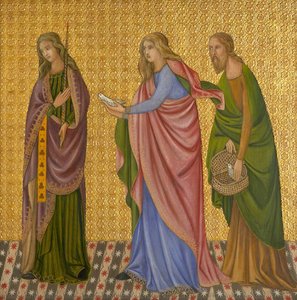
Reconstruction of Medieval Mural Painting, Story of Hezekiah
 Gothic Revival
 1927
1927 126.0 x 328.0 cm
 Preberi več
Ročno izdelana oljna reprodukcija
Ročno slikano olje na platnu v vaši izbiri velikosti in okvirja, izdelano po naročilu naših umetnikov. ( Preklop na tiskanine Preklop na digitalno sliko)




































Izberite eno od naših vnaprej določenih velikosti, ki ustrezajo prvotnim proporcijam umetničkega dela.

Svoje dimenzije lahko vnesete tako, da se prilagodite določenemu okvirju ali prostoru. Če izbrana velikost ne ustreza razmerjem originalne slike, bomo umetniško delo obrezali ali sliko dopolnili z dodatnimi ročno naslikanimi elementi. Pred začetkom proizvodnje vam bo poslan digitalni osnutek v odobritev.
Upoštevajte, da predogled na zaslonu ne odraža dejanskega obrezovanja ali podaljšanja. Le osnutek bo natančno prikazal končno kompozicijo.
Čeprav so na voljo velikosti po meri, priporočamo izbiro dimenzije s preddefiniranega seznama, da ohranimo originalne razmere.
Po oddaji naročila bo ekipa AllPaintingsStore.com stranki po e-pošti poslala navodila in predogled digitalnega predogleda.
Mednarodna dostava () v 3/4 tednih namesto običajnih 5 tednov. (21 september). Brez kompromisov pri kakovosti.

Brezplačna ekspresna dostava po vsem svetu

Visokokakovostno laneno platno

Popolno zavarovanje pošiljke

Garancija povračila carine in uvoznih davkov

Garancija popolnega barvnega ujemanja

Politika vračila v 100 dneh (le v primeru okvar)

Garancija 100% povračila denarja

Popust pri večjem naročilu
 Možnost stekla je na voljo le za velikosti pod 110 cm

Reconstruction of Medieval Mural Painting, Story of Hezekiah
Tehnika reprodukcije
Velikost reprodukcije
-


Skupna cena
$ 433
Sorodna umetniška dela



Biografija umetnika
The Guardian of Medieval Splendor: The Life and Legacy of Ernest William Tristram
In the quiet, hallowed corridors of British art history, few figures possess the dual mastery of scientific precision and artistic soul quite like Ernest William Tristram. Born in 1882 in the historic town of Carmarthen, Wales, Tristram was a man whose life’s work served as a bridge between the fading echoes of the Middle Ages and the modern era of conservation. His journey began not merely with a brush in hand, but with an exceptional aptitude for chemistry—a discipline that would later allow him to peer beneath the layers of time, analyzing the very pigments that once adorned the walls of England’s most sacred spaces.
Tristram’s artistic identity was forged at the Royal College of Art, where he studied under the legendary W. R. Lethaby. This period of his life was transformative, instilling in him a profound respect for the decorative arts and the structural integrity of historical design. As he transitioned from student to scholar, Tristram became more than just a painter; he became a detective of the past. His fascination with the visual heritage of Britain led him to a career defined by the meticulous documentation of medieval wall paintings, a vocation that required both the eye of an artist and the rigor of an archaeologist.
A Visionary of Reconstruction and Conservation
To understand Tristram is to understand his unique ability to breathe life back into lost grandeur. While many historians were content with mere cataloging, Tristram sought to reconstruct. He did not simply observe the remnants of Gothic murals; he reimagined them in their full, luminous glory. His work on the chancel wall panels for St Elisabeth's Eastbourne and his contributions to York Minster stand as testaments to this creative resurrection. Through his use of tempera and a deep understanding of Byzantine and Gothic aesthetics, he was able to translate fragmented historical evidence into vibrant, symbolic narratives.
< Key Artistic Achievements:- The Reconstruction of Medieval Murals: His ability to interpret faded pigments into complete, cohesive scenes, such as the striking depictions of biblical figures and royal attendants.
- Academic Leadership: Serving as the Professor of Design at the Royal College of Art from 1926 to 1948, where he shaped the next generation of British designers.
- Scientific Conservation: Applying his background in chemistry to the preservation of medieval monuments, including significant work on King Edward's Chair in Westminster Abbey.
- Scholarly Publications: Authoring definitive texts such as English Medieval Wall Painting, which provided a foundational understanding of the twelfth and thirteenth centuries.
The Enduring Resonance of a Scholarly Artist
Tristram’s legacy is etched into the very stone and plaster of the cathedrals he loved. His work was never solely about the preservation of objects, but about the preservation of meaning. Through his paintings—ranging from the poignant "Story of Hezekiah" to the opulent, gold-flecked panels of royal figures—he ensured that the spiritual and social complexities of the medieval world remained accessible to the modern eye. His art was a dialogue between the centuries, a way of ensuring that the light of the past would not be extinguished by the passage of time.
Though he retired in 1948 and passed away in 1952, the impact of his meticulous research and evocative reconstructions continues to resonate. He remains a pioneer who proved that the conservation of art is not merely a technical necessity, but a profound act of cultural storytelling. In every reconstructed line and every carefully analyzed pigment, Ernest William Tristram lives on, reminding us that history is not just something we read, but something we can see, feel, and touch.

ernest william tristram
1882 - 1952
Ključne informacije
- Artistic Movement Or Style: Academic Art Style
- Artists Or Movements Influenced By This Artist: ['English Medieval Painting']
- Artists Who Influenced This Artist: ['W. R. Lethaby']
- Date Of Birth: 1882
- Date Of Death: 1952
- Full Name: Ernest William Tristram
- Nationality: British
- Notable Artworks:
- La Païva
- The Sir William Dunn School of Pathology
- Place Of Birth: Carmarthen, Wales
Sorodni članki
Gothic Art Guide for Hotel Designers: Leveraging Dramatic Shadows and Architectural Grandeur in Luxury Interiors
Elevate hospitality interiors with our expert guide to Gothic art. Discover how to leverage dramatic shadows, architectural grandeur, and high-end reproductions to create sophisticated, atmospheric hotel spaces that captivate guests.

