

1988. Acrylic On Canvas.

§ 1Katalogovni podatki


To umetniško delo je zaščiteno z avtorskimi pravicami
Umetniška dela, prikazana na tej strani, so zaščitena z avtorskimi pravicami, kar pomeni, da po zakonu ne moremo ustvarjati ali prodajati identičnih reprodukcij. Ta zaščita se izvaja v skladu z mednarodnimi sporazumi, kot so Bernska konvencija in po nacionalnih zakonih, vključno s tistimi, ki jih določa Zakon o avtorskih pravicah ZDA – naslov 17.
Kot spoštljiva in zakonita alternativa ponujamo prilagojena, ročno slikana umetniška dela, navzornena na original. Naši sposobni in profesionalni umetniki skrbno preučijo stil, vzdušje in umetniško bistvo originala, da ustvarijo novo, edinstveno delo, ki vzbudi enak občutek – pri čemer ostaja popolnoma nova, samostojna izvirna stvar.
Ta način v celoti upošteva zakonodajo o avtorskih pravicah, saj ne vključuje kopiranja ali podvajanja zaščitenga umetniškega dela. Namesto tega gre za kreativno preinterpretacijo – novo sliko, ki je navdihnjen rezultat originala, vendar ni z njim identična.
 Preberi več
§ 2Abstraktno
Opis zbirateljskega predmeta
Francis Bacon’s visceral Second Version of Triptych 1944 confronts primal horror with grotesque figures and a pulsating crimson backdrop. Explore this iconic 1988 artwork by the renowned British painter and discover its haunting legacy.
Biografija umetnika
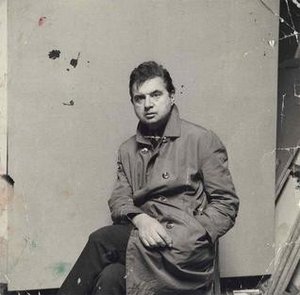
Raziščite umetnost Francis Bacon (1909-1992), znanega po izraznih figurativnih slikanjih. Njegova dela odražajo eksistencialne teme, distorzijo in močan ekspresionizem – ključna figura moderne umetnosti.
§ 3Komentacija
Second Version of Triptych 1944: A Descent Into Visceral Horror
Francis Bacon’s *Second Version of Triptych 1944*, completed in 1988, stands as a monumental testament to the artist's unwavering commitment to confronting the darkest recesses of human experience. It is not merely a repetition of his seminal 1944 masterpiece, *Three Studies for Figures at the Base of a Crucifixion*; rather, it’s an amplification—a deliberate deepening of the unsettling psychological landscape established by its predecessor. Executed in acrylic on canvas, this expansive piece embodies Bacon's signature style: grotesque, fragmented figures rendered against a stark crimson backdrop that pulsates with latent menace.- Historical Context
- Stylistic Innovations
- Symbolism and Imagery
- Technique: The Alchemy of Texture
- Emotional Resonance
Historical Context: Echoes of Trauma and Artistic Legacy
Bacon’s artistic journey began amidst the turbulent aftermath of World War II, a period marked by profound disillusionment and existential questioning. Influenced heavily by Picasso's biomorphs—distorted representations of human forms—and deeply affected by Nietzsche’s philosophy of eternal recurrence, Bacon wrestled with themes of suffering, mortality, and the inescapable brutality inherent in existence. *Three Studies for Figures at the Base of a Crucifixion*, created just two years prior, served as a crucible for these anxieties, distilling them into three powerfully unsettling images—a man seated on a bench, a figure standing before a red wall, and a man holding an umbrella beside a chair. The triptych’s genesis in Aeschylus's *Oresteia*, specifically the Furies—demons embodying retribution and vengeance—underscores Bacon’s preoccupation with primal forces and moral dilemmas. The 1988 reworking wasn’t simply a casual revisiting of this iconic work; it was a conscious effort to grapple with the legacy of its initial impact, acknowledging both its aesthetic brilliance and its unsettling psychological depth.Stylistic Innovations: Expanding Upon Formality
While retaining the core compositional elements of *Three Studies*, Bacon dramatically increased the scale of his second version—reaching 78 × 58 inches—a decision that profoundly altered the artwork’s expressive potential. The crimson hue replacing the burnt orange background intensifies the sense of dread and claustrophobia, mirroring the psychological tension inherent in the original. Critics noted a subtle shift away from the stark simplicity of the earlier piece; Bacon deliberately layered textures and employed techniques designed to heighten visual impact. This deliberate expansion wasn’t merely about grandeur—it was about allowing for a more immersive experience of the artwork's unsettling imagery. As John Russell observed, “there was painting in England before the Three Studies, and painting after them, and no one ... can confuse the two.”Symbolism and Imagery: Confronting The Primordial
The figures themselves—rendered in acrylic on canvas—remain strikingly similar to those depicted in *Three Studies*, embodying Bacon’s fascination with distorted human forms. These semi-anthropomorphic creatures are positioned against a backdrop that evokes the desolate landscapes of myth and legend, mirroring the influence of Nietzsche's philosophy. The deliberate fragmentation of the figures—their limbs contorted into grotesque postures—serves as a visual metaphor for psychological disintegration and the inescapable confrontation with mortality. Bacon’s use of geometric structures—the three radiating lines from the central figure—further reinforces this thematic preoccupation, channeling the energy of ancient Greek tragedy and highlighting the inescapable cycle of violence and retribution.Technique: The Alchemy of Texture
Bacon's meticulous approach to painting involved layering acrylic paint onto canvas with painstaking precision. He achieved remarkable textural effects through a combination of brushstrokes and glazing techniques—a deliberate departure from more polished styles prevalent at the time. The resulting surface is characterized by palpable roughness, conveying an immediacy and visceral energy that transcends mere visual representation. This technique wasn’t simply about achieving aesthetic beauty; it was about capturing the essence of psychological torment—the feeling of being trapped within a suffocating space where primal forces threaten to overwhelm reason.Emotional Resonance: An Unflinching Portrait of Darkness
Ultimately, *Second Version of Triptych 1944* succeeds in conveying Bacon’s profound pessimism and his unwavering commitment to confronting the darkest aspects of human consciousness. Like its predecessor, it refuses to offer easy answers or comforting illusions—instead presenting a starkly honest depiction of suffering, fear, and the inescapable confrontation with death. It stands as a powerful reminder that art can serve as a catalyst for introspection and a conduit for grappling with existential anxieties—a legacy cemented by Bacon’s enduring influence on subsequent generations of artists.Vprašanja in odgovori
Kje se "Second Version of Triptych 1944" uvršča v celotno stvar umetnika Francis Bacon?
"Second Version of Triptych 1944" pripada Expressionist Horror obdobju v ustvarjalnosti umetnika Francis Bacon, katerega značilne teme vključujejo picasso, nietzsche, aeschylus, trauma, suffering, morality, iconic, legacy.
Kako se v "Second Version of Triptych 1944" združujeta kontrast in harmonija?
V "Second Version of Triptych 1944" se Statement kontrast združuje s Unified Palette harmonijo.
Kdaj je nastalo in kateri slog predstavlja "Second Version of Triptych 1944" avtorja Francis Bacon?
"Second Version of Triptych 1944" je nastalo leta 1988 v okviru gibanja Expressionist Horror.


 Preklop na tiskanine


 Za umetniška dela ali reprodukcije, ki so po katerikoli strani širše od 105 cm (približno 41 palč), bo okvir poslan v razstavljeni obliki kot komplet. Ta metoda zagotavlja varno dostavo in preprečuje poškodbe med transportom.


