Preview
 Pošlji
 Deli
Deli
 Podrobnosti o delu

 Prenesi
 Podobni izdelki
 Rentgenski posnetek
 Predvajaj diaporama
cows


 Razviljaj več
Giclée tisk / Umetniški tisk
Giclée ali platnati odtis muzejske kakovosti z hitro proizvodnjo in prilagodljivimi možnostmi končne obdelave. ( Switch to hand made Painting Switch to Image)




P118B $10

P118H $10

P118W $10

P438Z $10

P508JH $12

P508YH $12

P805H $10

P805Z $10

P919BZ $10

P919G $10

P919XJ $10

P959ZH $10

P968JZ $12

W106C $8

W218G $10

W218JH $8

W218Y $10

W307PJ $10

W316G $10

W316PJ $8

W316Y $10

W398PJ $8

W4111J $10

W500HY $15

W500JH $15

W692G $12

W849H $8

W940BG $15

W953PJ $8




Izberite eno od naših vnaprej določenih velikosti, ki ustrezajo prvotnim proporcijam umetničkega dela.

Svoje dimenzije lahko vnesete sami, da bodo ustrezne za določen okvir ali prostor. Če izbrana velikost ne bo skladna z razmerji izvirne slike, bomo umetniško delo orezali ali podaljšali s pomočjo ogledalnega odraza ali barvno polnega roba. Pred začetkom proizvodnje vam bomo poslali digitalni predogled za potrditev.
Upoštevajte, da predogled na zaslonu ne prikazuje dejanskega orezovanja ali podaljševanja. Le digitalni predogled bo natančno prikazal končno kompozicijo.
Čeprav so na voljo prilagojene velikosti, priporočamo izbiro dimenzije s predhodno določenega seznama, da ohranite prvotna razmerja.
Globalna dostava () v 2 tednih namesto standardnih 4/5 tednov. (30 julij)

Brezplačna ekspresna dostava po vsem svetu

Visokokakovostno laneno platno

Popolno zavarovanje pošiljke

Garancija povračila carine in uvoznih davkov

Garancija popolnega ujemanja barv

60-dnevna politika vračanja (le v primeru napak)

Garancija 100% povračila denarja

Popust pri večjem naročilu
 Možnost stekla je na voljo le za velikosti pod 110 cm

cows
Giclée tisk / Umetniški tisk
Velikost reprodukcije
-


Skupna končna cena
$ 64
Opis zbirateljskega predmeta
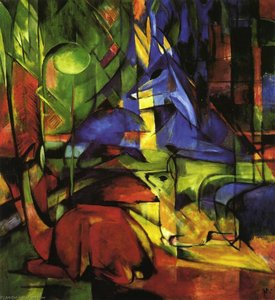
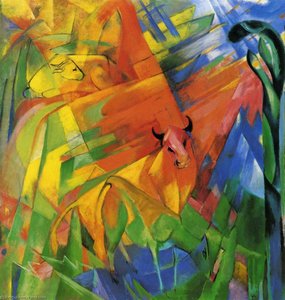
Franz Marc's "Cows": A Symphony of Spirit and Color
Franz Marc’s “Cows,” painted in 1912, is more than just a depiction of livestock; it’s a profound meditation on the soul of nature itself. Executed during a pivotal moment in the development of German Expressionism, this work embodies Marc's deeply held belief that animals possessed an inherent spiritual significance, offering a direct connection to the divine. The painting captures two bovine figures locked in a dynamic struggle, rendered with a bold palette and a confident, almost brutal, application of paint. This isn’t a realistic portrayal of farm animals; it’s a symbolic representation of primal forces – life, death, and the eternal cycle of existence – distilled into form and color.
A Window into Expressionist Philosophy
Created just before Marc's untimely death in 1916, “Cows” reflects the core tenets of Expressionism. Rejecting the objective observation championed by Impressionism and Post-Impressionism, Expressionists sought to convey subjective emotions and inner experiences through art. Marc’s use of intense color – the vibrant yellow of the lion and the rich red of the bull – isn't merely decorative; it’s a deliberate attempt to evoke powerful emotional responses in the viewer. The painting’s raw energy and distorted forms align perfectly with this movement’s desire to express the anxieties and spiritual yearnings of the modern age. The influence of Vincent van Gogh is palpable, particularly in Marc’s expressive brushwork and his commitment to using color to convey mood and feeling.
Technique and Composition
Marc's technique is characterized by thick impasto – a building up of paint that creates a tactile surface. This adds to the painting’s dramatic intensity, emphasizing the physicality of the animals and their struggle. The composition itself is deliberately unbalanced, with the lion dominating the left side and the bull on the right. This asymmetry contributes to the sense of unease and conflict inherent in the scene. The background forest, rendered in muted greens and browns, serves not as a mere backdrop but as an integral part of the narrative, grounding the figures within a wild, untamed landscape. The artist’s meticulous attention to detail, particularly in capturing the textures of fur and muscle, elevates this work beyond simple representation.
Symbolism and Legacy
"Cows" is laden with symbolic meaning. The pairing of the lion and bull – traditionally associated with strength, courage, and aggression – suggests a fundamental struggle within nature itself. Marc frequently used animals to represent spiritual concepts, believing they possessed a purity and innocence unattainable by humanity. This painting’s enduring power lies in its ability to tap into our primal instincts and confront us with questions of existence, mortality, and the relationship between humankind and the natural world. It remains a cornerstone of Marc's oeuvre and a powerful example of Expressionism’s profound impact on 20th-century art.
Sorodna umetniška dela



Biografija umetnika
Franz Marc – Cromer Artspace
Der Blaue Reiter
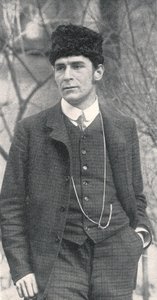
Franz Marc, nemški slikar, risar in grafik, * 8. februar 1880, München, Nemško cesarstvo (zdaj Nemčija), † 4. marec 1916, Braquis, Francija.
Velja za enega najpomembnejših ekspresionističnih slikarjev v Nemčiji. Ob Vasiliju Kandinskim je bil soustanovitelj uredniške skupine Der Blaue Reiter, ki je svojo prvo razstavo odprla v Münchnu 18. decembra 1911. Blaue Reiter je nastal iz Novega münchenskega združenja umetnikov, katerega član je bil Marc kratek čas.
Marc je imel zamisel o študiju klasične filologije ali teologije kot njegov starejši brat Paul - kot je v pismu leta 1897 povedal pastorju Ottu Schlierju, katerega tečaji birme so nanj naredili trajen vtis.
Marc je študiral umetnostno-teoretične spise za almanah Der Blaue Reiter in druge publikacije.
Early Life
Franz Marc se je rodil 8. februarja 1880 kot drugi sin družine Marc na Schillerstrasse 35 v Münchnu. Njegov oče Wilhelm Marc, ki je sprva končal pravo, preden je študiral slikarstvo na Akademiji za likovno umetnost v Münchnu, je bil krajinski in žanrski slikar.
Izhajal iz bavarske uradniške družine. Njegova mati Sophie, rojena Maurice, je prišla iz Alzacije in je otroštvo preživela v francosko govoreči Švici, kjer je obiskovala strogi kalvinistički internat.
Njegovi predniki bili aristokrati, z prijatelji med umetniki kot tudi ljudmi znanstvenimi.
Influences and Artistic Development
Marc je študiral literaturo in filozofijo, zlasti delo Thomasa Carlyla in Friedricha Nietzscheja. Zaradi težav v mladosti je bila njegova vera zelo kritična do Münchnega mladostnega gibanja in mesta življenja.
Njegov brat Paul je študiral klasično filologijo kot njegov starejši brat Paul - kot je v pismu leta 1897 povedal pastorju Ottu Schlierju, katerega tečaji birme so nanj naredili trajen vtis.
Njegova zgodnja dela še v naturalističnem slogu akademizma, vendar se po obisku Pariza leta 1907 pod vplivom Gauguina in van Gogha posvetil postimpresionizmu. Marc je študiral umetnostno-teoretične spise za almanah Der Blaue Reiter in druge publikacije.
Der Blaue Reiter and Artistic Vision
Marc je ustanovni član skupine Der Blaue Reiter (Modri jezdec) v Münchnu leta 1911. Blaue Reiter je nastal iz Novega münchenskega združenja umetnikov, katerega član je bil Marc kratek čas.
Marc je ustvarjal umetnostno-teoretične spise za almanah Der Blaue Reiter in druge publikacije.
Major Achievements and Legacy
Marc je ustvarjal umetnostno-teoretične spise za almanah Der Blaue Reiter in druge publikacije.
Marc je umrl 4. marca 1916, v času Prve svetovne vojne, kar je bila tragedija za svet umetnosti.
Njegovo delo še vedno resonira danes, zavzdihnjuje generacije umetnikov in očarati občinstvo z globoko emotivnostjo in duhovno vrednostjo. Marc je znan kot pionir nemške ekspresionistične umetnosti.
Franc Marko
1880 - 1916 , Nemčija
Hitri podatki
- Artistic Movement Or Style: Nemška ekspresionistična umetnost
- Artists Who Influenced This Artist:
- Vincent van Gogh
- Robert Delaunay
- Date Of Birth: 8. februar 1880
- Date Of Death: 4. marec 1916
- Full Name: Franz Moritz Wilhelm Marc
- Nationality: Nemški
- Notable Artworks:
- The Tiger
- Red Deer
- Tower of Blue Horses
- Place Of Birth: Münich, Nemčija
Sorodni članki

Surova Čustvenost Ekspresionizma: Revolucija v 20. Stoletnem Umetniškem Izrazu
Odkrijte surovo čustvenost ekspresionizma! Preberite o nastanku, ključnih gibih in vplivu tega revolucionarnega umetniškega sloga. Nasveti za zbiratelje in reprodukcije slavnih del na AllPaintingsStore.com.

Izrazi čustev: 10 mojstrovin ekspresionizma za vaš dom
Odkrijte 10 mojstrovin ekspresionizma, ki so zaznamovale umetnost! Edvard Munch, Nolde & Kirchner – spoznajte zgodbe in čustva za vsakim delom. Najboljša zbirka reprodukcij na AllPaintingsStore.com!

Fritz von Uhde: Bridging Realism & Symbolism in Late 19th-Century German Painting
Explore the captivating world of Fritz von Uhde, a pivotal German painter bridging Realism & Symbolism. Discover his plein-air techniques, religious themes, and influence on modern art. Learn about this fascinating artist at AllPaintingsStore.

Cubist Expressionism's 10 Defining Masterpieces | Art for Your Home
Explore 10 defining Cubist Expressionism masterpieces by Picasso, Braque & more. Discover the stories behind these bold, geometric paintings and bring museum-quality art to your home with AllPaintingsStore.com. Explore the full collection online.

AllPaintingsStore.com F.A.Q.: Razumevanje originalne umetnosti v primerjavi z ročno poslikanimi reprodukcijami za zahtevne zbiralce
AllPaintingsStore.com ponuja ročno poslikane reprodukcije vrhunske kakovosti za zahtevne zbiralce. Odkrijte razlike med originali in reprodukcijami, prilagoditev po meri ter garancijo zadovoljstva. Investirajte v umetnost z zaupanjem!