


 Preverite v realnem okolju
 Pošlji kot čestitko
 Deli
Deli
 Podrobnosti
 Priročnik

 Prenesi
 Podobni artefakti
 Rentgenski posnetek
 Predvajaj diaporama
 Statistika
Self-portrait


 Preberi več
Giclée tisk / Umetniški tisk
Giclée ali platnati odtis muzejske kakovosti z hitro proizvodnjo in prilagodljivimi možnostmi končne obdelave. ( Naročite ročno slikano reprodukcijo Preklop na digitalno sliko)




P118B €10

P118H €10

P118W €10

P438Z €10

P508JH €12

P508YH €12

P805H €10

P805Z €10

P919BZ €10

P919G €10

P919XJ €10

P959ZH €10

P968JZ €12

W106C €8

W218G €10

W218JH €8

W218Y €10

W307PJ €10

W316G €10

W316PJ €8

W316Y €10

W398PJ €8

W4111J €10

W500HY €15

W500JH €15

W692G €12

W849H €8

W940BG €15

W953PJ €8




Izberite eno od naših vnaprej določenih velikosti, ki ustrezajo prvotnim proporcijam umetničkega dela.

Vnesite širino in višino, ki jih potrebujete za svoj okvir ali steno. Tiskanje se lahko le odreže, vendar ga ni mogoče narediti večjega od slike, zato format z drugačno obliko pomeni izgubo dela slike. Pred tiskanjem vam pošljemo digitalni predogled za potrditev. Slika, prikazana na tej strani, ne prikazuje dejanskega izrezkov — le predogled to omogoča.
Globalna dostava () v 2 tednih namesto standardnih 4/5 tednov. (26 oktober)

Brezplačna ekspresna dostava po vsem svetu

Visokokakovostno laneno platno

Popolno zavarovanje pošiljke

Garancija povračila carine in uvoznih davkov

Garancija popolnega barvnega ujemanja

Politika vračila v 100 dneh (le v primeru okvar)

Garancija 100% povračila denarja

Popust pri večjem naročilu
 Možnost stekla je na voljo le za velikosti pod 110 cm

Self-portrait
Giclée tisk / Umetniški tisk
Velikost reprodukcije
-


Skupna cena
€ 56
A Window Into Soulful Reflection
In the quietude of 1905, a pivotal moment in art history was captured on canvas through Franz Marc’s Self-portrait. This work is far more than a mere likeness of the artist; it serves as a profound distillation of artistic and spiritual contemplation. At first glance, the composition appears deceptively simple, presenting a solitary figure set against the backdrop of a stylized tree. Yet, beneath this surface lies a complex tapestry of meaning that continues to resonate with modern viewers. Marc did not merely seek to depict his physical form; he aimed to translate his deepest spiritual convictions into a visual language, inviting us to peer through the canvas and into the very essence of his inner world.
The painting stands as a cornerstone of German Expressionism, a movement defined by its rejection of academic precision in favor of raw, emotional truth. Unlike the Impressionists, who sought to capture the fleeting dance of light upon a landscape, Marc prioritized the psychological state. Through his lens, we see a man caught in a moment of deep introspection, his posture and gaze suggesting a sense of reverence for the natural world. For collectors and enthusiasts of fine art, this piece offers a rare glimpse into the formative years of an artist who would eventually redefine the boundaries of color and spirit.
The Language of Color and Texture
Technically, the Self-portrait is a masterclass in expressionist boldness. Marc abandoned meticulous detail, opting instead for flattened planes of color and gestural brushwork that imbue the scene with an urgent, palpable energy. The application of paint is notably thick, utilizing impasto to create a textured surface that catches the light and adds a physical dimension to the emotional intensity of the subject. This tactile quality makes the painting feel alive, as if the artist's very movements are still etched into the pigment.
The palette chosen by Marc is deeply symbolic, moving beyond mere decoration to serve his spiritual narrative. The dominant hues of deep blues and vibrant yellows are carefully orchestrated; the blue embodies a sense of tranquility and profound contemplation, while the yellow signifies enlightenment and a divine radiance. For an interior designer, these colors offer a sophisticated balance of calm and energy, making such a reproduction a commanding focal point in any curated space. The interplay between the cool tones of the figure's coat and the luminous accents creates a visual rhythm that draws the eye inward, much like the artist’s own journey toward spiritual clarity.
A Legacy of Spiritual Renewal
To understand this work, one must consider the intellectual ferment of early 20th-century Germany. Emerging in a period marked by existential questioning and a search for new meaning, Marc’s work reflects a desire for spiritual renewal. His fascination with the purity of nature—and eventually the symbolic power of animals—finds its roots here, in this early exploration of the self within the landscape. The tree in the background is not merely a natural element but a structural anchor that provides depth and connects the human subject to the eternal cycles of life.
Owning a high-quality reproduction of this masterpiece allows one to bring a piece of this historical tension into the home. It is an invitation to pause, to reflect, and to find beauty in the intersection of humanity and nature. Whether placed in a quiet study or a grand living gallery, Marc’s Self-portrait serves as a constant reminder of the power of art to transcend the physical and touch the eternal.
Vprašanja in odgovori
V katero obdobje kariere Franc Marko pripada delo "Self-portrait" (1905)?
Datum 1905 situira "Self-portrait" v Mature Period razvoja umetnika Franc Marko.
Kakšen je umetnostvorno mesto dela "Self-portrait" avtorja Franc Marko?
Umetnostno-zgodovinska klasifikacija dela "Self-portrait" avtorja Franc Marko je German Expressionism, v obdobju Modern.
Kaj ima "Self-portrait" skupnega z ostalo celotno tvorbino umetnika Franc Marko?
V celotnem delu umetnika Franc Marko se delo "Self-portrait" prikloni slogu German Expressionism, ki vključuje tematiko van gogh influence, spiritual quest, natural harmony, expressionist vision, autobiographical reflection.
Sorodna umetniška dela


Biografija umetnika
Franz Marc – Cromer Artspace
Der Blaue Reiter
Franz Marc, nemški slikar, risar in grafik, * 8. februar 1880, München, Nemško cesarstvo (zdaj Nemčija), † 4. marec 1916, Braquis, Francija.
Velja za enega najpomembnejših ekspresionističnih slikarjev v Nemčiji. Ob Vasiliju Kandinskim je bil soustanovitelj uredniške skupine Der Blaue Reiter, ki je svojo prvo razstavo odprla v Münchnu 18. decembra 1911. Blaue Reiter je nastal iz Novega münchenskega združenja umetnikov, katerega član je bil Marc kratek čas.
Marc je imel zamisel o študiju klasične filologije ali teologije kot njegov starejši brat Paul - kot je v pismu leta 1897 povedal pastorju Ottu Schlierju, katerega tečaji birme so nanj naredili trajen vtis.
Marc je študiral umetnostno-teoretične spise za almanah Der Blaue Reiter in druge publikacije.
Early Life
Franz Marc se je rodil 8. februarja 1880 kot drugi sin družine Marc na Schillerstrasse 35 v Münchnu. Njegov oče Wilhelm Marc, ki je sprva končal pravo, preden je študiral slikarstvo na Akademiji za likovno umetnost v Münchnu, je bil krajinski in žanrski slikar.
Izhajal iz bavarske uradniške družine. Njegova mati Sophie, rojena Maurice, je prišla iz Alzacije in je otroštvo preživela v francosko govoreči Švici, kjer je obiskovala strogi kalvinistički internat.
Njegovi predniki bili aristokrati, z prijatelji med umetniki kot tudi ljudmi znanstvenimi.
Influences and Artistic Development
Marc je študiral literaturo in filozofijo, zlasti delo Thomasa Carlyla in Friedricha Nietzscheja. Zaradi težav v mladosti je bila njegova vera zelo kritična do Münchnega mladostnega gibanja in mesta življenja.
Njegov brat Paul je študiral klasično filologijo kot njegov starejši brat Paul - kot je v pismu leta 1897 povedal pastorju Ottu Schlierju, katerega tečaji birme so nanj naredili trajen vtis.
Njegova zgodnja dela še v naturalističnem slogu akademizma, vendar se po obisku Pariza leta 1907 pod vplivom Gauguina in van Gogha posvetil postimpresionizmu. Marc je študiral umetnostno-teoretične spise za almanah Der Blaue Reiter in druge publikacije.
Der Blaue Reiter and Artistic Vision
Marc je ustanovni član skupine Der Blaue Reiter (Modri jezdec) v Münchnu leta 1911. Blaue Reiter je nastal iz Novega münchenskega združenja umetnikov, katerega član je bil Marc kratek čas.
Marc je ustvarjal umetnostno-teoretične spise za almanah Der Blaue Reiter in druge publikacije.
Major Achievements and Legacy
Marc je ustvarjal umetnostno-teoretične spise za almanah Der Blaue Reiter in druge publikacije.
Marc je umrl 4. marca 1916, v času Prve svetovne vojne, kar je bila tragedija za svet umetnosti.
Njegovo delo še vedno resonira danes, zavzdihnjuje generacije umetnikov in očarati občinstvo z globoko emotivnostjo in duhovno vrednostjo. Marc je znan kot pionir nemške ekspresionistične umetnosti.
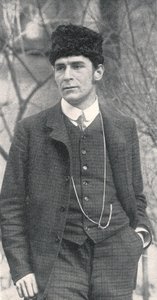
Franc Marko
1880 - 1916 , Nemčija
Ključne informacije
- Artistic Movement Or Style: Nemška ekspresionistična umetnost
- Artists Who Influenced This Artist:
- Vincent van Gogh
- Robert Delaunay
- Date Of Birth: 8. februar 1880
- Date Of Death: 4. marec 1916
- Full Name: Franz Moritz Wilhelm Marc
- Nationality: Nemški
- Notable Artworks:
- The Tiger
- Red Deer
- Tower of Blue Horses
- Place Of Birth: Münich, Nemčija
Sorodni članki

German Expressionism's 10 Defining Masterpieces | Art for Your Home
Explore 10 defining German Expressionism masterpieces – from Munch's 'The Scream' to Kandinsky’s abstracts. Discover the artists, stories & bold colors behind this powerful art movement. Find museum-quality reproductions at AllPaintingsStore.com.

Franz Marc: Expressionism, Spirituality & the Animal Symbolism of a Modern Master
Explore the profound world of Franz Marc's Expressionist paintings. Discover his spiritual connection to animals, innovative use of color, and lasting impact on modern art history. Learn more at AllPaintingsStore.

Serene Blue Backgrounds: Discover Soulful Art to Transform Your Space with Timeless Elegance
Transform your home with soulful blue art. From serene Monet impressions to modern textured sculptures, discover curated masterpieces designed to inspire calm. Explore expert art consultations and bespoke hand-painted reproductions to create your personal sanctuary.

The Allure of Azure: Exploring the Symbolic & Aesthetic Depths of Blue in Art History
Explore the rich history of blue in art! Discover its symbolism, from ancient pigments to modern masterpieces by Kandinsky & Seurat. Uncover the psychological impact and cultural meanings behind this captivating hue.
Slate Blue Masterpieces: 10 Iconic Paintings & Timeless Home Decor Ideas
Immerse yourself in the captivating world of slate blue! Explore 10 iconic paintings by Monet, Van Gogh & Renoir. Discover their stories, techniques & find museum-quality art reproductions for your home at .


