


 Predogled v realnem okolju
 Pošlji
 Deli
Deli
 Podrobnosti o delu
 Priročnik

 Prenesi sliko
 Podobni izdelki
 Rentgenski posnetek
 Predvajaj diaporama
 Q&A
Q&A Statistika
Two Sheep


 Preberi več
Giclée tisk / Umetniški tisk
Giclée ali platnati odtis muzejske kakovosti z hitro proizvodnjo in prilagodljivimi možnostmi končne obdelave. ( Kupite ročno slikano delo Preklop na digitalno sliko)




P118B €10

P118H €10

P118W €10

P438Z €10

P508JH €12

P508YH €12

P805H €10

P805Z €10

P919BZ €10

P919G €10

P919XJ €10

P959ZH €10

P968JZ €12

W106C €8

W218G €10

W218JH €8

W218Y €10

W307PJ €10

W316G €10

W316PJ €8

W316Y €10

W398PJ €8

W4111J €10

W500HY €15

W500JH €15

W692G €12

W849H €8

W940BG €15

W953PJ €8




Izberite eno od naših vnaprej določenih velikosti, ki ustrezajo prvotnim proporcijam umetničkega dela.

Vnesite širino in višino, ki jih potrebujete za svoj okvir ali steno. Tiskanje se lahko le odreže, vendar ga ni mogoče narediti večjega od slike, zato format z drugačno obliko pomeni izgubo dela slike. Pred tiskanjem vam pošljemo digitalni predogled za potrditev. Slika, prikazana na tej strani, ne prikazuje dejanskega izrezka — le predogled to omogoča.
Globalna dostava () v 2 tednih namesto standardnih 4/5 tednov. (29 oktober)

Brezplačna ekspresna dostava po vsem svetu

Visokokakovostno laneno platno

Popolno zavarovanje pošiljke

Garancija povračila carine in uvoznih davkov

Garancija popolnega barvnega ujemanja

100-dnevna politika vračil (le v primeru okvar)

Garancija 100% povračila denarja

Popust pri večjem naročilu
 Možnost stekla je na voljo le za velikosti pod 110 cm

Two Sheep
Giclée tisk / Umetniški tisk
Velikost reprodukcije
-


Skupna cena
€ 56
A Moment of Serene Intensity: Franz Marc's "Two Sheep"
Franz Marc’s “Two Sheep,” painted in 1913, isn’t merely a depiction of animals; it’s a profound exploration of the spiritual essence of life as perceived through the lens of early Expressionism. This work, rendered with Marc's signature vibrant palette and deeply emotive brushwork, transcends simple representation to become a meditation on instinct, connection, and the inherent beauty found within the natural world. The painting immediately draws the viewer in with its bold use of color – deep blues and greens dominate, punctuated by earthy browns and ochres—creating an atmosphere both tranquil and subtly charged.
The composition itself is deceptively simple. Two sheep stand side-by-side, their forms rendered with a loose, almost childlike quality that speaks to Marc’s desire to strip away the complexities of human perception and access a more primal understanding. They gaze outwards, seemingly lost in contemplation or perhaps anticipating an unseen event. The inclusion of a solitary figure in the background, partially obscured by the landscape, adds a layer of mystery – is this a shepherd observing his flock, or a representation of humanity’s relationship with nature? The sheep's posture and direct gaze invite us to share their silent awareness, fostering a sense of empathy and connection.
The Roots of Expressionism: Marc’s Spiritual Quest
Franz Marc’s artistic journey was deeply intertwined with his spiritual beliefs. Initially influenced by his father’s landscape painting, he later found himself grappling with questions of faith and existence, a period that profoundly shaped his work. His encounter with Vincent van Gogh's expressive use of color proved particularly transformative, igniting within him a desire to capture not just the appearance of things but also their underlying emotional resonance. Marc sought to translate this inner experience onto canvas, believing that art could serve as a conduit for spiritual insight – a way to access and communicate the fundamental truths of life.
The painting’s context within the broader artistic landscape is crucial to understanding its significance. “Two Sheep” was created during a period of intense experimentation and innovation in German art, particularly within the circle of Der Blaue Reiter (The Blue Rider). This group, comprised of artists like Wassily Kandinsky and August Macke, sought to break free from traditional academic conventions and explore new ways of representing the world. Marc’s work exemplifies this spirit of rebellion, prioritizing emotional expression over realistic depiction. The use of flattened perspective, simplified forms, and intense color harmonies are hallmarks of Expressionism, aiming to evoke a specific mood or feeling rather than simply mirroring reality.
Color as Soul: Marc's Palette and Technique
Marc’s mastery lies not just in his subject matter but also in his extraordinary command of color. He employed a technique known as “color-forms,” where shapes are defined primarily by their hue rather than precise outlines. This approach creates an almost dreamlike quality, blurring the boundaries between objects and imbuing them with symbolic weight. The blues and greens evoke feelings of serenity, introspection, and connection to nature – while the earthy tones ground the scene in a sense of earthly reality.
His brushwork is equally expressive, characterized by loose, gestural strokes that convey movement and energy. Marc wasn’t interested in meticulously rendering every detail; instead, he prioritized capturing the essence of his subjects—their spirit, their vitality. The painting feels alive, imbued with a sense of quiet intensity. The layering of colors creates depth and luminosity, drawing the viewer into the scene and inviting them to contemplate the sheep's silent world.
A Legacy of Spiritual Vision
“Two Sheep” remains a powerful testament to Franz Marc’s artistic vision. It is more than just a painting of animals; it’s an invitation to connect with the deeper rhythms of nature and to contemplate the mysteries of existence. Reproductions of this work, meticulously crafted by AllPaintingsStore.com, offer a remarkable opportunity to experience the emotional depth and spiritual resonance of Marc's masterpiece in your own home or studio. The vibrant colors and expressive brushwork are faithfully reproduced, allowing you to immerse yourself in the artist’s unique perspective and appreciate the enduring beauty of this iconic work.
Vprašanja in odgovori
Ali so barve dela "Two Sheep" močne ali nežne?
Intenzivnost barv dela "Two Sheep" je Balanced. Intenzivnost opisuje, kako močne so barve.
V kateri umetniški smer spada "Two Sheep" avtorja Franc Marko?
"Two Sheep" avtorja Franc Marko pripada gibanju German Expressionism. To gibanje zagotavlja slogovni kontekst dela.
Pod kakšnimi drugimi imeni je znan/a Franc Marko?
Franc Marko se pojavlja tudi pod imeni Franz Moritz Wilhelm Marc, Franc Jože Marko.
Sorodna umetniška dela


Biografija umetnika
Franz Marc – Cromer Artspace
Der Blaue Reiter
Franz Marc, nemški slikar, risar in grafik, * 8. februar 1880, München, Nemško cesarstvo (zdaj Nemčija), † 4. marec 1916, Braquis, Francija.
Velja za enega najpomembnejših ekspresionističnih slikarjev v Nemčiji. Ob Vasiliju Kandinskim je bil soustanovitelj uredniške skupine Der Blaue Reiter, ki je svojo prvo razstavo odprla v Münchnu 18. decembra 1911. Blaue Reiter je nastal iz Novega münchenskega združenja umetnikov, katerega član je bil Marc kratek čas.
Marc je imel zamisel o študiju klasične filologije ali teologije kot njegov starejši brat Paul - kot je v pismu leta 1897 povedal pastorju Ottu Schlierju, katerega tečaji birme so nanj naredili trajen vtis.
Marc je študiral umetnostno-teoretične spise za almanah Der Blaue Reiter in druge publikacije.
Early Life
Franz Marc se je rodil 8. februarja 1880 kot drugi sin družine Marc na Schillerstrasse 35 v Münchnu. Njegov oče Wilhelm Marc, ki je sprva končal pravo, preden je študiral slikarstvo na Akademiji za likovno umetnost v Münchnu, je bil krajinski in žanrski slikar.
Izhajal iz bavarske uradniške družine. Njegova mati Sophie, rojena Maurice, je prišla iz Alzacije in je otroštvo preživela v francosko govoreči Švici, kjer je obiskovala strogi kalvinistički internat.
Njegovi predniki bili aristokrati, z prijatelji med umetniki kot tudi ljudmi znanstvenimi.
Influences and Artistic Development
Marc je študiral literaturo in filozofijo, zlasti delo Thomasa Carlyla in Friedricha Nietzscheja. Zaradi težav v mladosti je bila njegova vera zelo kritična do Münchnega mladostnega gibanja in mesta življenja.
Njegov brat Paul je študiral klasično filologijo kot njegov starejši brat Paul - kot je v pismu leta 1897 povedal pastorju Ottu Schlierju, katerega tečaji birme so nanj naredili trajen vtis.
Njegova zgodnja dela še v naturalističnem slogu akademizma, vendar se po obisku Pariza leta 1907 pod vplivom Gauguina in van Gogha posvetil postimpresionizmu. Marc je študiral umetnostno-teoretične spise za almanah Der Blaue Reiter in druge publikacije.
Der Blaue Reiter and Artistic Vision
Marc je ustanovni član skupine Der Blaue Reiter (Modri jezdec) v Münchnu leta 1911. Blaue Reiter je nastal iz Novega münchenskega združenja umetnikov, katerega član je bil Marc kratek čas.
Marc je ustvarjal umetnostno-teoretične spise za almanah Der Blaue Reiter in druge publikacije.
Major Achievements and Legacy
Marc je ustvarjal umetnostno-teoretične spise za almanah Der Blaue Reiter in druge publikacije.
Marc je umrl 4. marca 1916, v času Prve svetovne vojne, kar je bila tragedija za svet umetnosti.
Njegovo delo še vedno resonira danes, zavzdihnjuje generacije umetnikov in očarati občinstvo z globoko emotivnostjo in duhovno vrednostjo. Marc je znan kot pionir nemške ekspresionistične umetnosti.
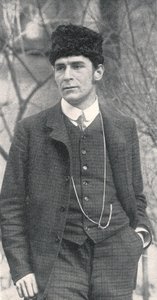
Franc Marko
1880 - 1916 , Nemčija
Hitri podatki
- Artistic Movement Or Style: Nemška ekspresionistična umetnost
- Artists Who Influenced This Artist:
- Vincent van Gogh
- Robert Delaunay
- Date Of Birth: 8. februar 1880
- Date Of Death: 4. marec 1916
- Full Name: Franz Moritz Wilhelm Marc
- Nationality: Nemški
- Notable Artworks:
- The Tiger
- Red Deer
- Tower of Blue Horses
- Place Of Birth: Münich, Nemčija
Sorodni članki

Franz Marc: Expressionism, Spirituality & the Animal Symbolism of a Modern Master
Explore the profound world of Franz Marc's Expressionist paintings. Discover his spiritual connection to animals, innovative use of color, and lasting impact on modern art history. Learn more at AllPaintingsStore.

Unmasking Emotion: A Journey Through the Raw Power and Visceral Beauty of German Expressionism
Explore the raw emotional power of German Expressionism. From Kirchner to Die Brücke, discover how artists used distortion and vibrant color to unmask the human psyche. A deep dive into art history for the discerning collector and enthusiast.

Živalski simbolizem v umetnosti: Od mitov do sodobne interpretacije prostora
Raziščite bogato zgodovino živalskega simbolizma v umetnosti – od antičnih mitov do sodobnih interpretacij prostora. Odkrijte skrite pomene in navdih za vaš dom z AllPaintingsStore.

Beyond the Screen: Transforming Personal Memories into Timeless AI-Driven Anime Masterpieces
Experience the magic of digital metamorphosis. Transform your cherished photos into stunning, hand-painted anime masterpieces using our proprietary AI technology and professional artists. Elevate your personal story with a timeless, high-quality oil painting on canvas.

German Expressionism's 10 Defining Masterpieces | Art for Your Home
Explore 10 defining German Expressionism masterpieces – from Munch's 'The Scream' to Kandinsky’s abstracts. Discover the artists, stories & bold colors behind this powerful art movement. Find museum-quality reproductions at AllPaintingsStore.com.


