


 Predogled v realnem okolju
 Pošlji
 Deli
Deli
 Podrobnosti o delu
 Priročnik

 Prenesi sliko
 Podobni izdelki
 Rentgenski posnetek
 Predvajaj diaporama
 Q&A
Q&A Statistika
Fan
 Oil
Oil- WallArt
- Art Deco
 1914
1914 22.0 x 40.0 cm
 Metropolitanski muzej umetnosti
 Preberi več
Giclée tisk / Umetniški tisk
Giclée ali platnati odtis muzejske kakovosti z hitro proizvodnjo in prilagodljivimi možnostmi končne obdelave. ( Kupite ročno slikano delo Preklop na digitalno sliko)




P118B €10

P118H €10

P118W €10

P438Z €10

P508JH €12

P508YH €12

P805H €10

P805Z €10

P919BZ €10

P919G €10

P919XJ €10

P959ZH €10

P968JZ €12

W106C €8

W218G €10

W218JH €8

W218Y €10

W307PJ €10

W316G €10

W316PJ €8

W316Y €10

W398PJ €8

W4111J €10

W500HY €15

W500JH €15

W692G €12

W849H €8

W940BG €15

W953PJ €8




Izberite eno od naših vnaprej določenih velikosti, ki ustrezajo prvotnim proporcijam umetničkega dela.

Vnesite širino in višino, ki jih potrebujete za svoj okvir ali steno. Tiskanje se lahko le odreže, vendar ga ni mogoče narediti večjega od slike, zato format z drugačno obliko pomeni izgubo dela slike. Pred tiskanjem vam pošljemo digitalni predogled za potrditev. Slika, prikazana na tej strani, ne prikazuje dejanskega izrezka — le predogled to omogoča.
Globalna dostava () v 2 tednih namesto standardnih 4/5 tednov. (30 oktober)

Brezplačna ekspresna dostava po vsem svetu

Visokokakovostno laneno platno

Popolno zavarovanje pošiljke

Garancija povračila carine in uvoznih davkov

Garancija popolnega barvnega ujemanja

100-dnevna politika vračil (le v primeru okvar)

Garancija 100% povračila denarja

Popust pri večjem naročilu
 Možnost stekla je na voljo le za velikosti pod 110 cm

Fan
Giclée tisk / Umetniški tisk
Velikost reprodukcije
-


Skupna cena
€ 57
A Whisper of Elegance: George Barbier’s “Fan” – A Dance of Deco Style
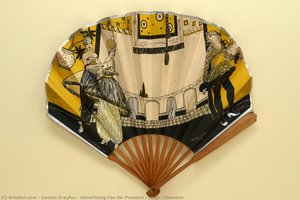
George Barbier's "Fan," painted in 1914, isn’t merely an illustration; it’s a portal into the heart of Art Deco’s opulent androgyny. This exquisite piece, now meticulously reproduced, captures a fleeting moment of sophisticated leisure within a world brimming with theatrical glamour and subtle symbolism. Barbier, a master orchestrator of visual style, didn't simply depict a fan; he constructed an entire atmosphere—a shimmering tableau vivant that speaks volumes about the era’s fascination with beauty, movement, and the blurring lines between masculine and feminine allure.
The artwork immediately draws the eye to its central subject: two figures engaged in a graceful dance within a richly appointed architectural setting. The composition is deliberately fluid, mirroring the delicate curve of the fan itself, creating a sense of perpetual motion. Barbier’s figures are rendered with an almost dreamlike quality—their poses suggest both intimacy and theatricality, hinting at a private performance unfolding before our eyes. Notice how their garments flow and drape, echoing the fan's intricate design, further emphasizing the interconnectedness of form and movement. The inclusion of a partially visible figure on the left adds to this sense of mystery, inviting us to imagine the narrative behind this captivating scene.
The Palette of Luxury: Color, Line, and Texture
Barbier’s masterful use of color is central to the artwork's impact. Deep blues, vibrant reds, shimmering golds, and creamy whites coalesce into a luxurious palette that evokes both opulence and sophistication. The contrast between the figures’ skin tones and the darker background creates a dramatic effect, highlighting their beauty while simultaneously emphasizing the setting’s grandeur. Barbier expertly employs strong, defined lines to delineate the figures' forms and architectural elements, lending the composition a sense of clarity and precision—a hallmark of Art Deco style. Furthermore, the texture is remarkably rendered; you can almost feel the smooth surface of the fan, the delicate folds of the fabric, and the subtle sheen of the gilded details.
The artwork’s lines aren't simply structural; they are imbued with a sense of dynamism. The ribs of the fan itself form a linear framework that reinforces the composition’s semi-circular shape, while geometric patterns subtly permeate the background, adding to the overall visual richness. These elements work in harmony to create an image that is both visually arresting and intellectually stimulating.
A Deco Dialogue: Symbolism and Historical Context
"Fan" is deeply rooted in the artistic currents of its time—specifically, the rise of Art Deco. Emerging in the 1920s, this style rejected the ornate excesses of previous eras, embracing streamlined forms, geometric patterns, and a fascination with exotic materials and cultures. Barbier’s work reflects these trends perfectly, incorporating elements of both classical mythology (evoked by the figures' poses) and modern design sensibilities. The fan itself—a symbol of elegance, refinement, and social status—takes on new significance within this context.
The scene subtly alludes to themes of courtship and performance, reminiscent of the lavish balls and theatrical productions that defined Parisian society during the early 20th century. Barbier’s meticulous attention to detail—from the intricate fan design to the luxurious fabrics—creates a world where beauty is paramount and social rituals are elevated to an art form. The artwork can be seen as a visual manifesto of Art Deco's celebration of glamour, sophistication, and the pursuit of pleasure.
Bringing “Fan” Home: Reproduction and Artistic Legacy
Today, George Barbier’s "Fan" continues to captivate audiences with its timeless beauty and evocative atmosphere. A meticulously crafted reproduction allows you to bring this exquisite artwork into your home or office, adding a touch of Deco elegance to any space. The high-quality print captures the original's rich colors and intricate details, while the canvas provides a durable and visually appealing surface. Whether displayed as a statement piece in a living room or incorporated into an interior design scheme, “Fan” is sure to spark conversation and admiration.
Consider this artwork not just as a decorative object, but as a window into a bygone era—a testament to the artistic vision of George Barbier and the enduring allure of Art Deco style. It’s a reminder that beauty, sophistication, and a touch of mystery can still be found in the most carefully crafted details.
Vprašanja in odgovori
Kako se motiv dela "Fan" povezuje s tipičnimi temami umetnika Georges Barbier?
"Fan" prikazuje nude figures, art deco, fan design, ballet, elegance, mythological, decorative, fashion, medtem ko so v art deco elegance, parisian style, mythological allegory, classical themes, fashion illustration, haute couture, decorative arts, theatrical design zabeležene teme umetnika Georges Barbier. Primerjava obeh razkriva, kako se to delo povezuje z običajnimi motivi umetnika.
Pri katerih letih je Georges Barbier ustvaril/a "Fan"?
Georges Barbier je bil/a star/a 32 let, ko je ustvaril/a "Fan" leta 1914. Starost je izračunana na podlagi leta rojstva umetnika, 1882.
Kakšna je priporočena velikost tiska za "Fan" avtorja Georges Barbier?
Za "Fan" avtorja Georges Barbier priporočamo reprodukcijo v velikosti Medium. Velikost je mogoče prilagoditi, ob čemer se ohranijo razmerja.
Sorodna umetniška dela



Biografija umetnika
George Barbier: Arhitekt art deco elegancije
George Barbier (1882–1932) ni bil le le ilustrator; bil je natančen arhitekt sloga, vizualni pripovedovalec, ki je oblikoval estetično pokrajavo zgodnjega 20. stoletja. Rodil se je v Nantesu v Franciji, v družini, globoko vprizeti v umetniško tradicijo – njegov oče je bil slikar, njegov kuzin Paul Iribe pa slavni oblikovalec – Barbier je podarjeno nasledil globoko spoštovanje do lepote in prirojeno sposobnost, da jo prenese na papir. Njegova kariera, čeprav relatively kratka, je pustila neizbrisno sled v modi, gledališču in dekorativni umetnosti, s čimer se je uveljavil kot ena najpomembnejših postav gibanja Art Deco.
Barbierjeva zgodnja izobraževanja na École des Beaux-Arts v Parizu mu je zagotovila trdne temelje klasičnih tehnik risanja, vendar so bili prav izpostavljeni živahnim družbenim krogom okoli revij, kot je La Gazette du Bon Ton, tisti trenutek, ko se je njegova ustvarjalna iskra zares razgorela. Postal je del tesno povezanega sklopa umetnikov – med njimi Paul Iribe, Bernard Boutet de Monvel in Georges Lepape – ki so bili z ljubeznijo imenovani »Vitezov v rolete« (The Knights of the Bracelet), kar je odražalo njihovo naklonjenost h flambozantnim oblačinom in sofisticiranim oblikam. To okolje je spodbudilo eksperimentiranje in sodelovanje, s čimer je Barbierja spodbudilo k raziskovanju novih pristopov k ilustraciji in oblikovanju.
Simfonija mode in gledališča
Barbierovo del je takoj prepoznavno zaradi njegove obilne podrobnosti, zapletenih vzorcev in mojstroske obrade barv. Prvotno je postal znan skozi svoje ilustracije za modne revije, zlasti La Gazette du Bonljeni Ton, kjer je s nefrepnim elegancijo zajel duh parizkega družbenega življenja. Njegove prikazi žensk v bleščajočih gundi, okrojenih s perjem, dragulji in zapletenimi pokrivali za glavo, niso bili le portreti; bili so miniaturne pripovedi, ki so prenašale občutek glamurja, sofisticiranosti in celo igriva senzualnosti. Ni le risal obleke; okoli njih je ustvarjal celotne svetove.
Vendar pa se je Barbierjev talent razprostiral daleč presežno od področja mode. Hitro se je uveljavil kot iskan oblikovalec za gledališne produkcije, s tvorbo čudovitih kostumov za baletne družbe, kot so bili Ballets Russes Sergeja Diaghileva, ter sodeloval pri prestižnih scenografijah za Folies Bergère v Parizu. Njegove zasnove so bile značilne po egzotičnih vplivih – vključevale so motive starodavnega Egipta, Perzije in Orienta – ki so se neopazno združili z geometričnimi oblikami Art Deco in luksuznimi materiali. Njegovo del za predstavo Casanova (1928), v kateri je igral Rudolph Valentino, je utrdilo njegovo ugled kot mojstra gledališčnega kostumskega oblikovanja.
Falbalas & Fanfreluches: Vizualno dedištvo
Morda Barbierjevo najbolj trajno dedištvo leži v njegovi seriji almanahov, Falbalas et Fanfreluches (1922–1926). Te čudovito ilustrirane knjige so bile razstava njegove značilne sloga – osupljiva zmedava mode, fantazije in dekorativnih motivov. Vsaka stran je bila miniaturno mojstrovina, polna izjemno slikanih figur, zapletenih vzorcev in oprijemljivega občutka joie de vivre. Sam naslov – »falbalas« (reslice) in »fanfrez« (okrasji) – je popolno zajel bistvo njegovega dela: praznik luksuznih tkanin in igrivih okrasov.
Ti almanahi niso bili le dekorativni; bili so skrbno konstruirane vizualne pripovedi, ki so pogosto prikazovale družbene okupe, egzotična potovanja in trenutke romantičnih intrig. Barbierjeva natančna pozornost do podrobnosti – od teksture svila do bleščanja diamantov – je ustvarila svet nepremagane lepote in sofisticiranosti. Vpliv Falbalas et Fanfreluches se lahko opazira še danes v sodobni modi in oblikovanju, kar dokazuje trajno moč Barbierjeve vizije.
Vplivi in umetniške povezave
Barbierov umetni razvoj je oblikovala raznolika vpliva. Klasična izobrazba, ki jo je prejel na École des Beaux-Arts, mu je zagotovila močne temelje risanja in kompozicije, medtem ko so ga izpostavljeni sodobnim gibanjem, kot sta fauvizem in kubizem, razširili njegove estetične horizonte. Navdih je črpal tudi iz orientalistične umetnosti, zlasti iz živahnih barv in zapletenih vzorcev perzijskih tekstiljev. Njegovi tesni odnosi z drugimi znamenitimi umetniki – vključno s Paulom Iribejem in Georgesom Lepapejem – so spodbudili duh sodelovanja in eksperimentiranja, ki je spodbudil njegov ustvarjalni razvoj.
Poleg tega Barbierovo del odraža širše kulturne trende 1920ih let – obdobja, ki so ga zaznačevale gospodarska prosperity, tehnološke inovacije in fascinacija egzotičnimi kulturami. Razvoj masovnih medijev, zlasti revij, kot je La Gazette du Bon Ton, mu je ponudil platformo za doseganje široke publike in utrdil njegov ugled med vodilnimi ilustratorji svojega časa.
Trajen vpliv
George Barbierjeva kariera je bila žal tragično prekinjena zaradi bolezni leta 1932, ko je imel 50 let. Kljub njegovi zgodnji smrti njegovo del še vedno očarava in navdihuje. Njegove ilustracije so cenjene zaradi njihove lepote, elegance in tehnične virtuoznosti ter ostajajo definicijsko primer Art Deco sloga. Barbierjeva dediština presega področje ilustracije; pomagal je oblikovati vizualni jezik mode, gledališča in dekorativne umetnosti, s čimer je pustil trajen peč na kulturni pokrajini.

Georges Barbier
1882 - 1932 , Francija
Hitri podatki
- Artistic Movement Or Style: Art Deco
- Artists Or Movements Influenced By This Artist:
- Diane Von Furstenberg
- Ken Russell
- Artists Who Influenced This Artist:
- Paul Iribe
- Bernard Boutet
- Date Of Birth: 1882-10-16
- Date Of Death: 1932-07-19
- Full Name: Georges Augustin Barbier
- Nationality: Francoz
- Notable Artworks:
- Falbalas et Fanfreluches
- Le Gout De Chales
- Place Of Birth: Nantes, Francija
Sorodni članki

Theatrical Elegance: The Art Deco Genius of Erté and the Era of Fashion Illustration
Explore the theatrical elegance of Erté and the Art Deco era. Discover how his mastery of geometric line and fashion illustration can elevate luxury hospitality design through premium, hand-painted reproductions and bespoke architectural art solutions.

