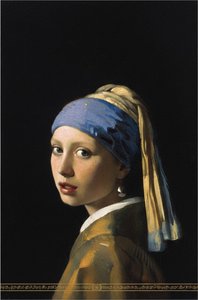
1631. Oil, 31.0 x 24.0 cm. Mauritshuis.

§ 1Katalogovni podatki

- 31.0 x 24.0 cm


§ 2Abstraktno
Opis zbirateljskega predmeta
This painting portrays a woman diligently sewing in a dimly lit room, attended by an older man offering her money – a visual representation of the complexities between virtue and indulgence within the domestic sphere.
 Preberi več
Biografija umetnika
Judith Jans Leyster (1609–1660) je bila pionirska slikarica holandskega zlati dobe, znana po živahnih žanrskih scenah, portretih in živih slikah. Njena dela ponujajo vpogled v 17. stoletje in izzivajo zgodovino umetnosti.
§ 3Komentacija
A Quiet Tension in Haarlem
Step closer and observe the stillness within this room. In 1631, Judith Jans Leyster captured a moment that feels remarkably private, as if we have interrupted a conversation mid-sentence. A woman sits at a table, her attention anchored to her sewing, a task representing the industriousness expected of her station. Yet, there is a subtle disruption in the air. An older man stands beside her, his presence marked by a gesture that carries weight: he presents a fist adorned with jewelry. It is a small movement, but it introduces an unspoken desire into this domestic setting, hinting at the complexities that can exist within even the most stable relationships.
The atmosphere is shaped by a masterful use of chiaroscuro. Leyster employs light and shadow to sculpt the figures, pulling them from the darkness of the room with a luminous touch. This interplay of light does more than define form; it creates a palpable sense of intimacy. The shadows are deep, yet they do not obscure, but rather focus our gaze on the textures of the scene—the delicate thread of the sewing, the glint of the ring, and the scattered books that lie nearby. These books offer a quiet metaphor for knowledge and education, suggesting an intellectual life existing alongside domestic duty.
The Weight of Virtue and Temptation
There is a profound psychological depth to be found in the way these figures interact without direct eye contact. The woman’s focus on her needlework symbolizes moral integrity and responsibility, values held dear in the Dutch Golden Age. However, the man's gesture acts as a subtle commentary on temptation and the potential for disruption. It is a delicate balance between duty and passion, rendered through tonal variations that imbue the scene with a sense of melancholy.
The setting itself speaks to the era of Haarlem’s flourishing. During this period of Dutch innovation, such genre scenes allowed artists to explore the nuances of human interaction. Leyster’s technique, characterized by confident yet delicate brushstrokes, allows us to feel the weight of the moment. The scene does not demand attention through loud colors; instead, it invites a slow contemplation of the tension between what is seen and what is felt. It remains a study of restraint, leaving us to wonder about the resolution of this silent encounter.
Vprašanja in odgovori
Katere barve prevladujejo v delu "The Proposition" avtorja Judith Leyster?
Barvna identiteta dela "The Proposition" avtorja Judith Leyster: paleta Earthy, ki prevladuje z barvo Espresso (#43371c).
Kakšno vzdušje in čustvo izraža "The Proposition" avtorja Judith Leyster?
Zapisani vzdušje dela "The Proposition" avtorja Judith Leyster je Calm, njegov čustveni ton pa je Reflective.
Na kakšen način je zasnovana barvna kompozicija dela "The Proposition" avtorja Judith Leyster?
V "The Proposition" se Serene kontrast združuje s Unified Palette harmonijo.


 Preklop na tiskanine


 Za umetniška dela ali reprodukcije, ki so po katerikoli strani širše od 105 cm (približno 41 palč), bo okvir poslan v razstavljeni obliki kot komplet. Ta metoda zagotavlja varno dostavo in preprečuje poškodbe med transportom.