


 Predogled v realnem okolju
 Pošlji
 Deli
Deli
 Podrobnosti o delu
 Priročnik

 Prenesi sliko
 Podobni izdelki
 Rentgenski posnetek
 Predvajaj diaporama
 Vprašanja in odgovori
 Statistika
Haystack -1


 Preberi več
Pridobite datoteko, pripravljeno za tiskanje, ki presega kakovost spletnega predogleda. Vsaka digitalna slika v naši ponudbi izvira iz visoko ločljive izvirne datoteke v naši bazi — običajno široke od 5.000 do 15.000 pikselov — zato lahko z zaupanjem tiskate v večji format, tesno izrezujete ali reproducirate fine podrobnosti.
Nobena datoteka ne zapusti našega studia nedotiknjena. Digitalni strokovnjak preveri barve v primerjavi z izvirno sliko in jih po potrebi popravi, nato pa s profesionalnimi orodji za retuširanje izboljša jasnost in podrobnosti — pri čemer vedno ostaja zvest umetnikovim potezam in slogu. Rezultat je slika, ki izgleda kot samo slikarstvo, ne pa kot le filtriran sken.
Potrditev pred dokončanjem dela: naš strokovnjak vam v roku 72 ur pošlje sliko po e-pošti na pregled. Niste zadovoljni? Zahtevajte izboljšave ali popravke ali prosite za povračilo denarja, če kakovost ni v skladu z pričakovanimi standardi.
To je kakovost, po kateri temeljijo založniki, oblikovalni studii, galerije in tiskarne.
Digitalna slika
Prenesite datoteko visoke ločljivosti za osebno uporabo, tiskanje in kreativne projekte. ( Preklop na tiskanine Kupite ročno slikano delo)
Vključeno v vsako naročilo digitalne slike
Zagotovljena strokovna digitalna dostava
Z izbiro AllPaintingsStore.com ne prejmete le slike – prejmete profesionalno urejeno digitalno umetniško delo, izdelano z največjo natančnostjo in zavestno podprto z garancijo za zadovoljstvo. Tukaj je vse, kar bo z vašim naročilom samodejno priloženo:

Hitra dostava prek e-pošte
Vaša digitalna slika visoke ločljivosti bo na vaš e-naslov poslana v roku 72 ur od zaklopa naročila – pripravljena za takojšnjo uporabo.

Digitalna datoteka z uporabo AI
Vaše umetniško delo je strokovno optimizirano z uporabo naprednih orodij umetne inteligence in ročne obdelave, kar zagotavlja največjo stopnjo podrobnosti, jasnosti in barvne natančnosti.

Brezplačna doletna ponovna dostava
Ste datoteko zaradi nespremietne napake izgubili ali izbrisali? Ni težav – vam jo bomo ponovno poslali kadar koli in brezplačno.

Brez uvoznih pristojbin – vedno
Svoje umetniško del uživajte takoj, brez carin, davkov ali stroškov dostave – digitalni prenosi so vedno brezdavčni.

Zagotovilo natančnosti barv
Z uporabo profesionalnih orodij in procesov upravljanja barv zagotavljamo, da vaša digitalna slika čim bolj natančno odraža prvotne barve.

100-dnevna garancija zadovoljstva
Če niste zadovoljni s svojo digitalno sliko, jo bomo uredili ali vam v 100 dneh povrnili 100% denarja – brez kakršnih koli vprašanj.

100% Garancija povračila denarja
Niste zadovoljni? Zagotavljamo vam popoln povračilo sredstev v 100 dneh po prejemu digitalne datoteke – brez dodatnih vprašanj.

Popusti pri večjih naročilih
Kupite 3 slike, prihranite 10% - Kupite 5 slik, prihranite 15% - Kupite 10+ slik, prihranite 20%. Odlično za kreativne projekte, galerije in agencije.
The Genesis of a Pop Visionary – Roy Lichtenstein and the Dawn of a New Aesthetic
Roy Fox Lichtenstein, born in 1923 amidst the vibrant energy of New York City, wasn’t merely an artist; he was a provocateur, a translator of the modern world onto canvas. His rise to prominence within the Pop Art movement represents a deliberate challenge to established artistic conventions – a rejection of the perceived elitism of fine art in favor of embracing imagery drawn from advertising, comic books, and everyday American life. His early exposure to museums, concert halls, and the pulsating rhythms of jazz music instilled a deep appreciation for visual communication, which would later become the cornerstone of his groundbreaking style. Lichtenstein’s formal training at the Art Students League, followed by brief service in the Army during wartime, provided him with foundational skills while simultaneously exposing him to the burgeoning anxieties and transformations of the mid-20th century. This confluence of influences – a cultivated cultural awareness coupled with a pragmatic artistic approach – set the stage for his revolutionary work.

The Stark Beauty of Dot and Color: Deconstructing the Familiar
“Haystack -1,” painted in 1969, exemplifies Lichtenstein’s signature style – a deliberate simplification and exaggeration of familiar imagery. The artwork presents a seemingly straightforward depiction of a haystack, yet it's immediately arresting due to its reliance on Ben-Day dots, a printing technique borrowed from commercial illustration. These meticulously arranged yellow dots create an illusion of texture and depth, mimicking the effect of halftone patterns found in magazines and comics. The stark contrast between the bright yellow dots and the predominantly white background generates a dynamic visual field, pulling the viewer’s eye across the canvas. The composition is remarkably balanced, with the haystack occupying most of the space, creating a sense of stability amidst the energetic surface pattern. It's a masterful demonstration of how seemingly simple elements can be combined to produce a complex and engaging image.
Decoding Pop Art: Consumerism, Mass Media, and American Identity
Lichtenstein’s work isn’t simply about replicating images; it’s about interrogating their meaning within the context of post-war America. The haystack itself represents a quintessential symbol of rural life – a nostalgic image often associated with simplicity and agrarian values. However, by rendering it in this highly stylized, almost mechanical manner, Lichtenstein subtly critiques the homogenization of American culture brought about by mass media and consumerism. The use of Ben-Day dots, reminiscent of comic book panels, further reinforces this connection to popular entertainment and advertising – industries that were rapidly shaping American society during this period. The artwork becomes a commentary on how images are disseminated and consumed, prompting viewers to consider the relationship between art, commerce, and identity.
A Legacy in Reproduction: Bringing Lichtenstein’s Vision Home
AllPaintingsStore offers meticulously crafted hand-painted reproductions of “Haystack -1,” allowing you to experience the power and precision of Lichtenstein's style firsthand. Each reproduction is created by skilled artists who understand the nuances of his technique, faithfully capturing the vibrant colors, intricate dot patterns, and overall dynamic energy of the original painting. Whether displayed in a contemporary interior or as a statement piece in a classic setting, this artwork brings a touch of Pop Art history into your space. Explore our range of sizes and canvas options to find the perfect representation of this iconic work – a testament to Roy Lichtenstein’s enduring legacy as one of the most influential artists of the 20th century.
Vprašanja in odgovori
V katero obdobje umetnostnega razvoja Roy Lichtenstein pripada delo "Haystack -1"?
"Haystack -1" predstavlja Pop Art Era umetnika Roy Lichtenstein.
Kje bi morala biti razpostavljena reprodukcija dela "Haystack -1" avtorja Roy Lichtenstein?
Z obliko Landscape se reprodukcija dela "Haystack -1" priporoča za Living Room.
Ali je "Haystack -1" znano umetniško delo v slogu Pop Art?
"Haystack -1" je v katalogu zabeležen kot Iconic med deli iz obdobja Pop Art.
Sorodna umetniška dela


Biografija umetnika
Življenje Roy Lichtenstein
Manhattan, New York City, 27. oktobra 1923. Roy Lichtenstein se rodi kot sin Miltona in Beatrice. Mestna energija metropole postavlja kuliso za življenje, ki bo sčasoma izzvalo meje fine umetnosti. Odraža v judovski družini srednje klase, kjer skozi muzeje in jazz glasbo vpija kultitne ritme metropole.
Smer njegove kariere se drastično spremeni v sredini dvosetega stoletja. Izstopa kot vodilna figura gibanja Pop Art, obdobja, ki ga opredelja radikalna odklonitev od težkih, čustvenihčovihčov izražanja Abstrakcionega ekspresionizma. Namesto da bi gledal navznoter, se usmerja navzdič, v sijoče, mehanske površine ameriške masovne kulture. Svojo tematiko najde v najbolj prezrtenih kotičkih vsakdanjega življenja: v dramatičnih panelih stripov in grozovitih, ponavljajočih se vzorcih komercajlne reklame.
Njegovo del transformira efemerno jezik tiska v nekaj monumentalnega. Z prevzemom vizualne kratkice mas, je prisilil v soočenje prestiž visoko umetnostnih galerij in vsakdanji pul ulice. Njegova prisotnost v umetnostnem svetu je zaznamana z načrtno distancą, saj uporablja prav orodja industrijske reprodukcije, da ponovno definiše, kaj lahko je slika.
Mladost, družina in izobraževanje
Manhattan, leto 1923. Mesto postavlja kuliso za prihod Roy Fox Lichtenstein v srednjoizobraženo judijsko družino. Njegov oče, Milton, je delal kot nepremičninski agent, medtem ko ga je mama Beatrice, usposobljena klaviristka, vovojila v kulturne ritme New Yorka. Te zgodnje leta so zaznamana z dvojno potopijo v vizualno in zvočno svetovnost; svojo mladost je preživel pri raziskovanju muzejev in ob obiskih koncertov, s čimer je razvil globoko naklonjenost jazzu, ki je trajala skozi celo njegovo življenje.
Smer njegove poti se v letu 1939 premakne v smeri formalne discipline. Vstopil je v Art Students League v New Yorku, kjer je delal pod vodstvom umetnika Reginald Marsh. Tu je osredotočenost ostala na temeljih risanja in slikarstva. Iz teh zgodnjih raziskav se je premaknil v višji obrazovni krog, ko se je vpisal na Univerzeto v Ohio, kjer je študiral likovno umetnost. Ta akademska podlaga mu je zagotovila tehnično rigoroznost, ki bo kasneje služila kot temelj za njegove radikalne odklonitve od tradicionalne zastavljanja slik.
Vojak in povratnik študij
Lichtensteinova izobraževalna pot se v letu 1943 nenadoma preobrne. Vojni draft ga izvleče iz pred classrooms in ga vrže v objem ameriške vojske. Za dve leti se osredje njegovega življenja premakne iz umetniškega ateljeja na evropske frontne linije. Služil je v Franciji, Belgiji in Nemčiji, kjer je med leti 1943 in 1945 preživljal v kaosu vojne. V tem obdobju je delal kot order, tehnik in umetnik, s skicami zajemljal realnost svojega okolja, medtem ko je konflikt dosegal svoj vrhunec.
Rat se konča, vendar prehod nazaj v civilno življenje ni okamoten. Po prenehanju sovražnosti leta 1945 je Lichtenstein nekaj časa ostal v Franciji z namenom, da bi študiral na Sorboni. Ta načrt se razvije, ko postane njegov oče resno bolnik, kar ga prisili v vrnitev v Združene države. Vrnil se je na Univerzeto v Ohaju, da bi dokončal tisto, kar je že začel. Do leta 1946 je pridobil svoj BFA in bil pripravljen, da se kot izščen praktikant ponovno vstopi v profesionalni svet umetnosti.
Kariera razrednika in zgodnja dela
Po vojenskih letih se Roy Lichtenstein sooča z akademskim okoljem ameriškega Midwesta in vzhodnega obala. Kot poučevalec likovnih umetnosti na Univerzi Ohio State drži svojo pozicijo v različnih obdobjih skozi desetletje. V tem obdobju se njegov ustvarjalni izraz močno spremeni; odmakne se od težkih, čustvenihčepel Abstract Expressionism in namesto tega začne eksperimentirati s kubističnimi interpretacijami ter lirskimi deli, ki so navzozihajali iz tapiserije iz Bayeux. Raziskuje tudi teme divjega zahoda, pri čemer ustvarja serije risk in slik, ki odražajo prihodnje zanimanje za stilizirano, natiskano podobo.
Prehod v bolj grafičen jezik se pospeši skozi njegove razliche akademske funkcije. Leta 1957 se preseli na Državno univerzo v New Yorku, Oswego, kjer poučuje industrijski dizajn. Ta vloga se sovpade z obdobjem intenzivnega eksperimentiranja. Začne kombinirati risane likove, kot je Mickey Mouse in Donald Duck, z abstraktnimi ozadji. Ta hibridni pristop predstavlja odklon od tradicionalne likovne umetnosti. Pozneje deluje kot pomožni profesor na Douglass College, Rutgers, State University of New Jersey, in kot pomožni profesor na SUNY Oswego. Ti akademski okolji mu omogočajo stabilnost, da izpilja vizualni jezik, ki zavrga teksturo tradicionalne slikarice v korist nečesa bolj mehanskega in detajriranega.
- Look Mickey (1961)
- Wimpy (Tweet) (1961)
- Mr. Bellamy (1961)
Tehnika in prepoznaven slog
Platno postane prostor mehanske natančnosti. Roy Lichtenstein odstrani vidno črto čopiča in umetnikov podpis nadomesti z hladnim, izračunanim jezikom masovne proizvodnje. Prevzame estetiko stripov in oglasov, pri čemer uporablja drzne, primarne barve in debele, črne konture za oblikovanje svojih motivov. Njegova slika deluje odmaknjeno, saj posnema ploščo, impersonalno kakovost tiskanega papirja namesto površine, ki bi bila naslikana ročno.
Tekstura je dosežena skozi namerano, sistematično uporabo Ben-Day pik. Ti majhni, barvni krogči ustvarjajo senčenje in gradacije, ki ponavtajo videz poceni komercajlne tiska. Teh pik ne slika posamezno; namesto tega uporablja šablone iz tanke plastike ali metala, čeprav s čopičem ali krpo prečka površino, da zagotovi enakomerno, strojno izdelano videzo. Ta tehnika spremeni dejanje slikanja v proces reprodukcije, ki neopozomljivo zamagljuje razliko med visokim umetnostjo in industrijsko izdelavo.
Ključna dela in ikonična slika
Prelom v njegovem prepoznavnem slogu se zgodi leta 1961 z delom Look Mickey. Tukaj prevzem Disneyjevega lika označuje odločen odklon od njegovih prejšnjih abstraktnih eksperimentov. Roy Lichtenstein se odvrne od težkih, čustvenih poteb brushworka prejšnjega desetletja in se namesto tega odloči za mehansko jasnost stripa. To delo deluje kot most, ki prevaja jezik pulp fikcije v formalno kompozicijo velikega obsega.
Do leta 1963 se obseg njegove vizualne raziskave širi. Whaam! izbruhta na platnu, kjer uporablja dramatične, razdrobljene panele vojaških stripov, da zajame trenutek visokoenergetične nasilja. Hkrati Drowning Girl predstavlja drugačen kind tensiona. Osredotoča se na žensko, potopljeno v vodi, katerega obraz obeležujejo stilizirane solze in oblaček s tekstom, ki izraža občutek osebnega upora. Ta dela ne zgolj prikazujejo scene; oni zamrznejo melodramo masovnih medijev v statične, grafične objekte.
Slika Nurse iz leta 1964 nadaljuje to raziskovanje romantičnega in dramatičnega. Uporablja tiste visoko kontrastne konture in Ben-Day pike, ki opredeljujejo njegovo najbolj prepoznavno obdobje. Subjekt, medicinska sestra iz romantičnega stripa, je prikazana z nesrednostjo, ki poudarja umetnost in izvenarnost izvornih materialov. Njegova produkcija v tej dobi ostaja osredotočena na stičišče človeških čustev in industrijske reprodukcije.
- Look Mickey (1961)
- Whaam! (1963)
- Drowning Girl (1963)
- Nurse (1964)
Pozne leta in smrt
Leta 1960-ih je v njegovem osebnem življenju prišlo do pomembnega premika, ko je leta 1968 spoznal in porodil Dorothy Herzko. To obdobje je bilo čas, ko je Roy Lichtenstein še naprej ustvarjal obsežno količino dela in širil svoj umetniški vpliv skozi različne medije. Njegova produktivnost je ostala izjemna, saj je ustvaril več kot pet tisoč del, ki so obsegala slike, skulpture in stene s freskami. Umetnik se je premaknilo od prvotnega šoka, ki ga je povzročil njegov stil, navzoz izginjen iz stripov, k bolj kompleksnim kompozicijama, vključno z serijami, ki so referirale na klasično umetnost in naravne motive.
Konec je prispel nenadoma konec 1990-ih. V avgustu 1997 je obtočil pljučnico, kar je bilo za njegovo organizem preveč zahtevno. Umrl je zaradi posledic okužbe 29. septembra 1997 v age 73 let. Njegova dediščevo ostaja ključni steber sodobne umetnosti, ki je za vedno spremenil način, kako gledamo na massovno kulturo.
Dediščina in trajni vpliv
V sledici njegovega vpliva se meje med visoko umetnostjo in popularno kulturo popolnoma razblinijo. S tem ko je vizualni jezik stripov in oglasov ponesel v galerije, je svojo umetnostjo prisilil do soočenja med likovno umetnostjo in masovno proizvedeno podobo vsakdanjega življenja. Ta premik ni spremenil le tematik slikarskih motivov; izzval je samo definicijo umetniškega avtorstva in originalnosti. Njegovo del ostaja katalizator za kritični dialog o stičiščih med umetnostjo, kulturo in komercializacijo.
Njegova prisotnost je opazna v največjih muzejskih zbirkah po vsem svetu. Od dvoran muzeja Tate v Londonu do muzeja sodobne umetnosti v New Yorku, njegova estetika ostaja temeljni del sodobnega kanona. Vpliv njegove metode se razprostira v grafični oblikovalki, ilustraciji in sodobni digitalni umetnosti, kjer napetost med mehanskim in ročno slikanim še vedno resonira. Roy Lichtenstein se ni le vključil v gibanje Pop Art; on je pomagal njegovo nastanek, vzpostavil pa je vizualni nabir, ki ostaja ključna referenčna točka za način, kako v medijsko nasičenem age konzumiramo slike.
- Whaam! (1963)
- Drowning Girl (1963)
- Masterpiece (1962)
- Look Mickey (1961)
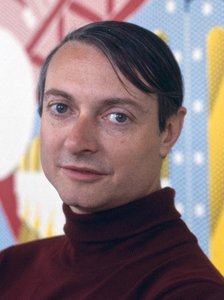
Roy Lichtenstein
1923 - 1997 , Združene države Amerike
Ključne informacije
- Artistic Movement Or Style: Pop art
- Artists Or Movements Influenced By This Artist: ['Pop art']
- Artists Who Influenced This Artist: ['Reginald Marsh']
- Date Of Birth: 1923
- Date Of Death: 1997
- Full Name: Roy Fox Lichtenstein
- Nationality: Američan
- Notable Artworks:
- Whaam!
- Drowning Girl
- Oh, Jeff…I Love You, Too…But…
- Masterpiece
- Look Mickey
- Place Of Birth: Manhattan, ZDA