- Početna strana

- Štampa na platnu
- Беневеното Челини
- Study for a seal

 Pregledaj u prostoru
 Pošalji
 Podeli
 Detalji o delu

 Преузми
 Slični predmeti
 Rendgenski snimak
 Slajdovi
Study for a seal
 Acrylic On Canvas
- WallArt
- Renaissance Mannerism
 1560
1560 315.0 x 125.0 cm
 Louvre
 Pročitaj više
Giclee štampa / Umetnički otisak
Giclée štampa ili print na platnu muzejskog kvaliteta uz brzu proizvodnju i fleksibilne opcije završne obrade. ( Pređite na ručno oslikano umetničko delo Prebacite na sliku)




P118B $10

P118H $10

P118W $10

P438Z $10

P508JH $12

P508YH $12

P805H $10

P805Z $10

P919BZ $10

P919G $10

P919XJ $10

P959ZH $10

P968JZ $12

W106C $8

W218G $10

W218JH $8

W218Y $10

W307PJ $10

W316G $10

W316PJ $8

W316Y $10

W398PJ $8

W4111J $10

W500HY $15

W500JH $15

W692G $12

W849H $8

W940BG $15

W953PJ $8




Izaberite jednu od naših unapred definisanih veličina koje odgovaraju originalnim proporcijama umetničkog dela.

Možete uneti sopstvene dimenzije kako biste umetničko delo prilagodili specifičnom okviru ili prostoru. Ako odabrani format ne odgovara proporcijama originalne slike, mi ćemo ili iscrtati deo dela ili proširiti sliku pomoću ogledane ivice ili jednobojnog popunjavanja. Digitalni prikaz će vam biti poslat na odobrenje pre početka proizvodnje.
Imajte na umu da pregled na ekranu ne odražava stvarno iscrtavanje ili proširivanje. Samo će prikaz (mockup) precizno pokazati finalnu kompoziciju.
Iako su prilagođene dimenzije dostupne, preporučujemo da odaberete dimenziju sa unapred definisane liste kako biste očuvali originalne proporcije.
Dostava širom sveta () za 2 nedelje umesto uobičajenih 4/5 nedelja. (30 јул)

Besplatna ekspresna dostava širom sveta

Visokokvalitetno laneno platno

Kompletno osiguranje transporta

Garancija povraćaja carine i uvoznih dažbina

Garancija vernosti boja

Politika povrata u roku od 60 dana (samo u slučaju nedostataka)

Garancija povrata novca od 100%

Popust pri grupnoj kupovini
 Opcija sa staklom dostupna je samo za dimenzije manje od 110 cm

Study for a seal
Giclee štampa / Umetnički otisak
Dimenzije reprodukcije
-


Konačna cena
$ 64
Opis predmeta
Benvenuto Cellini’s “Study for a Seal”: A Glimpse into Renaissance Genius
The world of 16th-century Florence pulsed with artistic fervor, a crucible where innovation and tradition intertwined to forge masterpieces that continue to captivate us centuries later. Among the giants of this era stands Benvenuto Cellini, not merely a goldsmith or sculptor, but a polymath—a writer, musician, soldier, and above all, an intensely self-aware artist who meticulously documented his life and work in his celebrated autobiography. Within this rich tapestry of creativity lies “Study for a Seal,” a remarkably intimate pen drawing executed around 1560 and currently residing within the hallowed halls of the Musée du Louvre. This seemingly modest piece offers a profound window into Cellini’s artistic process, revealing a meticulous mind grappling with form, symbolism, and the very essence of Renaissance aesthetics.
The drawing itself is deceptively simple: an angelic or mythological figure, rendered in delicate pen lines, stands poised upon what appears to be a stylized serpent. The creature possesses a distinctly human-like quality—a noble face, expressive eyes—yet simultaneously boasts features that transcend the purely mortal; notably, its feathered wings and the suggestion of divine attributes. This deliberate ambiguity is characteristic of Cellini’s work – he frequently blurred the boundaries between the earthly and the celestial, reflecting his own complex personality and a fascination with both the tangible beauty of craftsmanship and the intangible realm of spiritual significance. The background remains strikingly minimalist, composed of geometric shapes and lines that serve not as mere decoration but rather to frame and elevate the central figure, drawing our attention entirely to this enigmatic being.
A Master’s Process: Technique and Materials
Cellini's mastery is immediately evident in the execution of “Study for a Seal.” The work is executed entirely with pen and ink on paper, a medium that allowed him unparalleled control over line weight and detail. Observe how he employs hatching to create subtle gradations of tone, suggesting volume and texture without resorting to shading. The precision of his lines speaks volumes about his dedication to craft; each stroke is deliberate, imbued with the artist’s considered hand. The paper itself bears the marks of time – slight discoloration and warping—testaments to its age but also adding a layer of authenticity and historical resonance. It's not simply a drawing; it’s a tangible record of a creative journey, offering a rare glimpse into the mind of a master at work.
Symbolism and Context: The Seal of Florence
The “Study for a Seal” is inextricably linked to the burgeoning artistic and political landscape of Florence in the mid-16th century. In 1562, the Accademia del Disegno—the Florentine Academy of Drawing—was formally established, marking a pivotal moment in the development of Renaissance art theory and practice. The academy sought to establish standards for artistic training and patronage, and naturally required an official seal to authenticate its documents and represent its authority. Cellini, already a celebrated artist with connections to powerful figures like Francis I of France, was commissioned to design this emblem. The drawing itself is believed to be a preliminary study for the final seal, offering insights into Cellini’s initial conceptualization of the design.
The symbolism embedded within the image is rich and layered. The central figure, often interpreted as an angelic or mythological being, likely represents a deity or allegorical figure associated with wisdom, justice, or divine grace—themes frequently explored in Renaissance art. The serpent beneath suggests both temptation and transformation, reflecting the complex moral landscape of the era. The geometric background may allude to architectural principles, reinforcing the idea that art was not merely decorative but also served as a means of communicating profound philosophical and spiritual truths. It’s important to note that Cellini himself meticulously documented his artistic process in his autobiography, revealing a deep engagement with the intellectual currents of his time.
A Legacy of Craftsmanship: Reproduction Possibilities
“Study for a Seal” stands as a testament to Benvenuto Cellini's extraordinary talent and enduring legacy. Its intricate detail, evocative symbolism, and historical significance make it a truly remarkable work of art. For those seeking to experience the beauty and artistry of this masterpiece firsthand, high-quality reproductions are available through AllPaintingsStore.com. These meticulously crafted oil paintings capture the essence of Cellini’s original drawing, allowing you to bring a piece of Renaissance genius into your home or office. Consider this reproduction not merely as an image but as a portal—a connection to a world of artistic innovation and profound human expression.
Srodna umetnička dela


Biografija umetnika
Бенвенуто Челини: Ренесансни полимат
Бенвенуто Челини (1500-1571) био је изузетан уметник и личност Италијанске ренесансе. Рођен у Фиренци, прославио се као мајстор златарства, вајар, цртач, војник, музичар и писац. Његов разнострани таленат и живописна личност су савршено заробљени у његовој знаменитој аутобиографији, која се сматра значајним књижевним делом поред његових уметничких достигнућа. Челини оличава дух манеризма – стилског правца који је следио Високу ренесансу и карактерише га драматичан израз и комплексност.
Рани живот и уметнички развој
Челини је рођен у породици са музичким склоностима; његов отац је био музичар и произвођач инструмената. У почетку је показао таленат за музику, али се у петнаестој години страсно определио за каријеру златара, убедивши свог невољног оца да га прими као ученика код Антонија ди Сандра (познатог као Марконе). Овим је започела његова формална уметничка обука. Рани период живота није прошао без инцидената; са шеснаест година се укључио у сукоб са пријатељима, што га је довело до изгнанства из Фиренце и периода рада у Сијени под златарством Фракастороа. Ово искуство је било кључно за његов развој као уметника.
Мастерство златараства и вајарства
Челини се брзо прославио као изузетан златар, познат по својој прецизности, детаљима и оригиналним дизајном. Његова способност да обликује племените метале у сложене форме била је без премца. Међутим, његов таленат није био ограничен на златарство; такође се истакао као вајар, стварајући монументална бронзана дела која су демонстрирала његово познавање анатомије, композиције и драматичног израза.
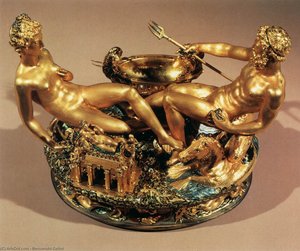
- Солоница: Ово елаборно сребрно ремек-дело, наручено од краља Франциска I Француског, је вероватно његово најпознатије дело. Показује изузетне детаље и динамичне фигуре, а данас се чува у Музеју историје уметности у Бечу.
- Персеј са главом Медузе: Бронзана скулптура која приказује Персеја како триумфално држи одсечену главу Медузе, ово дело је пример Челинијевог мајсторства у обликовању и драматичној композицији. Студирање покрета и емоција у металу је сведочанство његове вештине.
- Златна медаља Леде и лабуда: Направљена за Гонфалонијера Габријела Цесарина, ова медаља показује Челинијеву способност да споји класичну митологију са изузетном израдом.
Утицаји и стил
Челини је црпео инспирацију из класичне антике, посебно из дела древних грчких и римских вајара. Такође је био под утицајем Микеланђела, чије су моћне фигуре имале значајан утицај на његов стил. Међутим, Челини није само копирао своје претходнике; развио је сопсебен и препознатљив стил карактеристичан по динамизму, реализму и пажњи посвећеној детаљима. Његова дела често одликују издужени облици, претеране позе и осећај театралности – типичне карактеристике манеризма.
Живот ван уметности: Војник, музичар и аутобиографиста
Челинијев живот се протезао далеко изван радионице. Служио је као војник током опсада, тврдећи да је одиграо кључну улогу у одбрани Рима против царских снага. Био је и талентован музичар, свирајући корнет и флауту на папском двору. Међутим, његова аутобиографија га заиста издваја.
- Живот Бенвенута Челинија: Ова искрена и често хвалисава прича пружа непроцењиве увиде у ренесансну уметност, културу и друштво. То је задивљујућа нарација испуњена анегдотама о покровитељима, ривалима и личним авантурама, нудећи јединствену перспективу ере.
Његова аутобиографија није само препричавање догађаја; то је пажљиво конструисан само-портрет дизајниран да покаже његов таленат и оправда његове поступке. Иако понекад непоуздана због Челинијиних личних пристрасности, она остаје суштински примарни извор за разумевање ренесансног живота.
Наслеђе и историјска значајност
Бенвенуто Челини је умро у Фиренци 1571. године, остављајући иза себе наслеђе као један од најважнијих уметника манеризма. Његова техничка вештина, уметничка иновација и задивљујућа аутобиографија настављају да инспиришу уметнике и ентузиасте уметности широм света. Он представља квинтсенцијални ренесансни идеал – полимата вештог у различитим дисциплинама, вођеног амбицијом и неспремног да изрази своју индивидуаност. Његова дела се славе по лепоти, занатској умешности и драматичној моћи, учвршћујући његово место као кључне фигуре у западној историји уметности.

Беневеното Челини
1500 - 1571 , Italija
Osnovne informacije
- Artistic Movement Or Style: Manirizam
- Artists Who Influenced This Artist: ['Michelangelo']
- Date Of Birth: 1. novembar 1500.
- Date Of Death: 13. februar 1571.
- Full Name: Benvenuto Cellini
- Nationality: Italijan
- Notable Artworks:
- Perzej sa Meduzinom glavom
- Solnica Cellinija
- Place Of Birth: Firenca, Italija
Povezani članci
25 Remek-dela Metropoliten Muzeja: Umetnička Baština za Vaš Dom | AllPaintingsStore
Uronite u svet 25 remek-dela Metropoliten muzeja! Otkrijte priče Van Goga, Monēa i drugih majstora. Reprodukcije slika vrhunskog kvaliteta za vaš dom. Inspiracija & dekoracija enterijera na AllPaintingsStore.com
Renesansna Genijalnost: 10 Remek Dela Koja Su Izjedili Umjetnost
Otkrijte 10 remek dela koje su obeležile ranu renesansu! Leonardo, Michelangelo, Rafael... Uronite u priče iza ovih umetničkih dragulja i inspirisanje za vaš dom. Kvalitetne reprodukcije na AllPaintingsStore.com – istražite celu kolekciju online!

Sandro Botticelli: 25 Remek-dela Renesansnog Majstora za Vaš Dom | AllPaintingsStore
Uronite u svet Sandro Botticellija! Otkrijte 25 remek-dela renesansnog majstora – od Venere do Primavera. Istorija umetnosti, tehnike i inspiracija za dekoraciju enterijera. Kvalitetne reprodukcije slika na AllPaintingsStore.com.
Renaissance Humanism's Greatest Art: 10 Masterpieces for Your Home
Explore 10 Renaissance Humanism masterpieces by Leonardo da Vinci, Michelangelo & Raphael. Discover the stories behind these iconic paintings & sculptures and bring timeless art into your home with museum-quality reproductions from AllPaintingsStore.com. Explore the full collection online!

Proto-Renaissance Masters: 10 Artworks That Changed History | AllPaintingsStore
Journey back to the dawn of Renaissance art! Explore 10 iconic Proto-Renaissance masterpieces by Giotto, Cimabue & Duccio. Discover their stories, techniques & lasting impact. Find museum-quality reproductions for your home at AllPaintingsStore.com