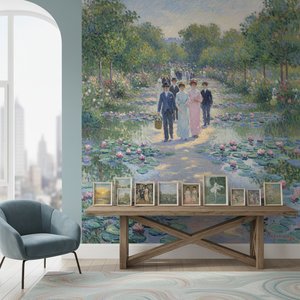
Acrylic On Canvas.

§ 1Katalog podaci

§ 2Apstraktno
Opis predmeta
 Pročitaj više
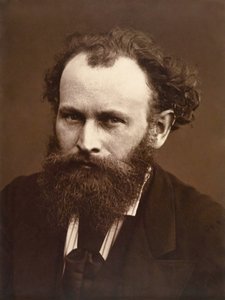
Biografija umetnika
Otkrijte života i dela Édouarda Maneta (1832-1883), ključne figure između realizma i impresionizma! Istražite ikonična dela poput 'Ručka na livadi' i 'Olimpija', i njegov trajni uticaj na moderno umetnost.
§ 3Komentar
Le lapin: A Fragment of Parisian Impressionism
Édouard Manet’s “Le lapin,” painted in 1881, is a deceptively simple composition—a solitary cat perched upon a weathered stone wall against the muted backdrop of a Parisian courtyard. Yet, within its understated elegance lies a profound exploration of light, texture, and psychological nuance that firmly establishes it as a cornerstone of Impressionist art.
- Subject Matter: The central figure—a tabby cat—is rendered with remarkable realism, capturing the subtle nuances of fur texture and musculature. Its gaze is directed upwards, seemingly absorbed in contemplation, inviting viewers to consider its inner life amidst the bustling city around it.
- Style & Technique: Manet eschewed academic conventions, prioritizing direct observation over meticulous detail. He employed loose brushstrokes—characteristic of Impressionism—to convey the fleeting effects of light and atmosphere. The artist skillfully blended colors to create a hazy luminescence that softens the contours of the cat and wall, mirroring the diffused sunlight filtering through the courtyard foliage.
- Historical Context: Painted during Manet’s formative years as an artist, “Le lapin” reflects the burgeoning artistic spirit of Paris at the turn of the century. It aligns with a broader movement away from historical narrative towards capturing contemporary life—a deliberate rejection of Romantic idealism and a celebration of sensory experience.
- Symbolism: While seemingly devoid of overt symbolism, the cat itself possesses connotations of independence and solitude – qualities that resonate within Manet’s artistic vision. Its upward gaze speaks to an aspiration for transcendence, hinting at a desire to escape the confines of everyday existence.
The painting's emotional impact is subtle yet powerful. It evokes a feeling of quiet contemplation, prompting viewers to ponder questions of perception and emotion. Manet’s masterful handling of light and color creates an immersive experience that captures not just what is seen but also how it feels—a testament to his enduring legacy as one of the most influential artists of the Belle Époque.
- Material & Reproduction: AllPaintingsStore offers high-quality reproductions crafted from archival pigment prints on canvas or paper, ensuring that you experience the beauty and artistry of “Le lapin” faithfully.
- Interior Design Inspiration: Consider incorporating elements of Manet’s palette—muted greens, earthy browns, and soft blues—into your interior design scheme to achieve a harmonious blend of tranquility and sophistication.
Pitanja i odgovori
Da li je „Le lapin”, autor Едуар Мане svetlo ili tamno umetničko delo?
Zabeležene vrednosti za „Le lapin”, autor Едуар Мане su: osvetljenost bright, luminansa Gentle Luminance.
Postoji li informativni list o delu „Le lapin”, autor Едуар Мане namenjen studentima?
Stranica Vodič za učenike za delo „Le lapin”, autor Едуар Мане nudi štampani informativni list u dve stranice: sam rad sa tabelom identifikacije, vremensku traku koja ga smešta u period života umetnika, druga dela istog umetnika, izmerenu paletu boja i citate spremne za kopiranje u četiri stila.
U kojoj periodi karijere umetnika Едуар Мане pripada delo "Le lapin"?
U okviru karijere umetnika Едуар Мане, delo "Le lapin" pripada periodu Mature Period, što omogućava poređenje sa drugim radovima ovog autora.


 Pređi na štampu


 Za umetnička dela ili reprodukcije čija je bilo koja strana veća od 105 cm (približno 41 inč), okvir će biti isporučen u obliku rastavljenog seta za sklapanje. Ovaj metod osigurava bezbednu dostavu i sprečava oštećenja tokom transporta.