

1601. Acrylic On Canvas, 107.0 x 90.0 cm.

§ 1Catalogue data

- 107.0 x 90.0 cm


§ 2Abstract
Opis predmeta
 Pročitaj više
Biografija umetnika
El Greco, grčki slikar španske renesanse, poznat po dramatičnim kompozicijama, izduženim figurama i religijskim temama. Otkrijte 'Sahranu grofa Orgaza' i ostala remek-dela ovog vizionara!
§ 3Commentary
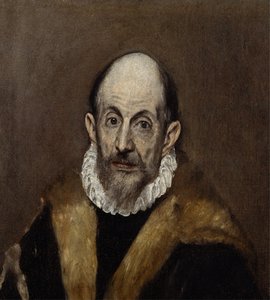
A Prelate: An Exploration of Mannerist Drama and Spiritual Reflection
Doménikos Theotokópoulos, universally known as El Greco – “the Greek” – stands apart from his contemporaries as a painter whose artistic vision transcended the conventions of his time. Born in Crete around 1541, amidst the turbulent currents of Venetian rule, El Greco embarked on an extraordinary journey that propelled him through Venice and Rome before establishing himself definitively in Toledo, Spain—a city steeped in religious fervor and serving as the crucible for his most profound artistic achievements. He wasn’t merely responding to stylistic trends; he fundamentally reshaped them, forging a style that foreshadowed the expressive power of Expressionism and anticipating the fragmented forms characteristic of Cubism centuries later. His formative years spent studying Byzantine iconography instilled within him an unwavering dedication to meticulous detail and a deep understanding of religious symbolism—a foundation that would nevertheless liberate him from rigid artistic constraints. He famously signed his canvases in Greek, appending “Krḗs” – Cretan – as a defiant assertion of his heritage, even as he embraced new artistic horizons. The genesis of El Greco’s distinctive aesthetic resided in the interplay between Byzantine tradition and Renaissance innovation, resulting in an oeuvre that remains perpetually captivating.- Subject Matter: This portrait depicts a prelate—likely a high-ranking ecclesiastical official—seated at a table with an open book. The deliberate positioning underscores themes of intellect, piety, and authority, reflecting the societal values prevalent during El Greco’s era.
- Style & Technique: El Greco's artistic approach embodies Mannerism, a stylistic movement that prioritized dramatic lighting, elongated figures, and expressive brushwork. He achieved this effect through layering paint with visible strokes, creating a textured surface that conveys both physicality and spiritual depth.
- Color Palette: Doménikos employed a muted color palette dominated by blacks, browns, and creams. The bold juxtaposition between the black robe and white collar highlights the figure’s solemn dignity while emphasizing the flesh tones of his face—a subtle yet impactful element of visual storytelling.
- Composition & Perspective: The composition adheres to a three-quarter pose, maximizing detail in the subject's facial expression and upper body. Distortion of perspective—a hallmark of Mannerist art—further enhances the painting’s dramatic impact, creating an illusion of depth that contributes to its ethereal quality.
Pitanja i odgovori
Koje su stvarne dimenzije dela „A Prelate”, autor Ел Греко?
Dimenzije originalnog dela „A Prelate”, autor Ел Греко su 107 x 90 cm.
Za šta se preporučuje reprodukcija dela „A Prelate”, autor Ел Греко?
Reprodukcija dela „A Prelate”, autor Ел Греко preporučuje se za Accent. Ovaj predlog proizilazi iz teme, raspoloženja i boja samog dela.
Na koji način se stil dela "A Prelate" odnosi na epohu njegovog tvorca?
U delu „A Prelate”, autor Ел Греко, umetnički pravac Mannerist Style susreće eru Renesansa.


 Pređi na štampu


 Za umetnička dela ili reprodukcije čija je bilo koja strana veća od 105 cm (približno 41 inč), okvir će biti isporučen u obliku rastavljenog seta za sklapanje. Ovaj metod osigurava bezbednu dostavu i sprečava oštećenja tokom transporta.


