Garancija povraćaja novca · 100 dana Besplatna dostava širom sveta
449.587umetnička dela 30.613umetnici 4.660muzeji 32jezici
Catalogue entry

rope runners

Watercolor.

Fig. 1. Ерnst Лудвиг Киршнер, rope runners. Shown as the reproduction you are specifying: , .

§ 1Catalogue data

§ 2Abstract

Opis predmeta

Experience Ernst Ludwig Kirchner's 'Rope Runners'! This Expressionist masterpiece captures urban chaos with bold lines, vibrant colors, and evocative figures – a powerful emotional journey.

Biografija umetnika

Ernst Ludwig Kirchner (1880-1938): Ključni umetnik ekspresionizma i osnivač Die Brücke grupe. Istražite snažne emocije u njegovim slikama grada, golih tela i pejzaža – izraz umetnosti početka 20. veka koji vas uvlači u svet umetnosti i umetničkog dela.

§ 3Commentary

A Storm of Color and Emotion: Unpacking Ernst Ludwig Kirchner’s “Rope Runners”

Ernst Ludwig Kirchner's "Rope Runners" isn’t merely a depiction of a cityscape; it’s a visceral plunge into the anxieties and frenetic energy of early 20th-century Germany. Painted in the heart of the Expressionist movement, this work explodes with a dynamic composition, dominated by bold lines, unsettling colors, and a deliberate distortion of reality. The scene unfolds as a chaotic tableau – tall, almost menacing cypress trees clawing at a bruised sky, punctuated by angular buildings that seem to lean precariously inward. Scattered figures, rendered in loose, sketchy brushstrokes, appear caught within this swirling vortex, their actions hinting at a frenzied activity, perhaps the very “rope running” suggested by the title itself. But beyond the literal subject matter lies a deeper current of unease and psychological intensity, reflecting Kirchner’s own struggles with modernity and the burgeoning sense of alienation that characterized his era.

The Language of Distortion: Form, Color, and Line

Kirchner's masterful manipulation of artistic elements is immediately striking. Traditional perspective vanishes entirely, replaced by an asymmetrical arrangement where buildings and trees are flattened and stylized – they exist more as emotional signifiers than accurate representations. The color palette is deliberately jarring; deep blues and greens wrestle with aggressive oranges and stark blacks, creating a sense of visual tension. These aren’t the harmonious hues of academic painting; instead, Kirchner employs color to amplify mood and convey feeling. Crucially, it's the lines that truly command attention. They are not used to define form or create smooth contours but rather to inject movement and energy into every element of the composition. Jagged, broken lines crisscross the canvas, overlapping and intersecting, mirroring the chaotic nature of the scene and contributing significantly to the overall sense of unease. The use of black outlines further emphasizes this dynamism, creating a dramatic contrast that pulls the viewer into the artwork’s turbulent world.

Echoes of Mourning and Modern Anxiety

The symbolic weight of "Rope Runners" is layered and complex. The prevalence of cypress trees – frequently associated with mourning and remembrance in European art – subtly introduces themes of loss and perhaps even a sense of impending doom. However, the scene isn’t simply melancholic; it's infused with an underlying current of anxiety and disorientation. The figures themselves are ambiguous, their actions unclear, suggesting a collective state of confusion or panic. Kirchner was deeply concerned with the psychological impact of modern life – the rapid industrialization, urbanization, and social upheaval that were transforming Germany at the turn of the century. "Rope Runners" can be interpreted as a visual representation of this anxiety, capturing the feeling of being overwhelmed by the forces of modernity. The title itself—"rope runners"—hints at a ritualistic or perhaps even desperate activity, adding another layer to the artwork’s enigmatic narrative.

A Window into Kirchner's World: Technique and Context

Kirchner’s technique is deliberately loose and expressive, prioritizing emotional impact over meticulous detail. He employs watercolor – or a similar translucent medium – allowing colors to bleed and blend, creating a sense of atmospheric depth while maintaining a relatively smooth texture overall. The layering of brushstrokes adds subtle variations in tone and opacity, enriching the visual experience. Born in 1880, Kirchner was deeply influenced by artists like Dürer and Munch, but he rejected academic conventions in favor of a more subjective and emotionally charged approach to art. He was a founding member of Die Brücke (The Bridge), an influential group of Expressionist painters who sought to break free from traditional artistic norms and explore the darker aspects of human experience. His work reflects this commitment to experimentation, challenging viewers to confront uncomfortable truths about themselves and their society. The Kirchner Museum in Davos offers invaluable insight into his life and oeuvre, providing a crucial context for understanding the emotional intensity of "Rope Runners."

Pitanja i odgovori

Koja dimenzija i orijentacija štampe se preporučuju za „rope runners”, autor Ерnst Лудвиг Киршнер?

Veličina Medium, Square orijentacija: ovo je preporučena postavka za štampu za „rope runners”, autor Ерnst Лудвиг Киршнер.

Mogu li da koristim proširenu stvarnost kako bih video/la „rope runners”, autor Ерnst Лудвиг Киршнер u svojoj prostoriji?

Stranica AR prikaz za delo „rope runners”, autor Ерnst Лудвиг Киршнер koristi proširenu stvarnost kako bi vam prikazala umetničko delo u vašem sopstvenom prostoru, pomoću kompatibilnog uređaja.

Na koji način je najbolje postaviti delo „rope runners”, autor Ерnst Лудвиг Киршнер s obzirom na njegov format?

Format (Square) i preporučeni prostor (Living Room) su dve navedene činjenice o postavljanju za „rope runners”, autor Ерnst Лудвиг Киршнер.
§ 4The artist

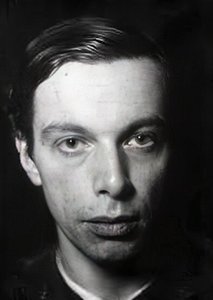
Ерnst Лудвиг Киршнер

Ерnst Лудвиг Киршнер

1880 - 1938, Германија

Quick facts about Ерnst Лудвиг Киршнер

  • Artistic Movement Or Style: Изразхеизм
  • Artists Who Influenced This Artist:
    • Албрехт Дюрер
    • Винсент ван Гох
    • Эдвард Мунк
  • Date Of Birth: 6 мај 1880.
  • Date Of Death: 15 јуну 1938.
  • Full Name: Ernst Ludwig Kirchner
  • Nationality: Германија
  • Notable Artworks:
    • Улица (1908)
    • Летећи танкеринен (1912)
    • Портрет самог себе (1910)
    • Пет жена (1913)
  • Place Of Birth: Ашафењебург, Германија

Biografija umetnika

Ernst Ludwig Kirchner (1880-1938): A Life Forged in Expression

Ernst Ludwig Kirchner, a name inextricably linked to the visceral heart of German Expressionism, wasn’t merely an artist; he was a conduit for anxieties simmering beneath the surface of early 20th-century Europe. Born into Bavaria's quiet countryside in 1880, his formative years instilled within him a profound awareness of displacement—a feeling that would become a cornerstone of his artistic vision. From Frankfurt’s bustling streets to Perlen’s serene lakes and finally settling in Chemnitz, Kirchner absorbed the accelerating pace of modernity, grappling with its promises and perils. Initially pursuing architecture at Dresden University, he swiftly recognized painting as his true calling – driven by an admiration for masters like Albrecht Dürer and a rebellious rejection of academic conventions. He found solace and camaraderie amongst fellow artists—Fritz Bleyl, Karl Schmidt-Rottluff, Erich Heckel—forming bonds that would propel them to forge a revolutionary artistic movement.

The Genesis of Die Brücke: Seeking Authenticity Amidst Change

Kirchner’s artistic journey gained momentum in 1905 with the founding of *Die Brücke* (“The Bridge”), an artistic collective determined to transcend prevailing aesthetic norms and embrace raw emotional expression. This wasn't simply stylistic ambition; it was a philosophical crusade. The group drew inspiration from sources often dismissed by mainstream art circles—primitive art from Africa and Oceania, the turbulent hues of Vincent van Gogh, and Edvard Munch’s haunting explorations of psychological torment. Rejecting idealized beauty championed by academic painting, *Die Brücke* artists deliberately distorted forms, employed jarring color palettes, and utilized expressive brushwork to convey the pervasive anxieties surrounding urbanization and societal transformation. Kirchner's early canvases pulsed with restless energy—a reflection of the collective’s shared conviction that art could confront uncomfortable truths and challenge accepted ideologies. The studio became a crucible for experimentation, mirroring the broader cultural landscape of its time.

A Painter's Palette: Style and Technique

Kirchner’s distinctive artistic style was immediately recognizable for its bold visual language. He eschewed meticulous realism in favor of conveying emotion—a deliberate rejection of academic precision. His palette embraced vibrant, often unconventional colors—drawing heavily from the influence of Henri Matisse and Edvard Munch—creating a dramatic contrast between light and dark that heightened the intensity of his compositions. Furthermore, Kirchner’s brushstrokes were energetic and visible, contributing to an overall feeling of immediacy and unfiltered emotion. Figures and objects appeared distorted or elongated, reflecting not objective observation but subjective experience—a hallmark of Expressionist aesthetics. Recurring motifs included urban landscapes—particularly Berlin street scenes—and nude figures—often depicted in intimate poses—serving as vehicles for exploring themes of isolation, vulnerability, and the human condition. He skillfully utilized woodblock printing techniques, reviving a tradition rooted in German artistic heritage while simultaneously rejecting academic conventions.

Major Works: Capturing Modern Angst

Kirchner’s oeuvre encompasses a remarkable range of subjects—from haunting landscapes to psychologically charged portraits—each imbued with an unmistakable sense of unease and disillusionment. Paintings like *The Street* (1908) exemplify his masterful depiction of urban life, capturing the frenetic energy and emotional detachment characteristic of the era. Similarly, *Leaping Dancer* (1912) embodies Kirchner’s fascination with movement and dynamism—a deliberate departure from academic stillness—while simultaneously conveying a profound sense of psychological complexity. His exploration of human form—particularly nude figures—continues to resonate today, reflecting his conviction that art could illuminate the darker recesses of human consciousness. Notable prints include *The Bridge* (1908), *Five Women* (1913) and *Self-Portrait* (1910).

Legacy: An Artist Amidst Darkness

Kirchner’s artistic career tragically intersected with the tumultuous political landscape of Nazi Germany. Despite his unwavering commitment to artistic integrity—a stance that contrasted sharply with the regime's embrace of “degenerate art”—he endured persecution and suffered debilitating illness. Over 600 of his artworks were confiscated and destroyed—a devastating blow that underscored the chilling consequences of ideological intolerance. Facing despair and failing health, Kirchner succumbed to suicide in Davos, Switzerland, in 1938—leaving behind a legacy as one of Germany’s most influential Expressionist artists. His work continues to inspire contemporary artists with its unflinching portrayal of human emotion and its bold rejection of artistic conventions—a testament to the enduring power of art to confront societal injustices and grapple with existential questions. Kirchner's influence extends beyond his own paintings; he championed primitive art, revitalized woodblock printing, and fostered a spirit of experimentation that profoundly shaped the trajectory of 20th-century art.

§ 5Comparanda

§ 6Questions

Osnovne informacije

  • Influences:
    • Dürer
    • Van Gogh
  • Location: WahooArt.com
  • Notable elements: Bold lines, anxiety
  • Artistic style: Expressionist
  • Title: Rope Runners

Kviz o umetnosti

Svako pitanje ima samo jedan tačan odgovor.

Pitanje 1:
What is the dominant style of ‘Rope Runners’?
Pitanje 2:
The color palette of 'Rope Runners' is most prominently characterized by:
Pitanje 3:
Which of the following best describes the use of lines in ‘Rope Runners’?
Pitanje 4:
Considering the title ‘Rope Runners’, what is a likely interpretation of the scene depicted?
Pitanje 5:
What artistic movement does Ernst Ludwig Kirchner’s style in ‘Rope Runners’ most closely align with?

§ 7Cite this entry

AllPaintingsStore.com, “Ерnst Лудвиг Киршнер, rope runners”, https://allpaintingsstore.com/sr/art/ernst-ludwig-kirchner-rope-runners-8LHTQR-en/ArtistReproduction/ (accessed 4 октобар 2026).

§ 8The reproduction

Ručno rađena uljana reprodukcija

Ručno oslikano uljanim bojama na platnu u dimenzijama i okviru po vašem izboru, izrađeno po porudžbini od strane naših umetnika. ( Pređi na štampu Pređi na digitalnu sliku)

It is specified on the order sheet in the margin; the present state of that sheet reads as follows.

rope runners

Tehnika reprodukcije

Dimenzije reprodukcije

-

Vrhunski maestri umetnosti

Više detalja, prefinjenosti i dodatnog vremena za izradu

-

Okvir za reprodukciju

-

-

Za umetnička dela ili reprodukcije čija je bilo koja strana veća od 105 cm (približno 41 inč), okvir će biti isporučen u obliku rastavljenog seta za sklapanje. Ovaj metod osigurava bezbednu dostavu i sprečava oštećenja tokom transporta.

Potrebna je profesionalna montaža – ovo nije proizvod namenjen samostalnoj izradi.
Set mora sastaviti i platno zategnuti iskusni profesionalni ramitelj, koristeći drveni lepak (nije uključen u set), hvataljku za zatezanje platna i stege kako bi se održao prav ugao okvira dok se lepak suši. Nepravilno sklapanje ili neravnomerno zategnuto platno mogu trajno oštetiti umetničko delo, što nije pokriveno našom garancijom.

  • Sve šipke od masivnog drveta su uključene, precizno isečene po veličini.

  • Montira se pomoću priloženih šrafova, uz dodatno korišćenje lepka za drvo za spojeve u uglovima, koji nije uključen u set i koji vaš čuvar okvira mora obezbediti.

  • Potreban je profesionalni alat koji nije uključen u set: klešta za zatezanje platna (zatezač) i stege za održavanje pravih uglova letvica tokom sušenja lepka.

Važno:
Za spojeve u uglovima neophodan je lepak za drvo, šipke se moraju pričvrstiti stezgama dok lepak potpuno ne osuši, a za zatezanje platna na sklopljenom ramu potrebne su hvataljke za zatezanje platna. Nijedan od ovih alata nije uključen u komplet. Pre naručivanja ove veličine, molimo Vas da unapred obezbedite iskusnog profesionalca za ramačenje.

Kratki opis natpisa

-

-

Zaštitni lak

Sjajni lak (pojačava intenzitet boja, štiti od svetlosti i vlage)

-

Personalizujte svoje umetničko delo

Primeri mogućnosti izmene: Zamena lica fotografijom kupca; Dodavanje ljubimca (npr. zamena mačke psom); Uključivanje skrivene poruke u pozadini; Promena pejzaža ili elemenata pozadine.

-

Hitna dostava

Svetska isporuka () za 3/4 nedelje umesto uobičajenih 5 nedelja. (1 новембар). Bez kompromisa po pitanju kvaliteta.

-

Brza dostava

Dostava širom sveta () u roku od 5 nedelja. (8 новембар).

Uključeno u cenu

Ukupna cena

дин 26887

Included with every order

  • Besplatna ekspresna dostava širom sveta
  • Visokokvalitetno laneno platno
  • Potpuno osiguranje transporta
  • Garancija povraćaja carine i uvoznih dažbina
  • Garancija vernosti boja
  • Politika povraćaja u roku od 100 dana (samo u slučaju nedostataka)
  • Garancija povrata 100% novca
  • Popust na više proizvoda
Order sheet