

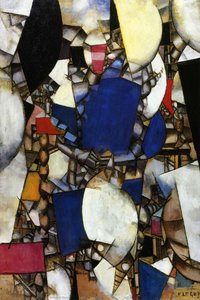
Composition (Fernan Leže, 1918)
1918. Acrylic On Canvas.

Ručno oslikano uljanim bojama od дин17851 za 36 x 28 cm
Dostupno i kao umetnička štampa od дин4410
- Besplatna ekspresna dostava širom sveta
- Isporuka za 4 do 5 nedelja
- Povraćaj novca u roku od 100 dana
- Ocena 4.9/5 na osnovu 241 recenzija kupaca na ArtShopReviews.com
§ 1Katalog podaci


§ 2Apstraktno
Composition od Fernan Leže, opis slike
Explore Fernand Léger’s ‘Composition of the Medallion’! A dynamic, abstract masterpiece blending Cubism & Surrealism with bold colors & geometric forms. Discover modern art's evolution.
 Pročitajte celokupni opis dela Composition čiji je autor Fernan Leže
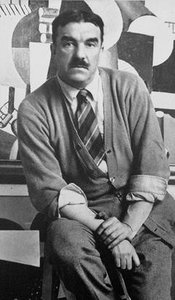
Fernan Leže: biografija
Francuski kubista poznat po tubizmu i ritmičnim, mehaničkim oblicima inspirisanim mašinskim dobom i neonskim svetlima Njujorka.
§ 3Komentar
Fernand Léger’s “Composition of the Medallion”: A Symphony of Geometric Form
A Life Forged in Form: The World of Fernand Léger Fernand Léger, born Joseph Fernand Henri Léger in 1881 amidst the rural landscapes of Argentan, Normandy, stands as a pivotal figure in the evolution of modern art. His journey from the farmlands of his youth to the forefront of Parisian avant-garde circles is a testament to an unwavering artistic vision and a relentless pursuit of capturing the spirit of the machine age. Unlike many of his contemporaries who embraced abstraction as a retreat from representation, Léger sought to *integrate* modernity – its dynamism, its mechanical forms, its very essence – into a new visual language that was both powerfully abstract and deeply rooted in the observable world. His early life, steeped in the physicality of agricultural labor, provided a grounding contrast to the industrialized future he would so passionately depict. Initially destined for architecture, Léger’s path shifted towards painting after arriving in Paris around 1900, supporting himself through illustration work while honing his artistic skills.Cubism and Surrealist Influences: Bridging Two Movements
Léger's artistic development was profoundly shaped by the burgeoning movements of Cubism and Surrealism. Initially drawn to Picasso’s pioneering explorations of fractured perspectives – a technique he adopted early in his career – Léger skillfully blended these influences with elements of Surrealist dream imagery. This fusion resulted in canvases that defied conventional notions of realism, prioritizing instead the expressive power of geometric abstraction. The deliberate simplification of forms and the fragmentation of surfaces served not merely as stylistic choices but as conceptual devices aimed at conveying a sense of mechanized repetition and underlying order amidst apparent chaos. Léger wasn’t simply rejecting traditional art; he was actively constructing a new visual vocabulary to articulate the anxieties and aspirations of his time.Technique: Bold Color Palette and Textured Surfaces
Léger's distinctive technique involved applying paint in thick, textured layers—a process known as *impasto*. This method allowed him to imbue his canvases with palpable physicality, mirroring the solidity and rhythm of industrial machinery. He favored a vibrant color palette dominated by reds, yellows, blues, and greens – colors he considered “the colors of the machine.” These hues weren’t blended smoothly but rather juxtaposed boldly, creating visual contrasts that heightened the dynamism of the composition. Léger meticulously crafted surfaces using brushes, knives, and spatulas, achieving remarkable textural variations that enhanced the expressive qualities of his artwork. The resulting canvases pulsate with energy, inviting viewers to engage in a tactile experience alongside their visual perception.Symbolism Within Abstraction: Representing Urban Life
Despite its apparent lack of recognizable imagery, Léger’s “Composition of the Medallion” is laden with symbolic significance. The prominent circles—particularly the large one dominating the upper left corner—represent not merely geometric shapes but also wheels and gears – emblems of industrial progress and relentless movement. These circular forms encapsulate the repetitive cycles inherent in urban life and convey a sense of inescapable momentum. Furthermore, the chair positioned on the right side serves as an anchor point amidst the swirling abstraction, symbolizing human presence within the machine age—a reminder that even amidst technological advancement, humanity retains its grounding in tangible reality. Léger’s intention was to capture not just *what* we see but *how* it feels – the pervasive influence of machinery on our perceptions and experiences.Emotional Impact: Optimism Amidst Uncertainty
Ultimately, “Composition of the Medallion” communicates an enduring message of optimism tempered by awareness of societal anxieties. Léger’s bold color choices and textured surfaces evoke a visceral response, conveying excitement and dynamism while simultaneously hinting at underlying tensions. The artwork's refusal to succumb to sentimentalism speaks to Léger’s conviction that art should confront uncomfortable truths without sacrificing beauty or expressive power. It stands as a testament to the transformative potential of abstraction—its ability to distill complex ideas into compelling visual forms—and invites viewers to contemplate the relationship between humanity and technology in an era defined by rapid industrialization. The painting's enduring appeal lies in its capacity to inspire contemplation and provoke dialogue about our place within the evolving landscape of modern civilization.Pitanja i odgovori
Da li je ova reprodukcija dela Composition ručno oslikana ili odštampana?
Ručno oslikano: profesionalni umetnik kopira Composition uljanim bojama na platnu od lana.
Koju veličinu treba da odaberem za Composition?
Dimenzije se kreću od 36.0 x 27.7 cm (дин17851) do 240.0 x 184.7 cm (дин149630); tabela na ovoj stranici navodi glavne korake i njihove cene.
Koliko dugo traje dostava?
Isporuka traje od 4 do 5 nedelja, uz besplatnu ekspresnu dostavu širom sveta; na ovoj stranici je ponuđena opcija hitne proizvodnje. Možete ga vratiti u roku od 100 dana uz pun povraćaj sredstava, bez ikakvih uslova.
Koji je medij koristio/la Fernan Leže za delo Composition?
Acrylic On Canvas




 Galerijski print


 Za umetnička dela ili reprodukcije čija je bilo koja strana veća od 105 cm (približno 41 inč), okvir će biti isporučen u obliku rastavljenog seta za sklapanje. Ovaj metod osigurava bezbednu dostavu i sprečava oštećenja tokom transporta.


