

Oil On Canvas.

§ 1Katalog podaci


§ 2Apstraktno
Opis predmeta
Fernand Léger’s "Still Life 3" is a dynamic Cubist painting featuring bold colors & fragmented forms. Explore this unique artwork's textural depth & modern aesthetic – a precursor to Pop Art!
 Pročitaj više
Biografija umetnika
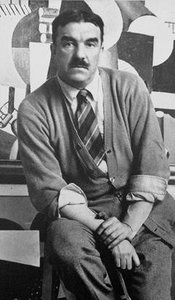
Fernand Léger (1881-1955): Pionir kubizma i 'tubizma'! Otkrijte njegove jarke slike koje slavlјaju moderni život, mašine i čoveka – prethodnik pop arta koji je revolucionisao umetnost.
§ 3Komentar
A Symphony of Forms: Exploring Fernand Léger’s “Still Life3”
“Still Life3” by Fernand Léger is a captivating example of Synthetic Cubism, a pivotal movement in the evolution of modern art. This work isn't merely a depiction of objects; it’s a bold exploration of form, color, and the very essence of representation.Deconstructing the Everyday
The artwork presents a fragmented still life, featuring recognizable elements – an accordion, a fish can, flowers, and a chair – yet rendered in a strikingly non-naturalistic manner. Léger dismantles these everyday objects into geometric shapes and overlapping planes, challenging traditional perspective and inviting viewers to reconstruct the scene anew. This deliberate deconstruction reflects the early 20th-century fascination with analyzing and reassembling reality, mirroring advancements in science and technology.The Tubist Aesthetic & Technique
Léger’s style is often referred to as “Tubism,” a descriptor highlighting his preference for cylindrical forms and machine-like structures. “Still Life3” exemplifies this approach with its emphasis on simplified, robust shapes. The painting demonstrates Léger's mastery of oil paint application; distinct blocks and planes of color are layered to create depth and visual interest despite the flattened space. The limited palette – dominated by reds, oranges, blacks, and whites – is used strategically for maximum impact, generating a dynamic tension within the composition.Historical Context: Cubism & Beyond
Emerging in the early 1900s, Cubism revolutionized art by rejecting traditional notions of perspective and representation. Léger’s work builds upon the foundations laid by Picasso and Braque but diverges with its focus on machine aesthetics and a more accessible, figurative style. He sought to integrate modern life – particularly the energy of industrialization – into his artistic vocabulary. This painting places him firmly within this lineage while establishing his unique voice as a pioneer of modern art.Symbolism & Interpretation
While Léger largely eschewed overt symbolism, the objects themselves can be interpreted through the lens of early 20th-century life. The accordion evokes popular culture and entertainment, the fish can represents mass production and consumption, and the chair symbolizes domesticity. However, it’s crucial to remember that Léger prioritized formal experimentation over narrative content. The painting's power lies not in what these objects *mean*, but in how they are presented – as building blocks of a new visual language.Emotional Impact & Interior Design
“Still Life3” is an intellectually stimulating work that invites contemplation rather than eliciting immediate emotional response. Its bold colors and dynamic composition create a sense of energy and vitality, making it a striking focal point for any space. The painting’s abstract nature lends itself well to modern and contemporary interiors, adding a touch of sophistication and artistic intrigue. It pairs beautifully with minimalist furniture and neutral color palettes, allowing the artwork's vibrant forms to take center stage.- Style: Synthetic Cubism / Tubism
- Medium: Oil on Canvas
- Period: Early 20th Century
- Key Features: Fragmented forms, bold colors, geometric shapes, machine aesthetic.
Pitanja i odgovori
Koji je format dela "Still Life3"?
„Still Life3”, autor Фернан Леже je kompozicija u Landscape formatu. Vredno je proveriti proporcije pre odabira veličine printa.
Da li je Фернан Леже, autor dela "Still Life3", poznat/a i pod drugim imenima?
Фернан Леже se pojavljuje i pod drugim imenima: Жозеф Фернанд Анри Леже, Joseph Fernand Henri Léger.
Iz kog istorijskog perioda potiče „Still Life3”, autor Фернан Леже?
"Still Life3" pripada periodu Modern.


 Pređi na štampu


 Za umetnička dela ili reprodukcije čija je bilo koja strana veća od 105 cm (približno 41 inč), okvir će biti isporučen u obliku rastavljenog seta za sklapanje. Ovaj metod osigurava bezbednu dostavu i sprečava oštećenja tokom transporta.


